
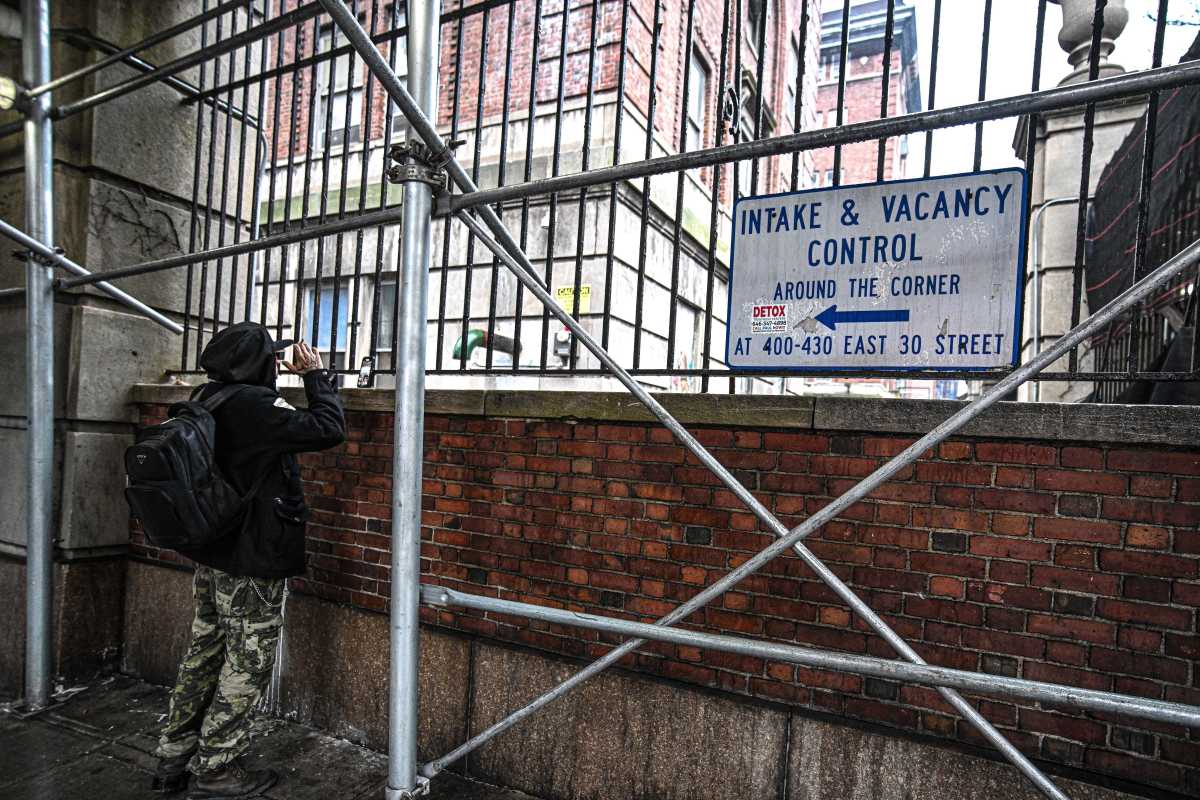
An East Village neighborhood group and several residents sued the Mamdani administration on Monday to stop the opening of a new city men’s intake center at 8 East 3rd St., saying the plan was rushed forward without enough public review.
The case, filed on April 20 in the state Supreme Court in Manhattan, asks a judge to halt the project before its planned May 1 opening.
At the center of the dispute is a plan to convert the East 3rd Street location from a 175-bed transitional housing site run by Project Renewal into the city’s new main intake site for single adult men.
The city announced the move on March 5 as part of its plan to close the longstanding Bellevue men’s intake shelter on East 30th Street over safety concerns. At the time, Mayor Zohran Mamdani said the city must move people into spaces that are “safe, humane, and truly livable.”
Bellevue, a nine-story city-owned building on East 30th Street, had for decades served as an emergency intake site for men and adult families entering the city’s shelter system. That building could accommodate about 850 people, though roughly 250 residents were living there at the time of the closure.
The Mamdani administration announced that starting May 1, men seeking intake services will be sent to 8 East 3rd St., while adult families will be directed to 333 Bowery.
Homeless advocates also raised concerns about the timeline at the time of the announcement. The Legal Aid Society and Coalition for the Homeless warned that a fast transition could create confusion and make it harder for some people to seek shelter.
The city said at the time that DHS would keep a small presence at Bellevue for at least a year to direct people to the new locations and that transportation would be available.
The group and nearby residents behind the new lawsuit say the city did not give the neighborhood advance notice and did not hold a community question-and-answer session until April 7, more than a month after the announcement and less than a month before the site was set to open.
They say that the meeting was announced with only a few hours’ notice and left basic questions unanswered, including how long the site would operate in its new role, what the budget would be, and why the city chose that location.
The suit also says the city skipped several standard reviews before making the move, including land-use, environmental, and “fair share” reviews meant to weigh the impact of public facilities on neighborhoods already hosting similar services. The group argues that the East Village and Bowery area already has several nearby shelters and homeless service providers.
Not commenting on the lawsuit, City Hall defended the move in a statement, saying conditions at the Bellevue intake shelter “have been unacceptable for years” and that vacating the site was necessary for safety.
“Transferring shelter intake to 8 E. 3rd St. is critical to ensuring that every New Yorker in need has access to safe, dignified shelter without delay,” the statement said.
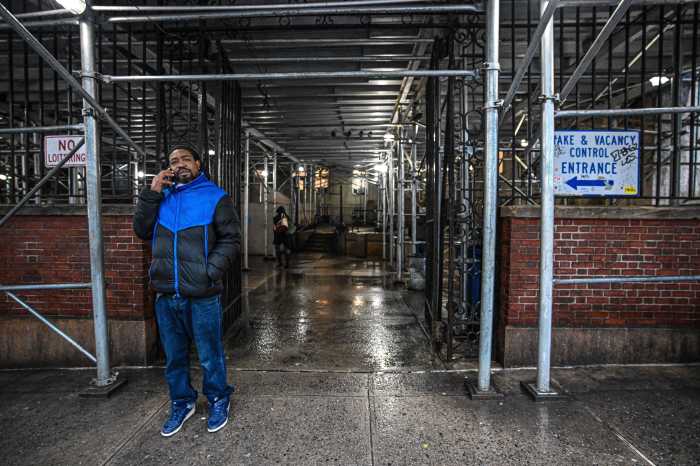 The Bellevue shelter on E. 30th Street.Photo by Dean Moses
A key affidavit supporting the case comes from Robert Mascali, a former Department of Homeless Services official who served from 1999 to 2007 under the Giuliani and Bloomberg administrations.
Mascali said turning 8 E. 3rd St. into the “front door” of the men’s shelter system would be a “seismic shift” and a major burden on the surrounding neighborhood. He said intake centers bring a more transient population and often lead to more loitering, drug use, public disorder and safety concerns around the site.
Mascali also said the city had already concluded decades ago that 8 East 3rd St. was a poor fit for an intake center. In his affidavit, he said the city moved intake services from that address to Bellevue in 1984 because the East Village site was too small and created overcrowding and safety problems in the neighborhood.
Another major point in the lawsuit is the building itself. The filing says the certificate of occupancy limits the basement to 90 people and the first floor to 208 people, even though the site would be taking over a citywide intake role. Mascali claims that trying to process large numbers of men there could create serious safety risks, especially if people in crisis were packed into tight waiting areas.