
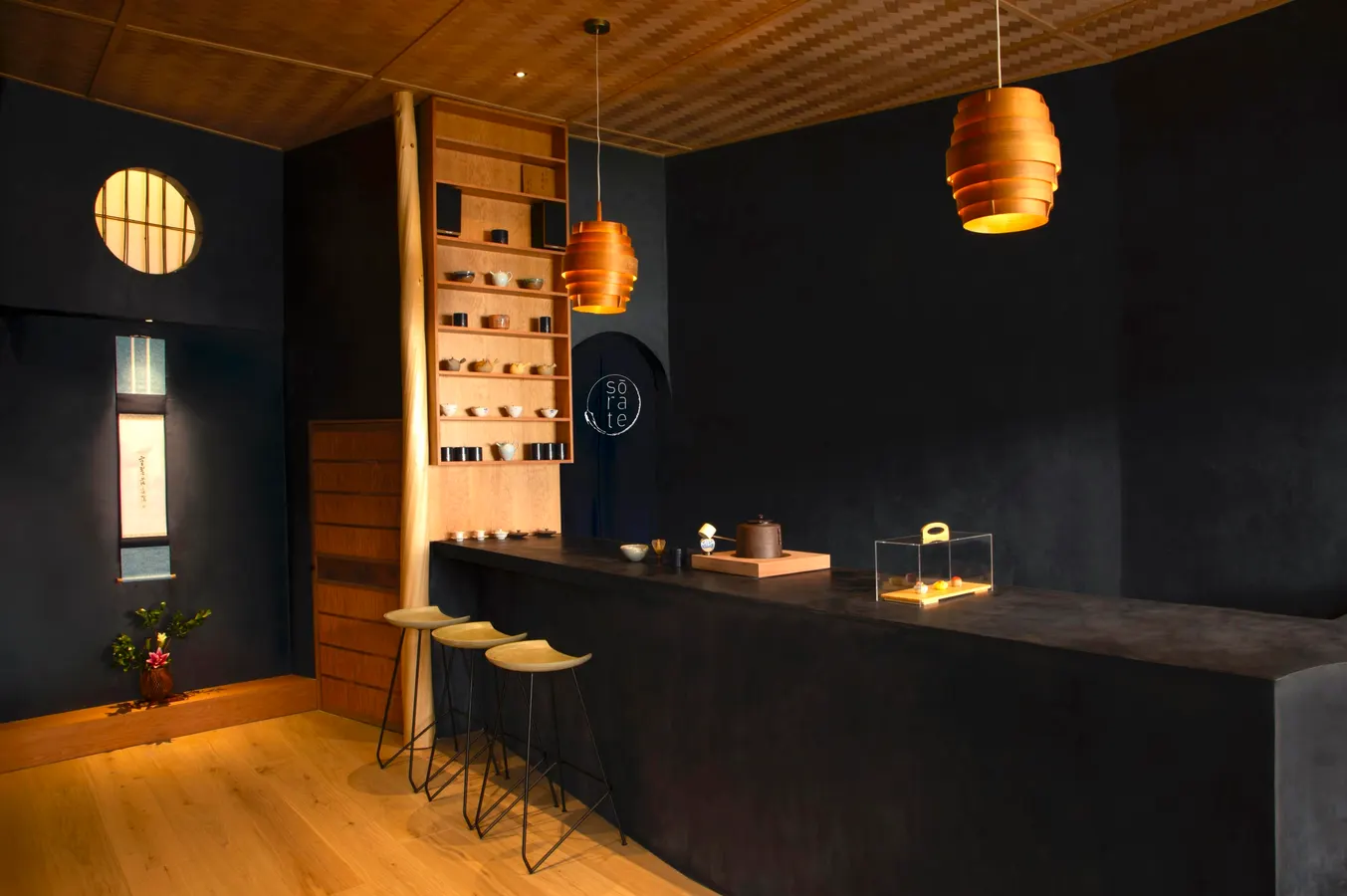
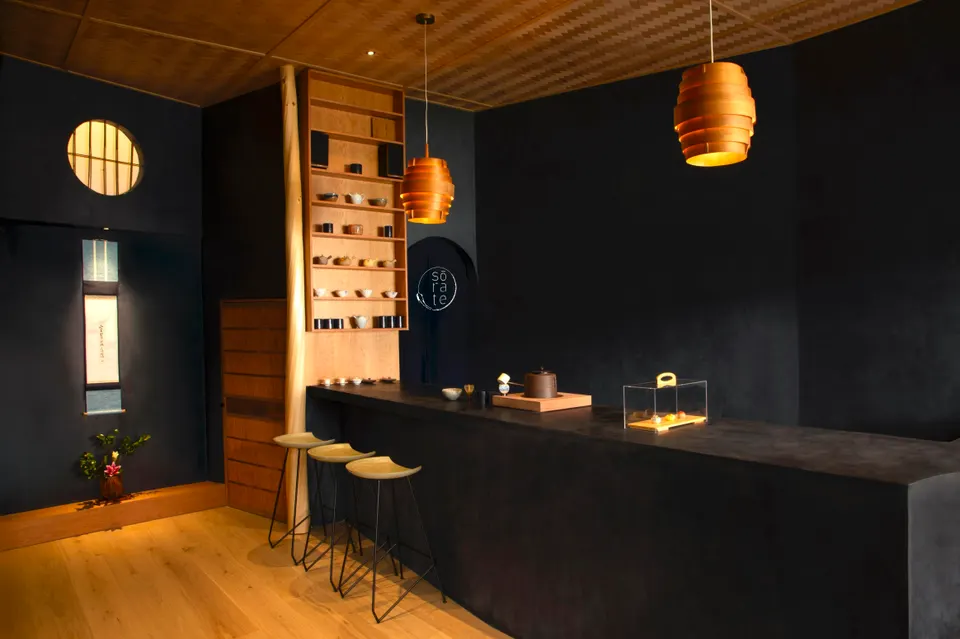
Sorate Flatiron.
Sorate – ph Riccardo Piazza
Matcha has taken the U.S. by storm. But not quite in the way traditionalists might hope.
Driven by rising health consciousness and the global popularity of Japanese food, exports of Japanese tea have dramatically surged in recent years. Export value in 2025 reached a record high of 72.1 billion yen ($455 million), up 98% from the previous year. And no surprise—the driving force was Matcha. The U.S. accounted for 35% of the total export, 85% of which was Matcha.
Matcha’s popularity in the U.S. is largely as a drink or confectionery ingredient. In other words, what Americans currently seek is the “Matcha latte,” rather than the spirituality of the tea ceremony or the deep, natural flavors that define authentic Japanese tea culture.
However, Silvia Mella, an Italian-native, noticed this gap and opened Sorate in 2020 in New York.
After graduating from college, she moved to New York and landed her dream job at a fashion magazine, only to find herself disillusioned with the industry as social media and influencers took over, eroding the depth of content.
Searching for clarity, she embarked on a solo journey to Japan. “It was a country that had long intrigued me,” she says.
With no set plans, she spent three weeks wandering Kyoto. What captivated her most during that time was tea culture.
What was at the heart of its appeal?
“From the seasonality expressed through beautifully handcrafted tea utensils, to the sense of calm created by the rituals of the tea ceremony, not to mention the deliciousness and refreshing quality of the tea itself—I found so many fantastic qualities within the Japanese tea culture,” says Mella.
She returned to New York feeling refreshed, but there was no true space in the city to experience Japanese tea culture in its full depth. So she decided to create one.
Sorate’s founder Silvia Mella
Sorate – ph Riccardo PiazzaA Moment Of Peace
The name of her tea business “Sorate” comes from the Venetian dialect of Italian, meaning “to relax”; it is also a play on the Japanese word sora (sky/emptiness), evoking the sense of openness and freedom that tea brings to the mind.
She revisited Japan to source high-quality tea. Through an acquaintance, she connected with the Nagatani tea farm, which traces its lineage to Soen Nagatani, the pioneer of modern sencha production.
At first, the farm declined to do business with her; she was a young foreigner with no tea business background. But eventually, she convinced the farm by showing her vision through repeated visits and a well-made prototype website. “My magazine design experience worked out,” she smiles.
Mella began selling tea online in 2020. The business grew steadily, leading to the opening of a brick-and-mortar store in Soho, Manhattan in 2023, followed by another in the Flatiron District in 2025.
Alongside a café, she offers not just premium Matcha, but a wide range of teas from Sencha, Gyokuro, Genmaicha, to Hojicha, which Japanese people enjoy more regularly than Matcha.
The Japanese tea culture has two aspects: the everyday custom of brewing in a teapot and the ritualistic aspect of the tea ceremony. To convey both, Mella collaborates with Keiko Kitazawa, a Omotesenke school tea master based in New York, to host tea ceremonies at her stores.
Around 70% of Sorate’s tea leaf customers online are women in their 30s to 50s, but many of the store’s in-person visitors are Millennials and Gen Z, including NYU students nearby. Meanwhile, tea ceremonies often attract couples, suggesting that authentic Japanese tea culture has the potential to gain a broader audience.
“There is a universal value to Japanese tea. I make tea to enjoy a moment of relaxation. I put my phone away, look at my tea accessories, listen to the water boiling and smell the leaves. It gives me a precious moment of peace, even in the middle of a busy day,” says Mella.
She is planning to expand Sorate to other cities in the U.S., Italy and eventually in Kyoto.
Sorate offers traditional Matcha and sweets.
Sorate – ph Riccardo Piazza