
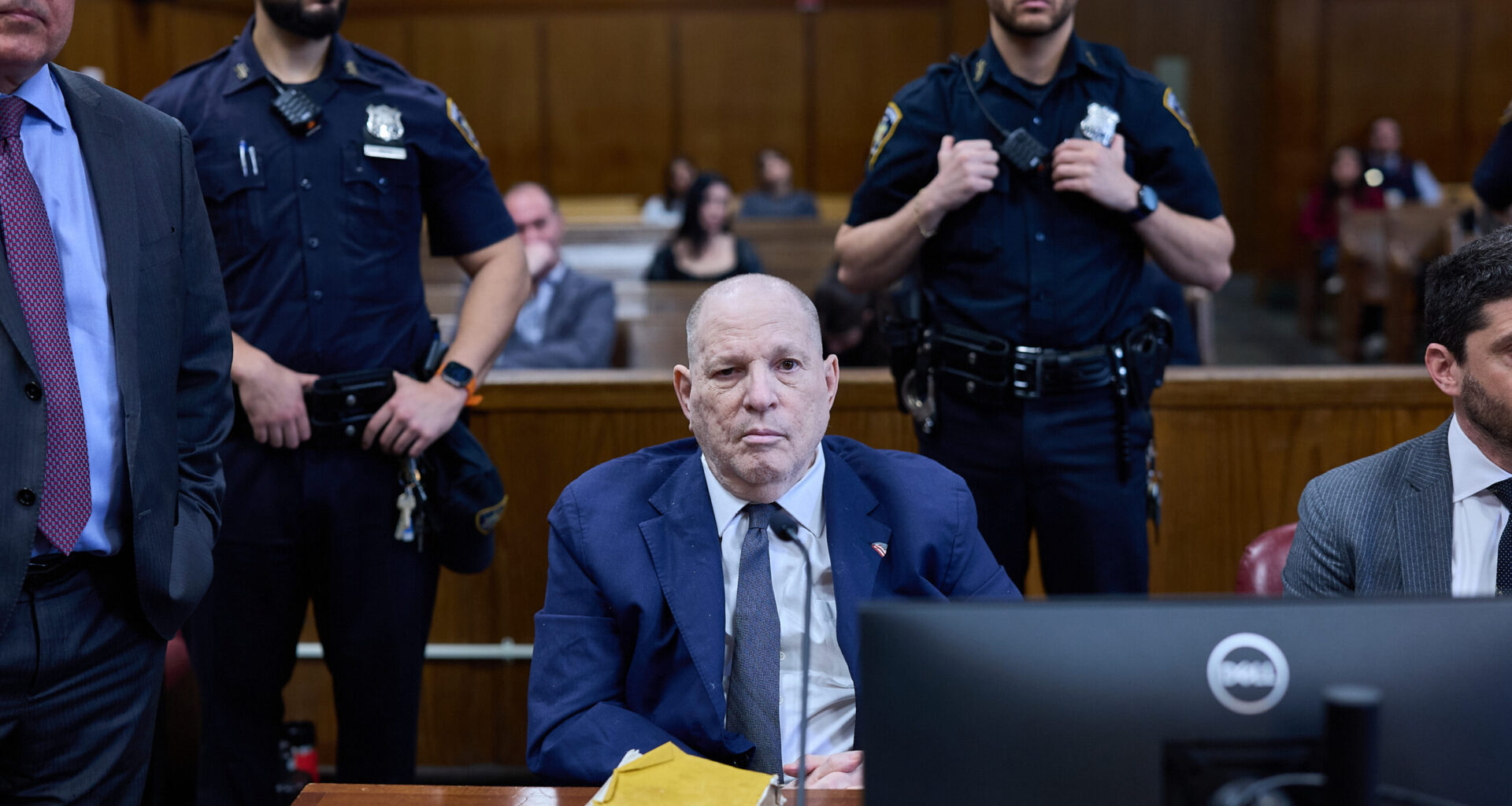
With a new jury and legal team in place, Weinstein faces a retrial centered on a 2013 allegation that has remained unresolved for years
Opening statements began Tuesday, April 21, in Manhattan criminal court in the latest retrial of former disgraced Hollywood producer Harvey Weinstein. With a new legal team and a newly seated jury, Weinstein’s third trial is expected to last until May 15, per Judge Curtis Farber. Weinstein, who has pleaded not guilty, faces a single count of third-degree rape stemming from a 2013 allegation by aspiring actress Jessica Mann. The retrial follows a sordid legal history: his 2020 New York conviction was overturned by the state’s highest court, and a subsequent 2025 retrial ended in a hung jury on the Mann charge, leaving the case unresolved nearly eight years after his initial arrest.
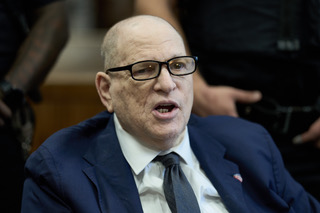 Harvey Weinstein, January 8, 2025. 100 Centre StCredit: Curtis Means
The courtroom was filled with high-profile members of the media, including Lisa Evers of Fox 5 and Jericka Duncan of CBS. Defense attorney Karen Agnifilo sat in the gallery observing her colleagues (and her husband) Jacob Kaplan, Teny Geragos and Marc Agnifilo. In the front row, Weinstein’s public relations representative Juda Engelmayer sat alongside prison consultant Craig Rothfeld of Inside Outside.
Ahead of opening statements, the defense raised the issue of being permitted to discuss Mann receiving payments from a “victims’ fund,” or “sexual misconduct claims fund,” related to her prior testimony, noting they would make clear to the jury that it was not a civil lawsuit. The court noted they would monitor how this was brought up and the defense’s questioning accordingly after a lengthy back and forth.
NOW🚨Here at 100 Centre for opening statements in Harvey Weinstein’s third retrial, centered on the third-degree rape allegations involving Jessica Mann. I’m told Jacob Kaplan will deliver the opening statement for the defense. The chatter around the courtroom is disbelief that… pic.twitter.com/QGJWJ8cNeZ
— Lauren Conlin (@conlin_lauren) April 21, 2026
The jury is comprised of 10 men and 8 women; the 6 alternate jurors are unknown.
During opening statements, Assistant District Attorney Candace White told jurors the case centers on “power, control and manipulation,” arguing that Harvey Weinstein used his influence to dominate and exploit Jessica Mann. White described Weinstein as a powerful figure with deep connections across politics, music and fashion, who routinely conducted meetings in luxury hotel suites: a common industry practice, she noted, but one she said he used to control the environment. “It was Harvey’s world and everyone else was just living in it,” White told the jury, adding that “behind closed doors, he would take what he wanted from Jessica Mann when he wanted.” She portrayed Weinstein as demanding and demeaning, contrasting his power with Mann’s vulnerability, noting she was working three jobs and at times living out of her car when they met. White also described an alleged assault at a DoubleTree hotel, where Mann was “terrified,” though Judge Curtis Farber briefly interrupted proceedings to correct an error in the stated date of the alleged rape, clarifying it occurred on March 18, 2013, not March 13.
Defense attorney Jacob Kaplan, representing Harvey Weinstein, countered in his opening statement by pointing to what he described as a 4-year relationship with ongoing, intimate, and supportive communication between Weinstein and Jessica Mann (even after the alleged assault). Reading excerpts of messages to the jury, Kaplan cited texts such as “I love you,” “Miss you, big guy,” and “Appreciate all you do for me,” arguing they continued through 2017…years after the alleged rape. He framed Weinstein as a successful film producer who rose from a modest upbringing in Queens to co-found Miramax and produce acclaimed films, also rejecting the prosecution’s argument that his fame stripped Mann of her ability to make independent choices. Kaplan told jurors that Mann had previously said “no” to Weinstein on multiple occasions and made her own decisions throughout their relationship, and the evidence would show that.
Scroll to continue reading
Kaplan then walked through the timeline of March 18, 2013, arguing that Mann traveled to New York with a friend and sought to arrange a meeting between Weinstein and a Hollywood agent in hopes of advancing her career. He said Weinstein agreed to the meeting as a favor to Mann and claimed the encounter at the DoubleTree hotel was part of an ongoing consensual sexual relationship. Kaplan argued Mann was concerned about others discovering the relationship, not about the encounter itself, and noted she went to Weinstein’s hotel room, had the opportunity to leave but did not, and later joined him for brunch and extended her stay in New York. He also emphasized that less than 24 hours after the alleged assault, Mann met Weinstein for breakfast with his daughter, questioning whether that behavior was consistent with her allegations. “This case,” Kaplan told jurors, “will come down to Jessica Mann’s words against her own words.”
Before breaking for lunch, the People noted that during Kaplan’s opening, he implied that upon Mann reading other women’s allegations against Weinstein in the press in 2013, she was jealous. The People stated that Mann was, in fact, disturbed, and this should open the door to the jury hearing about the multiple articles in the press regarding other women coming forward with allegations of misconduct. Judge Farber noted he may charge the jury with instructions, should this come up.
The People’s first witness is expected to be called this afternoon.