
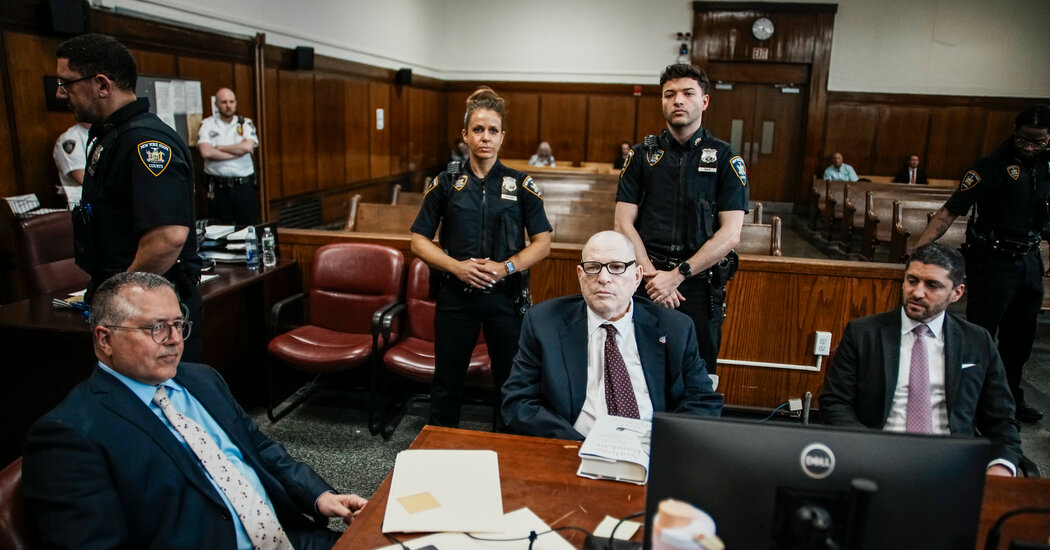
Mr. Weinstein, 74, first went on trial in the case in 2020 and was convicted of rape, but the verdict was overturned. In a second trial last year, the jury deadlocked on the rape count. The judge overseeing the case, Justice Curtis Farber of State Supreme Court in Manhattan, ordered a mistrial.
The third trial is expected to last through the beginning of May.
On Tuesday, Candace White, an assistant district attorney, told the jury that the incident was part of a larger pattern between the Ms. Mann and Mr. Weinstein. Ms. Mann had a tumultuous upbringing, one that included emotional and physical abuse, Ms. White said. Mr. Weinstein used those vulnerabilities to manipulate her into walking a “tightrope” in a relationship that spanned years, she said.
“This case will come down to power, to control and to manipulation,” Ms. White said.
For this trial, Mr. Weinstein has hired a new team of lawyers: Jacob Kaplan, Marc Agnifilo and Teny Geragos. Their firm has defended other high-profile people, including Sean Combs, the fallen hip-hop mogul.
In his opening statements on Tuesday, Mr. Kaplan did not dispute the prosecution’s account of some parts of his client’s relationship with Ms. Mann. Mr. Kaplan said that over four years, the two had fallen into a “mutually beneficial” arrangement, much of it detailed in emails, which Mr. Kaplan characterized as evidence of a “supportive and consensual relationship.”
“Harvey was the opportunity she had always been looking for,” Mr. Kaplan said of Ms. Mann.
But Mr. Kaplan said Mr. Weinstein did not rape Ms. Mann in the Manhattan hotel. Instead, he said, when sexual misconduct accusations against the producer surfaced in 2017, Ms. Mann “had to choose: either be with him or against him.” Worried about how her relationship with Mr. Weinstein would be perceived, Ms. Mann — who was already struggling with her mental health — lied about the encounter, Mr. Kaplan said.