
In about 10 weeks, New York City will have a budget. That much is certain because the mayor and City Council are legally required to have one finished by June 30.
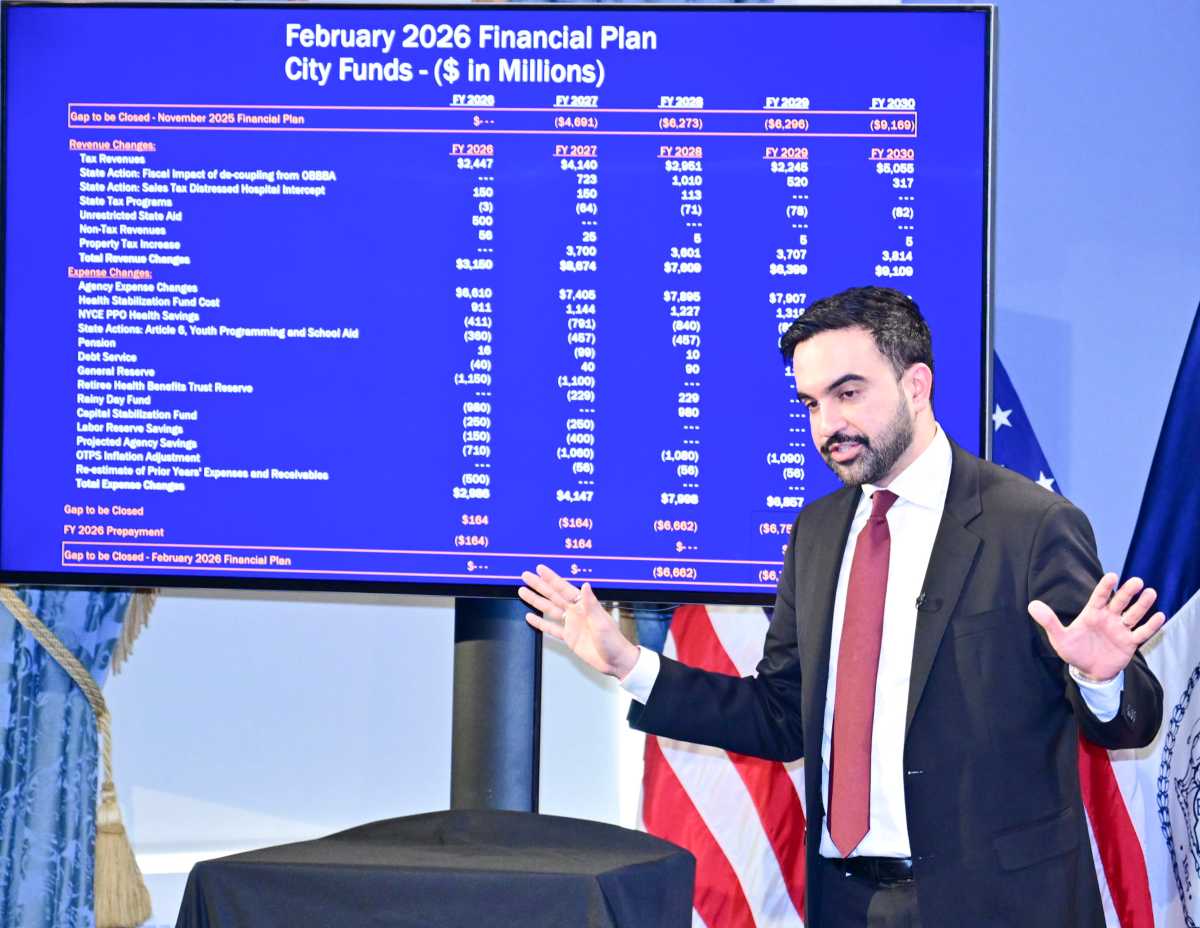
What isn’t certain is how that budget will stop the river of red ink pouring out of City Hall. The city is in a $5.7 billion deficit, and reducing that number to zero in 10 weeks is especially challenging this year given that Mayor Zohran Mamdani wants to raise taxes on somebody, anybody, to spend more — despite the fierce opposition of two of his biggest political partners, Gov. Kathy Hochul and City Council Speaker Julie Menin.
Hochul has shown signs of giving in a little to Mamdani’s tax demand, introducing a pied-a-terre tax on non-New York City residents who own homes worth $5 million or more. It’s an ultra-specific tax increase on ultra-wealthy absentee property owners — but should it come to fruition, it would only generate $500 million in new income. Do the math, and it’s not even close to filling the gap.
Mamdani still holds out hope Hochul and the state Legislature will go even further and raise income taxes on wealthy New Yorkers, something the governor has repeatedly refused to do amid her re-election campaign. If she holds true to her word, that’s not going to happen whenever Albany gets around to passing their three-weeks-overdue-and-counting budget.
The dreaded “Plan B” for Mamdani is a 9.5% tax increase on all New York City property owners. Menin, like Hochul, repeatedly said such an increase was a “nonstarter” in budget negotiations.
There’s three good reasons why Mamdani is facing such strong resistance to his tax increase demands: The economy, the economy, and the economy.
New York City’s economy, while strong because of Wall Street’s resilience, is mired in a horrific affordability crisis, and people are leaving for more affordable pastures. The Citizens Budget Commission released a report Monday showing that $68 billion in income relocated from the Big Apple to the suburbs, Florida and Texas between 2019 and 2023.
That number represents tens of thousands of people who finally had it with the higher costs for rent, food and mere existence in New York City, and headed for the exits. That number represents a steady, escalating erosion of the middle-class tax base that sustains this city and its services. It’s a recipe for disaster.
If this keeps up, and new taxes motivate more people and businesses to leave New York, we will replay the fiscal crisis of the 1970s — a total collapse of the middle-class tax base, followed quickly by the housing market, the job market, and ultimately, city government itself.
No one is suggesting that Mamdani and Menin swing the meat ax at the city’s budget and reduce vital services to nothing in the name of the balanced budget they are required to achieve. We believe a $127 billion spending plan for New York ought to be large enough to satisfy the debt, and preserve police, fire, education, aging and other services.
But it’s time for City Hall to get real about the big picture. We’re not going to tax-and-spend our way out of this mess — not just because we don’t want to, but because we literally can’t afford to.