
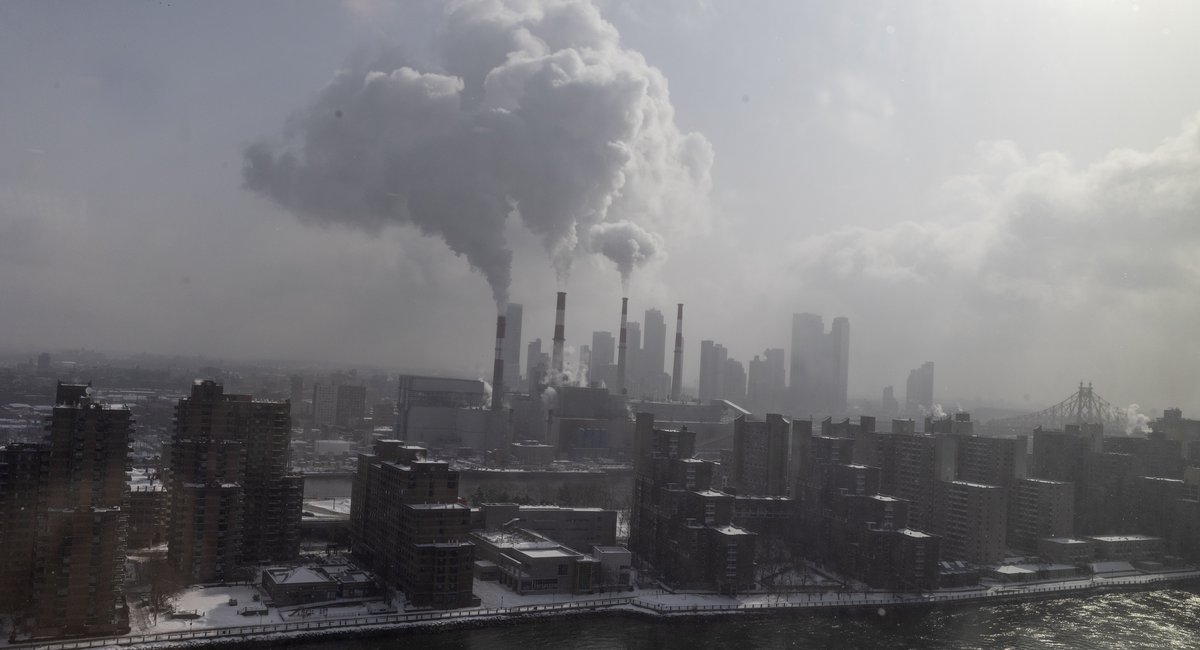
As New York state embarks on a new era of nuclear power, New York City is struggling to wean itself off fossil fuels.
Gov. Kathy Hochul is pursuing a plan to build 5 gigawatts of nuclear power upstate to address growing demand for energy from data centers. More than 20 companies have submitted proposals to build nuclear plants, and eight communities have raised their hands to host a facility.
But none of those projects would serve the New York City area, where experts and advocates see an urgent need for reliable, clean power.
“New York City is powered by aging fossil fuel infrastructure that pollutes our air, ruins our wallets and fuels the climate crisis,” said Kim Fraczek, director of Sane Energy, a renewable power advocacy group. “Staying hooked on this type of energy is the definition of lose-lose.”
Since the shuttering of the Indian Point nuclear plant in Westchester, the downstate grid is roughly 90% dependent on fossil fuels and facing rising demand from increasing use of electricity for heat, transportation and data.
After years of advocacy by residents and prominent opponents like Robert F. Kennedy Jr., former Gov. Andrew Cuomo succeeded in closing the facility in 2021. Critics were concerned about the implications of a meltdown or terrorist attack on the plant, which sits on the Hudson River, less than 50 miles from New York City.
Dietmar Detering, the chair of the Nuclear New York advocacy group, said downstate’s aversion to nuclear power has been bad for the region.
“ For the citizens of New York City, historically, these decisions to move nuclear clean generation away from the city and instead go with dirty fossil generation has been harmful,” Detering said.
The further away the energy source is from demand, the higher the cost for consumers, he noted.
”Typically you want the generation right where the load is, everything else is a compromise,” Detering said. “When you’re looking at the cost figures, it’s several million dollars per mile of transmission.”
According to grid operators, the city needs up to 4 gigawatts of additional new power by 2030. The Champlain Hudson Valley Express will bring just over one gigawatt of clean power from Canada during the summer months, starting this year. A wind power project known as Empire Wind off of Long Island that will serve New York City has faced extensive delays due to interference from the Trump administration. Once completed, the first phase is projected to serve around 500,000 homes, which is shy of 1 gigawatt.
Meanwhile, the city is weaning itself off natural gas and electrifying in accordance with local climate laws. The growing demand, coupled with a lack of new energy sources, prompted power grid operators to warn of the growing risk of blackouts as soon as this summer.
Hochul said she has no plans to reactivate Indian Point, which is in the midst of decommissioning.
“Governor Hochul has been clear that her plans to build new nuclear plants would only be for upstate–and only in communities that want them,” Hochul spokesperson Ken Lovett said in a statement.
Data centers are driving the state’s expansion of nuclear power upstate. According to the state’s grid operators, there are around 50 projects requesting connections for power, totaling more than 11 gigawatts. That’s enough power for roughly 11 million households. While Hochul said data centers will pay for the extraordinary amount of energy they require, nuclear power projects benefit from significant taxpayer subsidies.
Nuclear power plants currently in operation in the state have 20-year, $33-billion subsidies from 2029-49 that are paid for by ratepayers.
Joseph Romm, a nuclear energy scholar at the University of Pennsylvania, took a skeptical view of nuclear power as a solution to energy affordability.
“There are three certainties in life: death, taxes, and new U.S. nuclear plants are inflationary and lead to higher electricity rates even if they’re never turned on,” Romm wrote in a recent analysis of the affordability of nuclear power.
The first new nuclear reactor in New York, which will add one gigawatt of power, is expected to begin construction by 2033 and supply power by 2040. The upstate grid is already predominantly powered by zero-emission energy with a mix of nuclear, hydro and renewables.
The downstate grid, meanwhile, looks as if it will remain hooked to fossil fuels for the foreseeable future.