
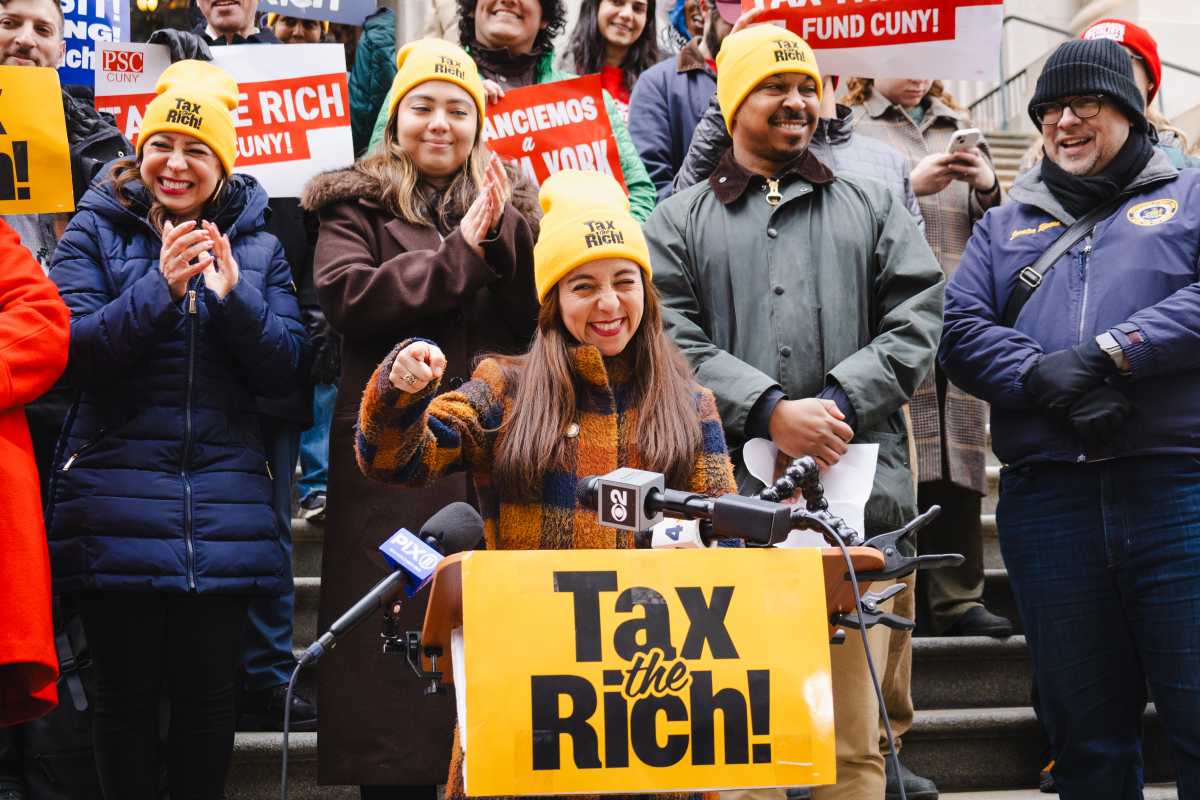
Remember when Representative Alexandria Ocasio-Cortez wore a dress with “Tax the Rich” splashed across it to the Met Gala? It certainly turned heads, but it didn’t solve any of the financial problems actually facing her constituents.
As if taxing the rich solves poverty, defunding the police cures crime, or building awall fixes immigration. Issues this complex require detail and nuance, not political slogans designed for social media.
Right now, Governor Hochul is facing pressure around her re-election and has pivoted from a platform of no new taxes to embracing a “tax the rich” approach, aligning with Mayor Mamdani and advancing an annual tax on non-resident New Yorkers who own homes valued above $5 million.
The Governor claims this “pied-à-terre” tax will generate $500 million annually for the city. If that were true, I would fully support it. But what this initiative really does is forge alignment with a political base eager to target the ultra-wealthy. That may help in the short term politically, but it comes at a big cost.
Just weeks ago, Governor Hochul was encouraging wealthy former New Yorkers to return from places like Florida, acknowledging that high earners are essential to funding the city’s social programs. This proposal sends the opposite message. It’s much easier and more cost-effective for people of means to get a hotel room for a few nights than to pay a high annual tax on top of the other high taxes they’ve paid and continue to pay to the City and State.
There are several reasons why this tax is poorly conceived and ultimately ineffective:
This policy is unlikely to generate anything close to the projected revenue and could put the city in a worse financial position. Fewer second-home owners mean less spending in restaurants, retail, and entertainment, which directly impacts jobs and local businesses.
Another challenge is how this tax will actually be implemented. Most of New York City’s housing stock consists of co-ops, where ownership structures are far more complex than traditional property holdings. Creating a fair and enforceable system to determine who is taxed, and how, would be extraordinarily difficult.
There are also broader consequences for housing. Developers are currently incentivized to include affordable units alongside market-rate and luxury housing. Policies that discourage high-end investment risk shrinking development pipelines altogether, reducing not only luxury inventory, but also the affordable housing this city desperately needs.
It’s easy to understand why this proposal is politically appealing. It fits a narrative and resonates with a certain audience. But is the goal to score political points with headlines, or to achieve meaningful, lasting results?
There’s no question that New York City’s property tax system needs reform. But this is not the way to do it.
We should be exploring alternative sources of revenue and bringing together leaders from both the public and private sectors to develop thoughtful, actionable solutions. There are countless developers and industry professionals who would welcome the opportunity to collaborate with the government to strengthen this city.
New York has always been resilient. We get knocked down, and we come back stronger. People are drawn to the energy, the opportunity, and the life this city offers. That’s exactly why it’s so concerning to see short-term thinking take precedence over long-term strategy.
I urge the Governor to take a step back and consider the broader impact before advancing a policy that may ultimately do more harm than good. There are better solutions; let’s find one that works.