
Sign up for Executive Dysfunction, a weekly newsletter that surfaces under-the-radar stories about what Trump is doing to the law—and how the law is pushing back.
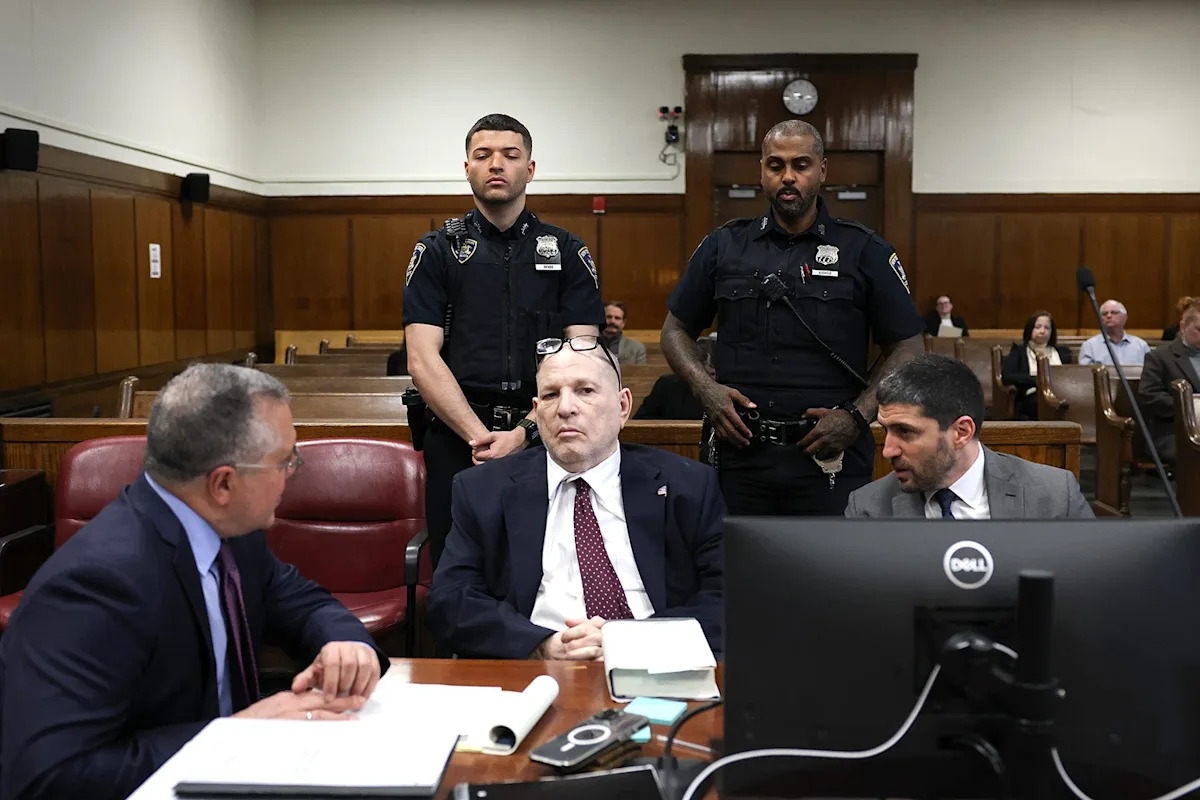
On Tuesday, prosecutors began their case against Harvey Weinstein, who is on trial in Manhattan for rape—for the third time. This third trial is only happening because Weinstein’s previous rape conviction in New York was overturned due to outdated rules of evidence. The start of Weinstein’s latest trial is, among other things, a clarifying moment about how things should change in the world of legal procedure to bring powerful abusers to justice: New York and other states must change their rules of evidence to make sure serial rapists like Weinstein aren’t shielded from accountability.
In May 2025, actress Jessica Mann sat in front of a Manhattan jury and told them, through tears, exactly how Harvey Weinstein raped her. Some jurors had doubts—the rape charge ended in a hung jury. (Weinstein was convicted on a lesser charge relating to a different victim.) But Mann should never have been in court in May 2025, much less preparing to face her rapist again in April 2026. In February 2020, Mann told the same story to a different Manhattan jury. They believed her, and Weinstein was convicted of rape and sentenced to 23 years in prison. What went wrong?
Just four years after that conviction, New York’s highest court overturned Weinstein’s rape conviction, claiming he didn’t have a fair trial because other victims of his were allowed to testify at the 2020 trial despite prosecutors not charging Weinstein with those other rapes and sexual assaults. The jury in 2020 believed Mann because her testimony was bolstered by the harrowing stories of so many other women describing how Weinstein abused them in similar ways. The jury might not have been willing to believe one woman. But they did believe women.
It’s critical to understand that in the federal system and 16 states, the rules of evidence allow the “mistake” New York prosecutors made in 2020. In those jurisdictions, additional victims can testify to establish a defendant’s propensity to commit rape and sexual assault. There’s a good reason to allow this. Each additional victim testifying lends credibility to all the others. Juries might have reasonable doubt in a “he said, she said” case. That doubt usually vanishes once it becomes a “he said, they said” case. While the rate of false accusations of sexual assault is already low, it’s rarer still for multiple women to coordinate a conspiracy of false accusations. If someone is credibly accused by multiple women of similar sexual assaults, there is unlikely to be reasonable doubt about who is telling the truth.
Trials are about discovering the truth, and a jury should know if a defendant has been accused of rape or sexual assault in the past. Yet most states, including New York, don’t adopt the modern federal rule allowing this. Instead, they choose to put a thumb on the scales of justice in favor of serial rapists like Weinstein. The justification is that it wouldn’t be fair if juries heard that a defendant had raped other victims because the case at hand isn’t about those other victims—a defendant might have raped a dozen women in the past but still be innocent of the particular rape charge before the jury.
It’s true that we don’t want juries convicting simply because they don’t like the defendant. That’s a good argument against admitting evidence that a rape defendant cheated in school, kicked a dog, or got a DUI. Maintaining rules against some forms of so-called “character” or “propensity” evidence makes sense when the evidence doesn’t say much about the likelihood the defendant committed the crime at hand. But what doesn’t make sense is shielding serial rapists from accountability by preventing some of the most useful and probative evidence from being heard at trial. Rape defendants, like Weinstein, should be free to cross-examine other victims who testify, but they shouldn’t be able to silence them.
Allowing other victims’ testimony does not create a flood of false convictions or unfairness—the federal system has allowed such testimony since 1995 without ill effect, and 16 states have followed suit. We should also ask why lawmakers are so concerned about serial rapists being falsely convicted when less than 5 percent of sexual assaults lead to a conviction and false accusations are relatively rare. After Weinstein’s conviction was overturned, some New York legislators proposed a bill that would adopt the modern rule and allow such testimony, but it failed to pass. New York lawmakers seem overly concerned with outdated, and often sexist, assumptions about the likelihood of victims lying and not nearly concerned enough about holding abusers to account. They should rethink those assumptions and pass the bill.
Jessica Mann shouldn’t be forced to stand alone to tell her story in court for the third time. She should be joined by dozens of other victims who can testify to Weinstein’s undeniable propensity to commit sexual assault. With that other testimony, it wouldn’t be hard for the jury to convict Weinstein again, like they did in 2020. It’s time for lawmakers to stop shielding rapists like Weinstein and make it easier for juries to believe victims like Mann.