
The young man arrived in a rare book shop on Madison Avenue last January carrying a ratty briefcase from which he lifted dozens of books and spread them out across the floor.
One of them was a leatherbound volume containing what seemed to be handwritten letters from John Keats to his beloved Fanny Brawne. There were famous letters. They looked genuine. The man, however, looked cagey.
“Usually people who want to sell you something are very forthcoming, they tell you everything about their family,” said Joshua Mann, co-owner of B&B Rare Books. This fellow did not. The usual procedure would be to turn him away and warn other bookshops of a suspicious seller, but then this marvellous book of letters would simply vanish.
US newsletter
A balanced, fair and fact-checked take on global news and culture for our US readers.
Sign up with one click
“We let him believe we were interested,” Mann said. He took the book, put it in a safe and began investigating.
Mann and Sunday Steinkirchner, the co-owner of his bookshop, are now being credited with the recovery of a treasure. The book containing the original letters was valued at $2 million and along with 16 other rare volumes was seized by Manhattan’s Antiquities Trafficking Unit and returned to the Whitney family, who reported them missing from the shelves of their Long Island mansion in 1989.
Announcing the seizure, Alvin Bragg, the district attorney, declared that it had only been possible thanks to the actions of Mann and Steinkirchner.
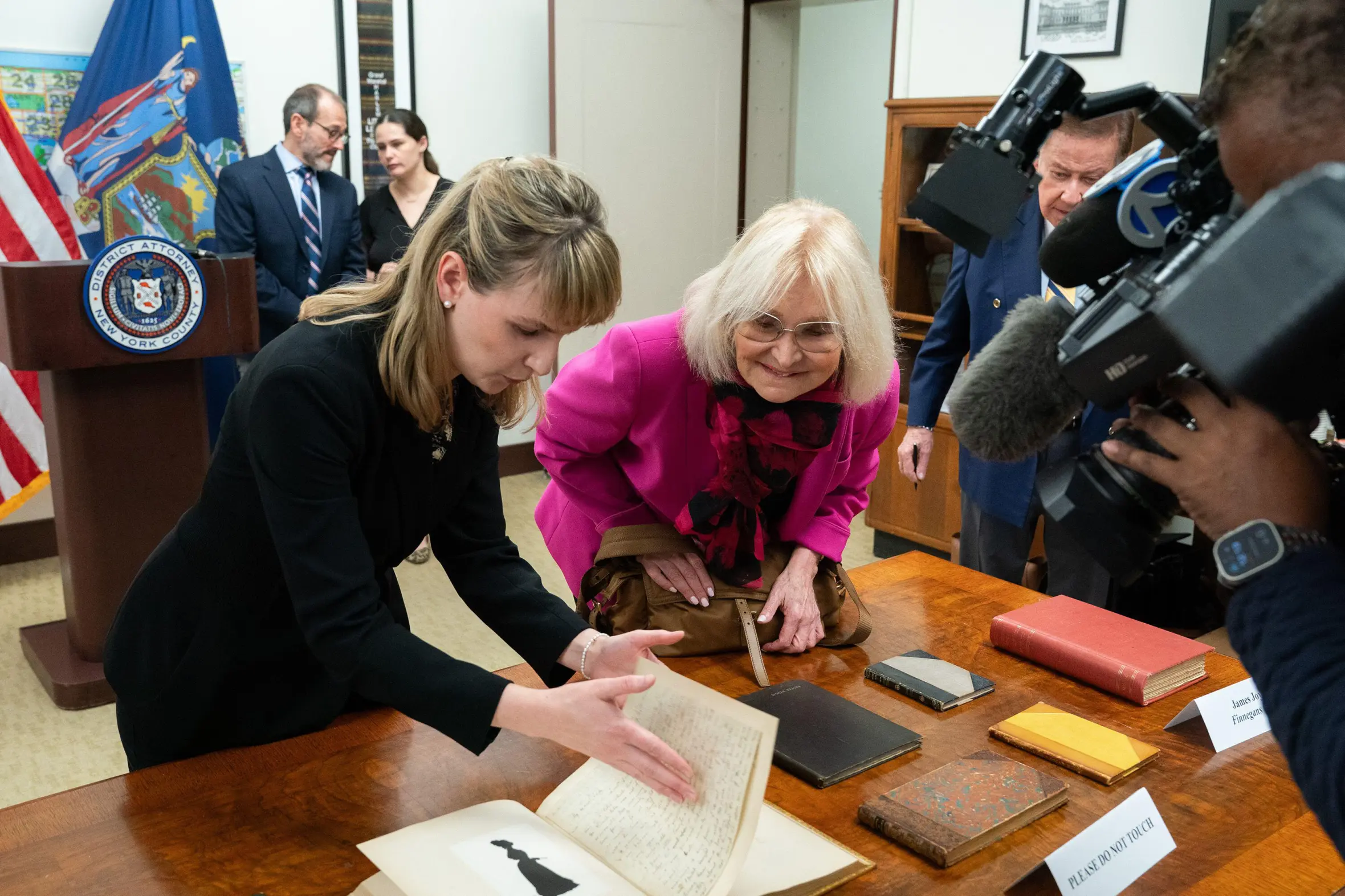 Officials at the Antiquities Trafficking Unit examine the recovered booksBarry Williams/New York Daily News/TNS/Alamy
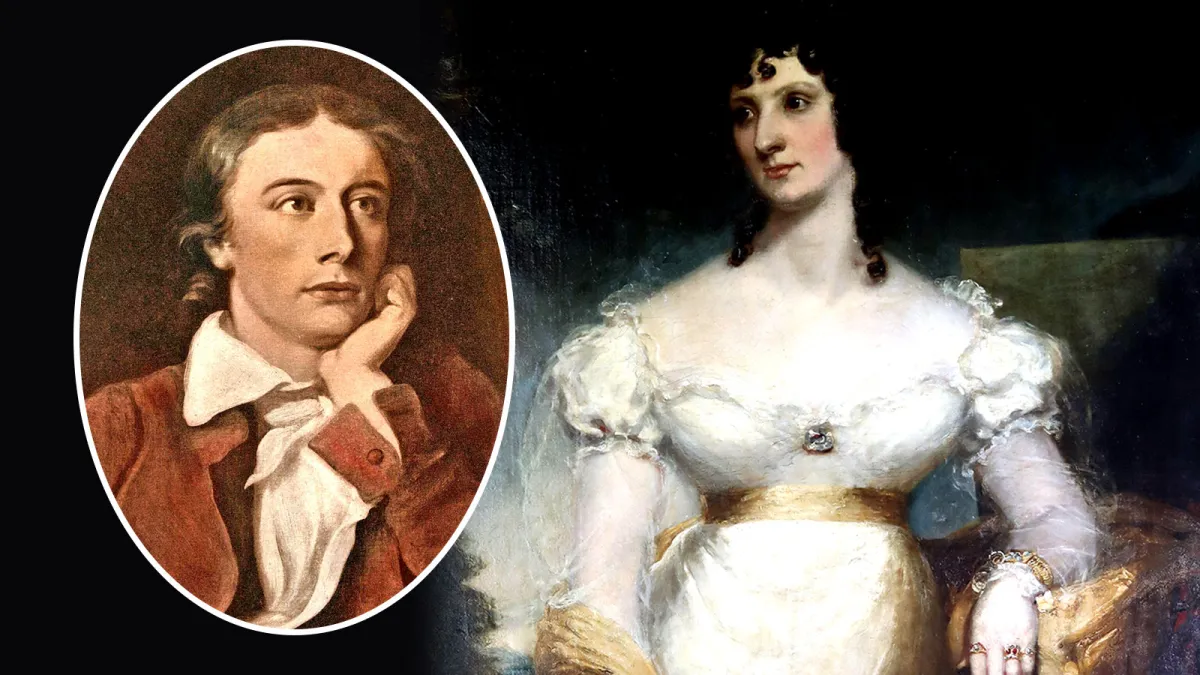
Keats wrote his first letter to Brawne one morning in the summer of 1819, after discarding one that he had written in the night that he thought a little too much. He begged her to write back.
“Write the softest words and kiss them that I may at least touch my lips where yours have been,” he wrote. “For myself I know not how to express my devotion to so fair a form: I want a brighter word than bright, a fairer word than fair.”
He was in a cottage on the Isle of Wight, thinking of her incessantly. “I almost wish we were butterflies and liv’d but three summer days,” he wrote. “Three such days with you I could fill with more delight than fifty common years could ever contain.”
In a closing postscript, he declared that “I know before night I shall curse myself for having sent you so cold a letter”. Another thirty-six letters followed, some composed at his home in London and hand-delivered to Brawne, the girl next door. They became engaged, but it was steadily becoming clear to Keats that he might not be granted fifty common years. Stricken with tuberculosis, a doctor advised him that he could not survive another English winter.
Stepping from a ship at Naples on October 31, 1820, he wrote a letter to Brawne’s mother, describing the harbour and adding: “God bless Fanny.” He died four months later.
“He died almost forgotten,” said Susan Wolfson, a leading Keats scholar at Princeton University. It was only in 1848, with the publication of a biography by Richard Monckton Milnes, that his reputation began to rise.
Brawne had kept his letters and did not marry for a decade. After her death, in 1865, her children published the letters and the originals were sold at auction in 1885. Oscar Wilde wrote a poem about the sale, likening those bidding for “each poor blotted note” to the Roman soldiers gambling for the tunic of the crucified Christ.
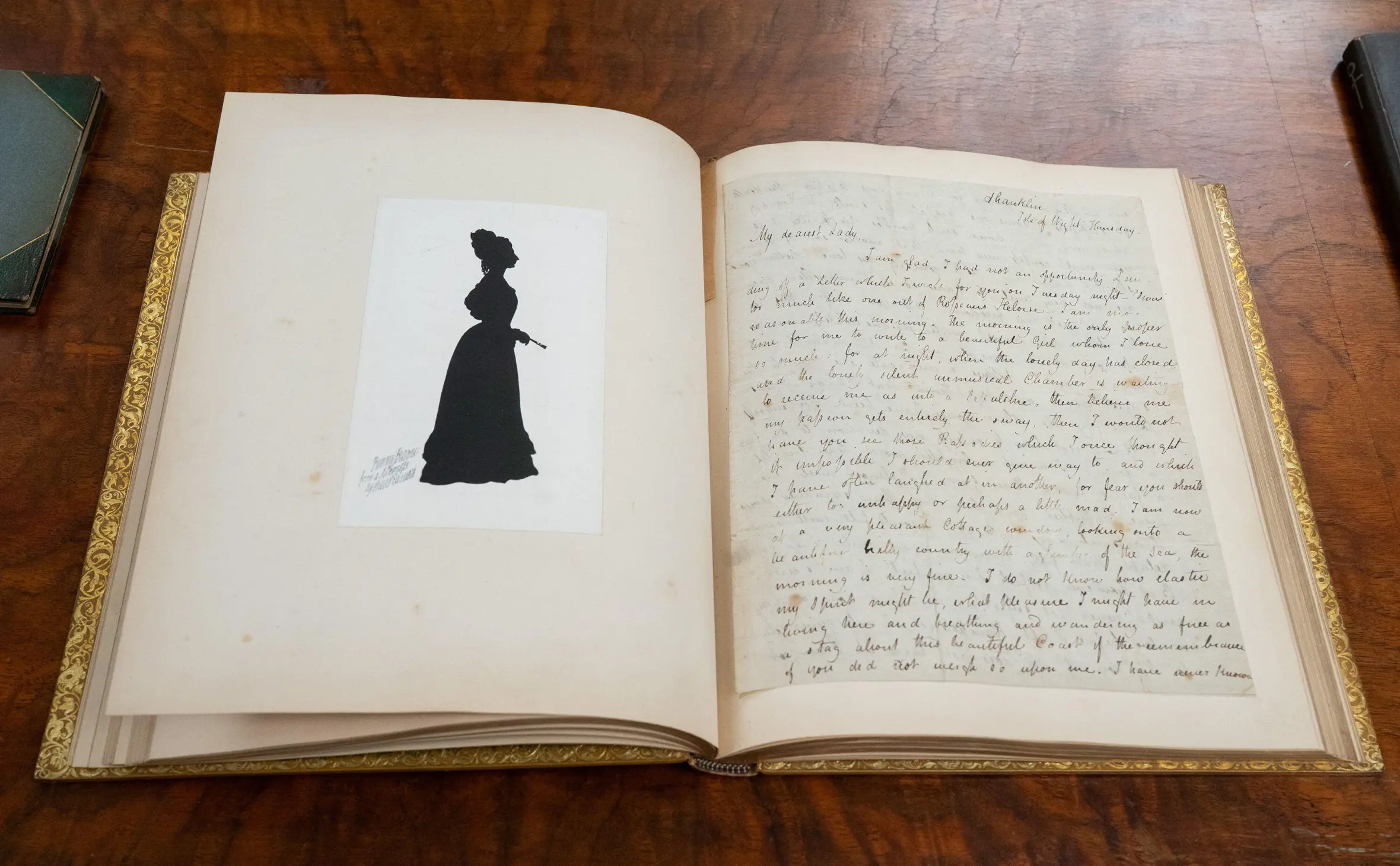 The bound collection of 37 love letters contains originals that had previously been thought lostBarry Williams/New York Daily News/TNS/Alamy
Eight of the letters were exhibited at the Colony Club in New York in 1915 by the venerable Whitney family, who later founded the Whitney Museum of American Art. The letters, bound with great style into a large leather volume, were kept at the family’s Greentree estate in Manhasset. It was only in 1989, during an inventory, that the book was discovered missing.
Then, last year, a young man arrived at B&B Rare Books, attempting to sell it and Mann placed it in the store’s safe. When the would-be seller returned a few days later and demanded it back, Mann refused. Some 15 years earlier, he and his partner had nearly been ruined after buying something that turned out to have been stolen from the Vanderbilt estate, he said. Ever since, “we have been carrying a little bit of a vendetta against people like this’, he said.
They persisted in the face of a lawsuit, he said. “We spent two months with our lawyer buying us time.”
A Keats expert referred them to Wolfson at Princeton and they brought to her dining room table. “It was like heaven on earth for me,” Wolfson said. “I had been studying Keats’s letters for my entire adult professional life.”
Previously she had only seen transcripts of these letters to Brawne. “They said: ‘Do you think this is Keats’s handwriting. I said: ‘I know this is Keats’s handwriting.’”
But Mann and Steinkirchner still didn’t know where the book had come from. Just as a court deadline approached they consulted an expensive art theft database in London and found it listed among missing items in a police report from 1989.
The district attorney’s office said an investigation is now under way into how the 17 books, including the volume of letters, were taken from the Whitney house. The young man who tried to sell them has been cleared of involvement as he was not born at the time that they went missing.
“We have not identified any specific individual for the theft, or thefts,” Matthew Bogdanos, head of the Antiquities Trafficking Unit, told a press conference.