
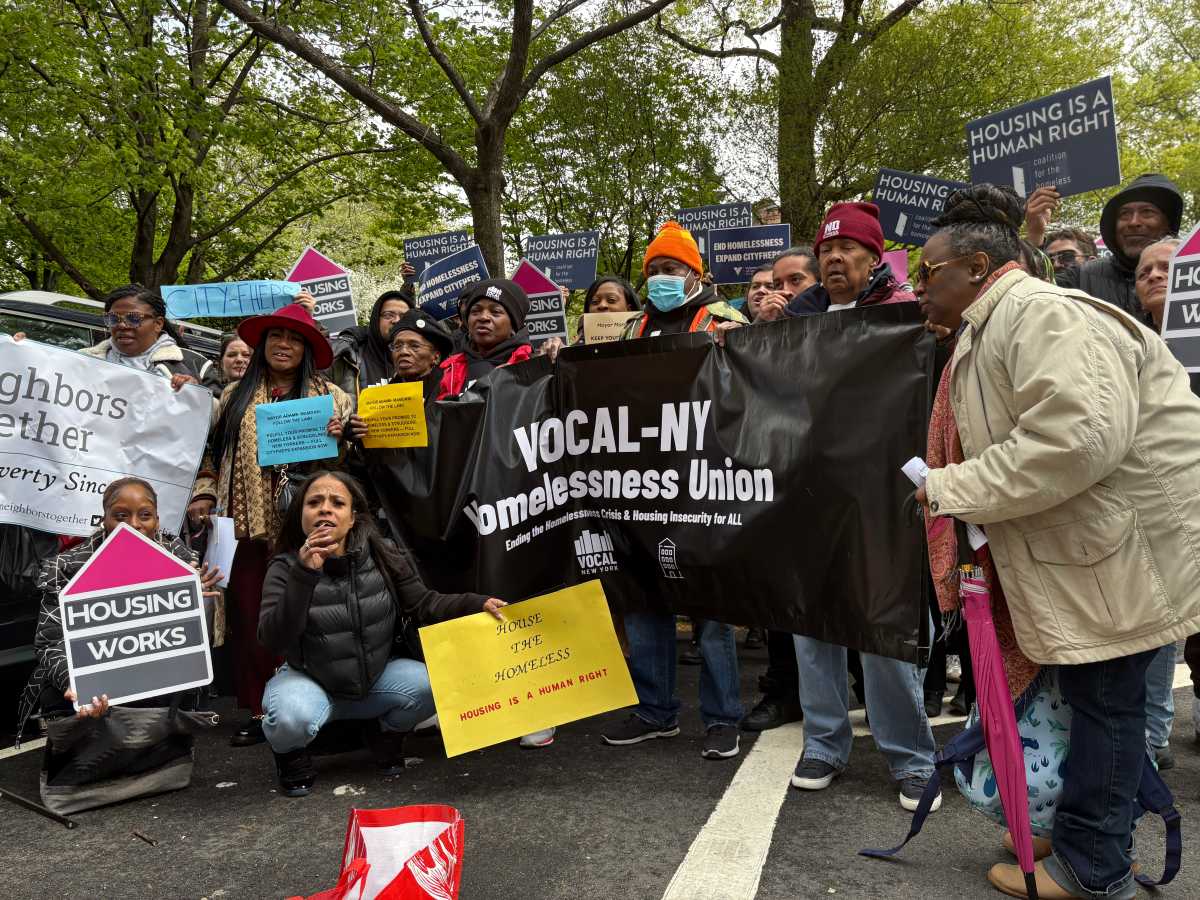
Dozens of affordable housing advocates gathered Wednesday outside Gracie Mansion, the mayor’s official residence on the Upper East Side, to protest Zohran Mamdani’s decision to backpedal on his campaign promise to expand a city rental assistance program — City Fighting Homelessness and Eviction Prevention Supplement (CityFHEPS).
The new mayor has come under fire for flip-flopping on a pledge to drop the city’s challenge to a City Council bill passed in 2023 expanding CityFHEPS, launched by the former Adams administration. The legal fight goes on as the city grapples with how to close a $5.6 billion budget deficit, which the new administration attributed to years of chronic underbudgeting.
CityFHEPS has come under fire for its exponential spending growth since its inception in 2019; initially launched with a $25 million budget six years ago, that earmark ballooned to more than $1 billion last year alone.
Nevertheless, advocates from nonprofits like, Vocal New York, Housing Works, The Safety Net Project and Neighbors Together insist that Mamdani keep his promise to make CityFHEPS available to more New Yorkers. At the April 22 protest, they hoisted printed signs reading, “Housing is a human right,” and “House the homeless,” while taking turns sharing their experiences in the city’s shelter system and with housing vouchers in front of the Mayor’s home.
Wayne Kinsey, a representative from Vocal New York, said he had been staying in a shelter until he received approval for a CityFHEPS voucher, which he told amNewYork changed his life.
“ The voucher did me justice,” Kinsey said. “I’m in a building: it’s brand new and it’s adequate. It’s pretty much the best thing that’s happened to me because it’s a brand new building and I’m excited to just be moving presently over there.”
Calvin Michael, an activist with the Urban Justice Center’s Safety Net Project, a collective of people who are currently and formerly unhoused, told amNewYork that if it weren’t for the CityFHEPS program that he would still be living in crowded, often unsafe city shelters.
“ It saved my life because I had no place else to go,” Michael said.
Michael, who lives with the autoimmune disorder Multiple Sclerosis (MS) and uses a device to help him walk, said that Mamdani’s pivot away from CityFHEPS amounted to a broken promise that made New Yorkers struggling to afford housing less safe and more vulnerable to displacement and deteriorating health conditions.
“ I only get a certain amount of disability I’m on a fixed in income, and that’s why the CityFHEPS voucher allows me to stay in a house and it’d be affordable and safe,” he said.
Yet city Hall said that despite the budget challenges, it was working on honoring the mayor’s promise to keep housing in the city affordable, while also balancing a responsibility to fund the rest of the city’s crucial services.
“Mayor Mamdani has been clear that CityFHEPS is an invaluable tool to prevent homelessness and support homeless New Yorkers,” a City Hall Spokesperson said. “That is why our team is working hard to ensure that it is fiscally sound and sustainable for the long-term. As the legal process continues to play out, we are moving full-steam ahead on building the housing necessary to tackle the housing crisis, address the root causes of homelessness, and creating a more affordable city where New Yorkers live in a home of their choice, rather than in shelters or on the streets.”
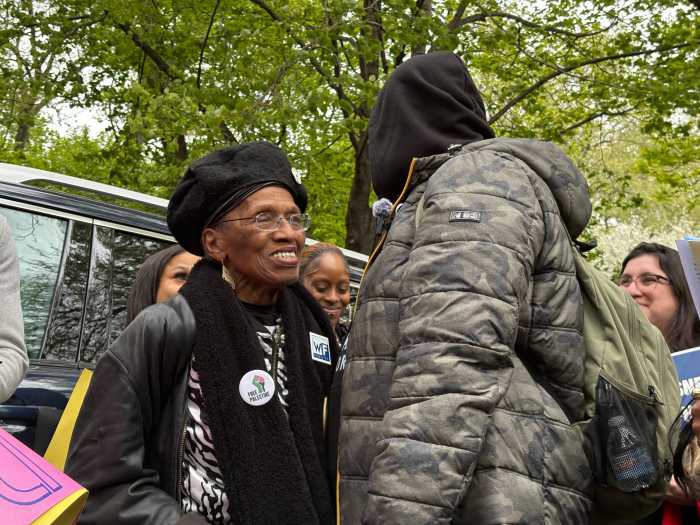 Nathylin Flowers-Adesegun (left) lived in city shelters for five years before she was approved for a CityFHEPS housing voucher that allowed her to move into an affordable unit. She said the shelters were some of the darkest moments of her life. Photo by Sadie Brown
Nathylin Flowers-Adesegun lived in the city’s shelter system for 5 years after losing her rent-stabilized apartment. Following a lengthy court battle, she said her rent had ballooned to more than twice what she had been paying and that she was evicted in 2015.
“Mama Flowers,” as the 80-year-old former CPA is affectionately known, said that conditions in the shelter were so bad that it severely impacted her health, prompting her doctor to recommend she go to the hospital to get a blood transfusion.
“ It was just horrible,” Flowers-Adesegun said. “It was, um, the worst place I’ve ever been. In fact, they tell me jail food was better than our food.”
She said the poor nutrition and lack of accommodations for people with special dietary needs left her feeling hungry and demoralized.
“We didn’t even get two egg s— boiled eggs— a week until one of the council members called the food supply company,” she said.
Advocates emphasized that the debate over CityFHEPS is not just about budget lines but about the lived realities of thousands of New Yorkers navigating an increasingly unaffordable housing market. While City Hall maintains that it is seeking a fiscally sustainable path forward, those gathered outside Gracie Mansion argued that delays or rollbacks risk pushing the city’s most vulnerable residents back into instability.
With legal questions still unresolved and budget pressures mounting, the future of the program remains uncertain but many who rely on it say the urgency is immediate.