
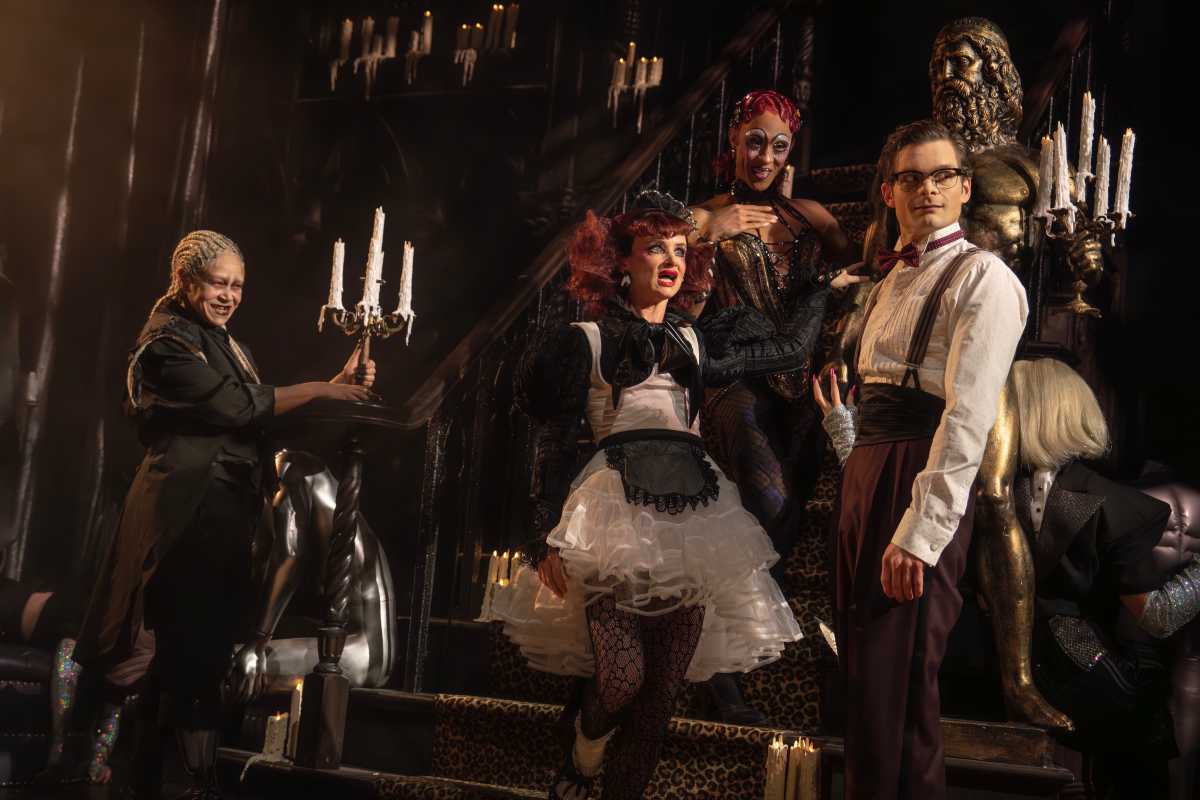
There may be no more logical home for “The Rocky Horror Show” than Studio 54, the former disco palace synonymous with 1970s excess. More surprising is that it took this long. Reviving it in a venue so steeped in sex, spectacle, and decadence feels less like a bold idea than an obvious one.
Produced by the Roundabout Theatre Company and directed by Sam Pinkleton, fresh off “Oh, Mary!”, this revival leans fully into the material’s identity as an event. Pinkleton does not try to impose narrative discipline, instead embracing its loose, strange, unapologetically camp nature. The result plays like a high-end Halloween party, occasionally messy but consistently entertaining.
That atmosphere is evident from the moment you enter. Red and green lights wash over the auditorium. Sculpted male physiques line the space. Posters for vintage sci-fi films echo the references embedded in the score. Tubes extend into the audience as if part of Frank-N-Furter’s lab. A staircase dominating the stage mirrors the theater’s own mezzanine steps, complete with shag carpeting, blurring the line between performance space and venue. The effect is immersive without being overwhelming, a theatrical funhouse that feels like stepping inside Frank’s castle.
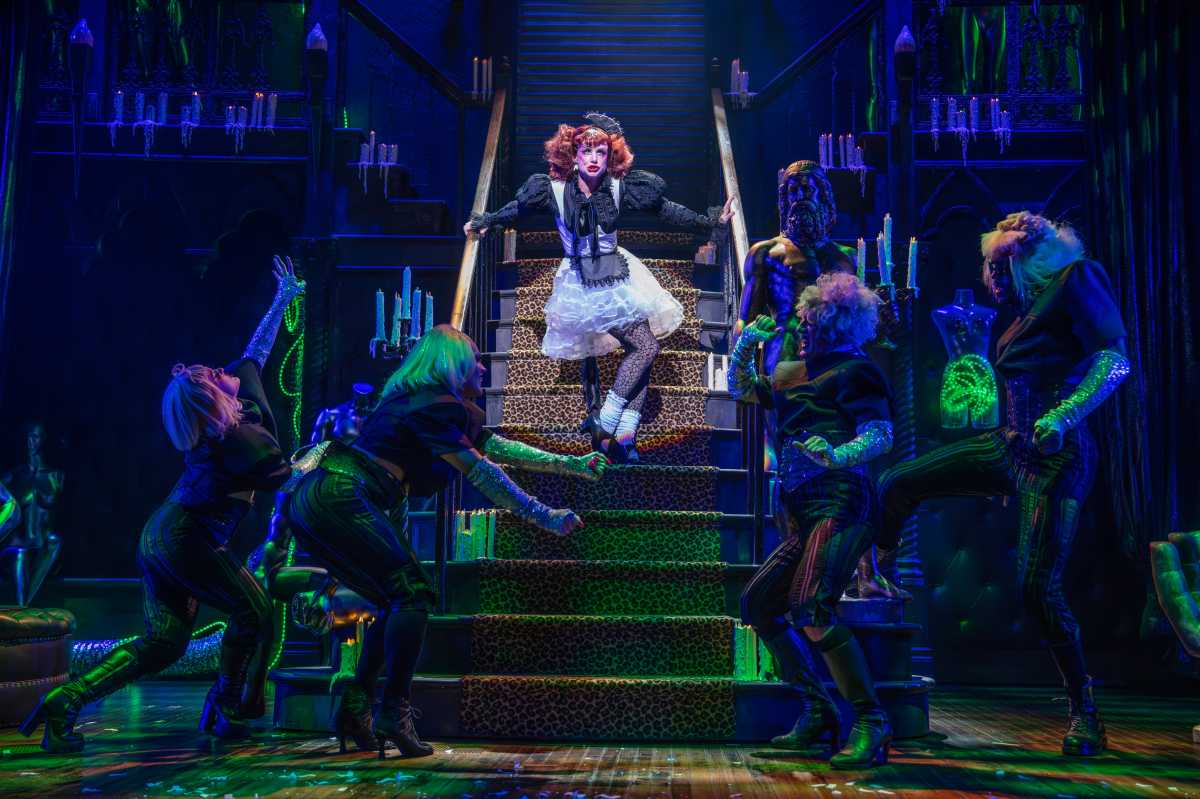 The cast of “The Rocky Horror Show.”Photo by Joan Marcus
The visual imagination continues throughout. The Sonic Transducer resembles a giant retro television set. During “Science Fiction Double Feature,” sculptural heads in the theater boxes spring to life as if joining the backup vocals. Later, the stage fills with candles, and Frank descends on a crescent moon during the floor show like a figure out of the Ziegfeld Follies. These flourishes, rooted in old-fashioned showmanship, give the evening a sense of constant discovery.
A more complicated issue is how to handle its participatory culture. Audience callbacks are central to the more well-known film version, “The Rocky Horror Picture Show,” which built its legacy through midnight screenings and ritualized interaction. But this is the stage musical, and what plays as gleeful chaos in a movie theater can overwhelm a live performance.
The 2000 Broadway revival at Circle in the Square leaned fully into that chaos, encouraging talk-backs to the point that the line between show and event nearly vanished. This production takes a more measured approach, asking for restraint while acknowledging that some interaction is inevitable. The result is a negotiated middle ground, with familiar shout-outs surfacing tentatively, as if the audience is testing the limits. It never devolves into a free-for-all, yet it does not feel tightly controlled either. When it all clicks, it is a blast.
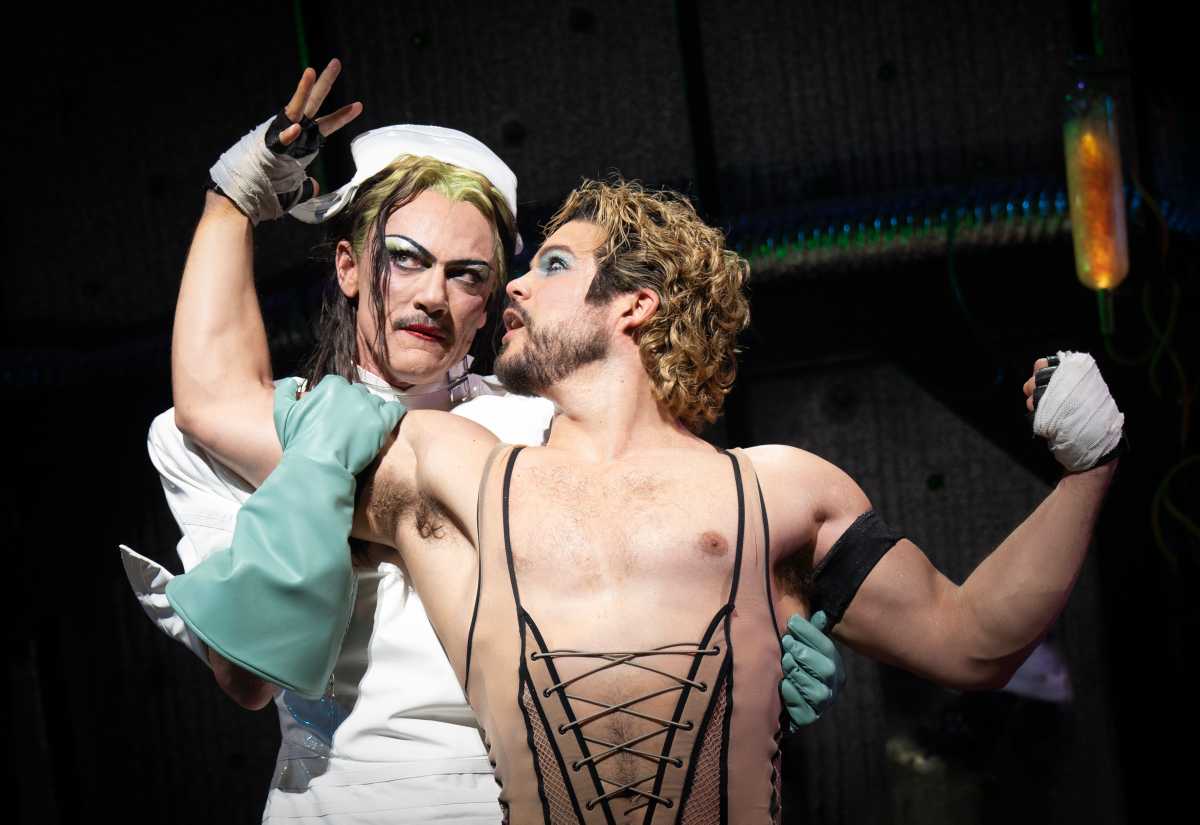 Photo by Joan Marcus
As Brad and Janet, Andrew Durand and Stephanie Hsu provide a necessary anchor. Their performances, pitched with heightened sincerity, recall the earnest charm of Seymour and Audrey in “Little Shop of Horrors.” Durand’s clean-cut conviction contrasts effectively with the surrounding chaos, while Hsu shifts convincingly from prim innocence to liberated exuberance.
The evening’s center of gravity, and arguably its main draw, is Luke Evans as Frank-N-Furter. Making his Broadway debut, Evans delivers a performance of commanding presence and unapologetic sexuality. He struts, prowls, and preens with assurance, fully inhabiting the character’s mix of menace and allure. Vocally strong and physically controlled, he supplies the production’s charge whenever it threatens to drift.
Not all of the casting choices land. Juliette Lewis, as Magenta, brings an offbeat, spacey quality but proves uneven vocally. Her performance of “Science Fiction Double Feature,” which opens the show, is off-tempo and uncertain, dulling its impact. Michaela Jaé Rodriguez, as Columbia, feels off, slightly out of sync with the role’s manic energy. These shortcomings are noticeable, but they do not derail the evening. By contrast, Amber Gray offers one of the evening’s most fully realized performances, bringing an eerie physicality and vocal precision to Riff Raff.
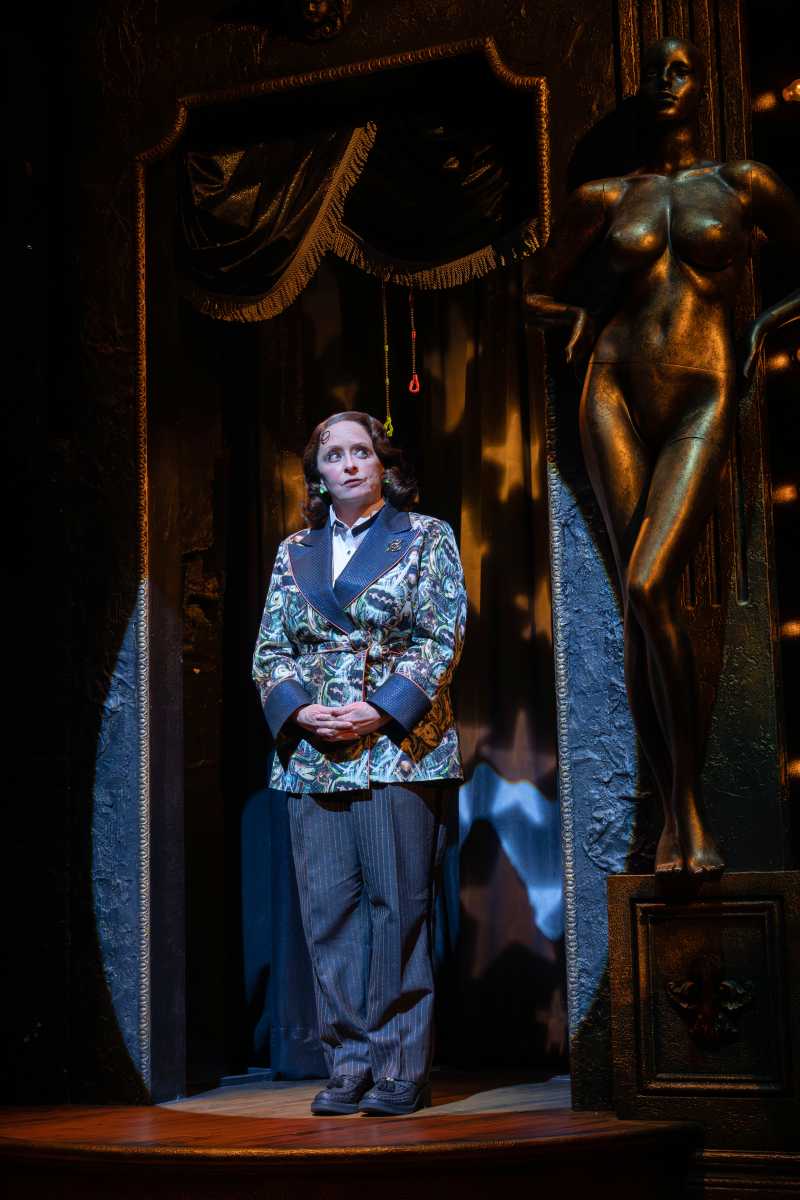 Rachel DratchPhoto by Joan Marcus
In a smart bit of casting, Rachel Dratch plays the Narrator with an amiable, slightly strange quality that fits the tone and reliably lands the laughs.
Musically, the score remains as infectious as ever. “Dammit Janet,” “Sweet Transvestite,” and “Time Warp” all land strongly, with the latter featuring a playful moment that brings audience members onstage, one of the few instances where interaction is fully embraced. The sound design is crisp and immediate, giving the music renewed clarity.
This “Rocky Horror” is not without flaws, but it hardly matters. The style carries you along, and the energy rarely falters. For nearly two hours, it delivers what it promises: a weird, exuberant, and thoroughly enjoyable night out. Participation optional, temptation unavoidable.
Studio 54, 254 W. 54th St., roundabouttheatre.org. Through July 19.