
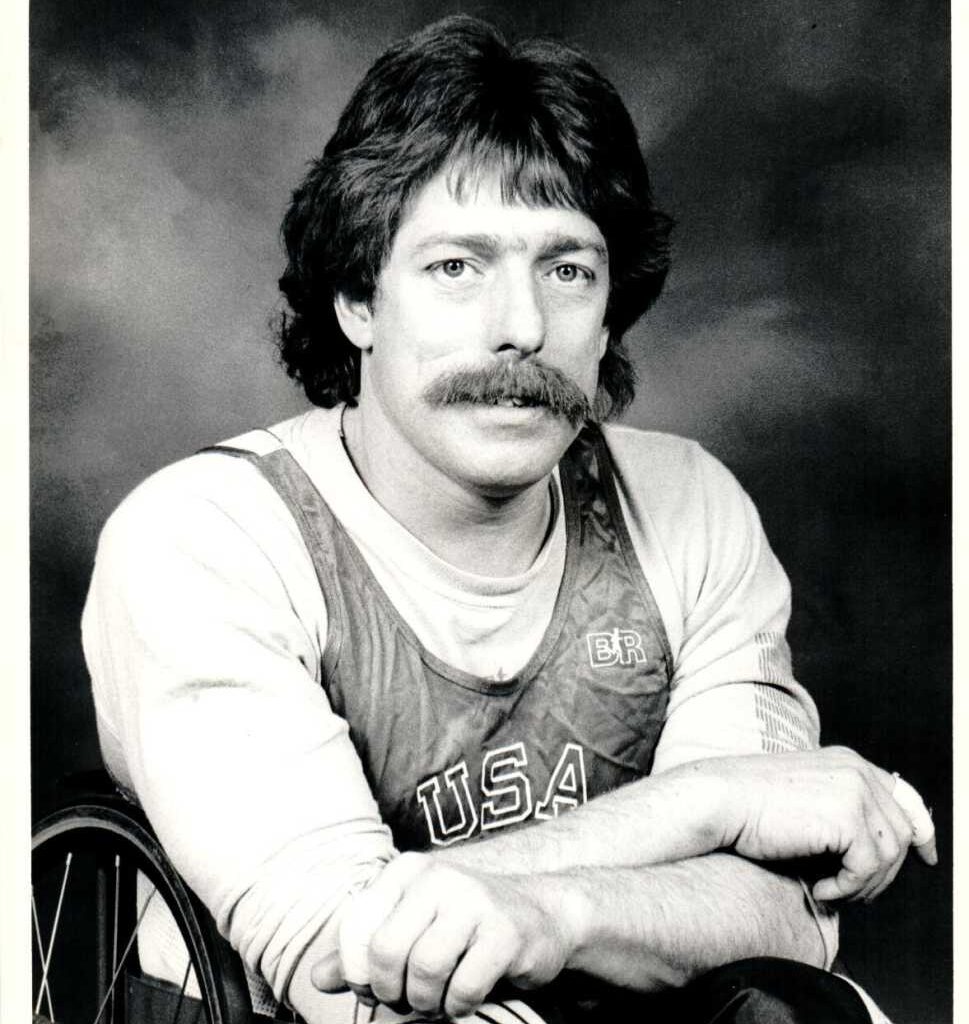
Bob Hall passed away on April 12 at age 74. A renowned marathon champion, Hall won both the Boston Marathon and the New York City Marathon. But he didn’t win using his feet; he won using a wheelchair.
After winning the Boston Marathon, Hall sought to compete in the New York City Marathon in 1977, but his application was rejected. The New York Road Runners Club, which sponsors the marathon, claimed that with so many bridges and road crossings, competitors in wheelchairs posed a safety hazard. The NYRRC argued as well that a marathon is a classic footrace and that it would be unfair to allow participation by athletes on wheels, whether on bicycles, skateboards, or wheelchairs.
Hall then filed a complaint with the New York State Human Rights Commission. He argued that the NYRRC discriminated against him by barring someone with a physical disability from equal treatment in “a place of public accommodation,” namely, the New York Marathon course.
The Commission ordered a hearing. At the time, I was a marathon runner and the lawyer for the NYRRC. As I recollect that case, nearly 50 years ago, and the amazing exploits of athletes with physical disabilities, it seems like a surreal story.
But at the time, there was no legal precedent on the issue of whether a marathon race violated the Human Rights Law by barring individuals with physical disabilities from using wheelchairs to compete. If there was any legal authority, I couldn’t find it.
It’s also important to recognize that back in the 1970s, legal protection against vulnerable groups was very limited. Protection against discrimination in the workplace against persons with physical disabilities would not be prohibited until 1990. Sexual conduct by consenting persons of the same sex was a serious felony in most states and would not be given constitutional protection until 1995. Gay marriage was not constitutionally recognized until 2015. Abortion had recently been legalized but was subject to numerous state restrictions. High levels of racial and gender discrimination existed.
In preparing for the hearing, I located a handful of incidents in marathons in other jurisdictions involving crashes and near collisions between runners and wheelchair competitors. We actually tested the speed of a person in a wheelchair going down the steep drop on Central Park Drive near 79th Street, which is about the 24th mile of the New York marathon course. The speed clocked in at 44 miles an hour.
I added two legal arguments. First, the marathon course was not “a place of public accommodations” but a place restricted to qualified applicants only. Second, there was no discrimination against athletes using wheels to navigate the course because the competition was open only to persons using their feet.
Hall gave powerful testimony. He was stricken with polio as an infant, loved sports but could not compete with his feet, and began using a wheelchair to compete. His courage, commitment, and humility impressed everyone in the room, including the judge. Bill Rogers, the great U.S. marathon champion, testified for Hall.
We lost the case at the hearing stage and again on appeal to the Human Rights Appeals Board.
The Court of Appeals, New York State’s highest court, agreed to review the case and reversed the decision of the Human Rights Commission (New York Roadrunners Club v. State Division of Human Rights, 1982). The court observed that “we, of course, are not insensitive to the role athletic activity may play in the lives of the handicapped.” However, the court held, “the acts on which the complaint here was posited did not constitute an unlawful discriminatory practice.”
The court observed that a marathon footrace is an historically rooted athletic event. The NYRRC, the court noted, could have opened the race to individuals who used any means of locomotion other than their feet to participate but was under no legal compulsion to do so.
“Standing alone, its election to adhere to the method of locomotion most intrinsic and conventional to what, at all odds, is planned as a foot racing event cannot be catalogued as blameworthy in a Human Rights Law discriminatory sense,” the court ruled. “It also was a valid consideration for the club to take into account the fact that a uniform requirement that the race be run on foot would tend to equalize competition. Equally valid was its concern that, without a uniform rule, it would make it difficult, if not impossible, to objectively evaluate the relative performances of the competitors.”
After the court’s decision, and after pressure from Mayor Edward I. Koch, the NYRRC agreed to allow wheelchair racers to compete.
It was not until 2000 that an official wheelchair division was created for the New York City marathon.
Hall competed in a lightly modified hospital-style wheelchair. After his racing career ended, he designed and manufactured racing chairs that were ultralight, three-wheeled chairs used by pro athletes today. One of his aerodynamic models was featured in a design exhibition at the Museum of Modern Art in New York.
Bob Hall survived polio to become, in effect, the father of wheelchair marathoning. He inspired tens of thousands of wheelchair athletes around the world to participate not only in road races but all other athletic events. He gave people the courage to believe they can overcome any life challenge.
RIP Bob Hall.
Bennett L. Gershman is a distinguished professor at the Elisabeth Haub School of Law at Pace University.