
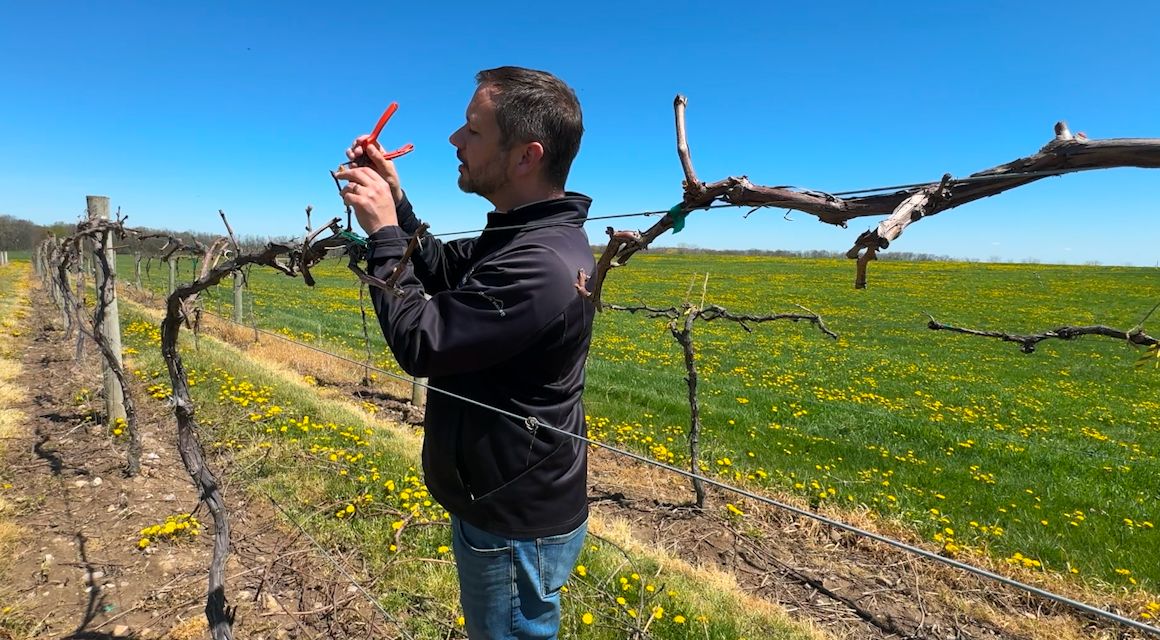
ROCHESTER, N.Y. — Wine may not be the first thing you think of when it comes to weather. But wine, and grapes in particular, have left many winemakers across the East Coast to see the effects of what colder weather can do.
What You Need To Know
With the fluctuating weather, this could keep a unique drink off shelves
As many winemakers across the East Coast are seeing the effects of what colder weather can do, the owner of one local winery and its team is working hard to reduce those impacts
Cornell AgriTech helps troubleshoot for hundreds of vineyards and growers across the state. And its researchers have been able to help secure production quality.
“One of the tricky things about New York’s climate is we’re buffered by the lakes to the west and the Atlantic to the east,” Cornell AgriTech associate professor Jason Londo said. “There’s no mountain range to block what might come our way from the Arctic. And so we can have really big changes in temperature, particularly in the spring.”
Within the past few days, the region has seen lots of rain and below-freezing temperatures, causing damage to vineyards and farms across the East Coast.
“From the plant’s point of view, as soon as it warms up, that means grow,” Londo said. “They don’t follow the calendar the same way we do. They follow it with heat units. And so in this particular case, the plants woke up. They were following the cues. It just so happens that there’s another freeze in the turnstile. From the grower’s point of view, when we have warmer springs, it means the start of the season is earlier synchronized, when our pests and pathogens, and when insects are available as pollinators, that can throw off the crop. If we get too hot in the middle of the summer, that can make the crop have lower quality and that affects the downstream marketability of the crop. And so all these little nudges build up in large part over the whole season. And so it’s important for the general public just to know that any change from what our current status is makes it harder to produce high-quality fruit and high-quality food.”
Cornell Agritech helps troubleshoot for hundreds of vineyards and growers across the state. And its researchers have been able to help secure production quality.
“Grapevine research is really important to remember in the state because we have a unique climate relative to other grape-producing regions,” Londo said. “And I believe we’re the second or third, probably the third-largest producer of grapes in the United States. What we don’t want to have is big crop losses and then a bunch of research trying to repair something. We need to constantly stay ahead of these challenges.”
Luckily for Casa Larga Vineyards and Winery, its location actually helps combat the frost and freeze.
“We’re one of the highest points in Monroe County,” Casa Larga Vineyards and Winery president Andrea Colaruotolo O’Neil said. “We’re actually sitting up high enough that we’re between Lake Ontario and Candidate Will Lake. This constant airflow helps our vineyards not succumb to frost. I don’t want to say it’s never, ever happened, but for the most part, we’re in a very good position.”
The family-owned and operated business shares that although the weather may make things more challenging, they have learned to work around it.
“We have a couple of different things that they can rely on,” Londo said. “One is the fact that they have more fruit than they can probably use each year. So they can sort of build up a stash at the wineries and in the storage centers. And also, we have mechanisms that if we have a really bad frost or freeze and we lose a lot of our fruit, we can then import fruit from other states.”
“It is really tough being up here because we’re not set up with irrigation systems,” O’Neil said. “But usually we have plenty of water, plenty of precipitation in this area. If we have good crops, you have more products or better-quality products, which actually affects the price. It could keep the price stabilized. But if we have bad growing seasons and we’re all looking for the same fruit, or there isn’t enough fruit, you have to bring it in from somewhere. Anything you buy closer to home is better, whether it’s wine or your beer, because the further away things have to come to you, they have to figure out how they’re going to get it to you. We’re talking more preservatives or additives to stabilize that wine so it can go on a boat and travel in the rough seas and get to your shelf. But the closer you buy products to home, the less things we’re using. It’s more natural. And you’re putting your money back into the community.”