
People who like to leave for the airport with just enough time will relate: You catch a cab to make your flight, and then you hit traffic. Both the meter and your anxiety level start to tick up, and you wish there was a way to just fly above it all.
Well, one company is trying to show what that could be like. Starting this week, Joby Aviation is flying demonstration flights of its electric air taxis in New York City. The vehicles will go between Manhattan and JFK airport in Queens, as part of a new federal pilot program meant to help air taxis become a regular sight in U.S. skies.
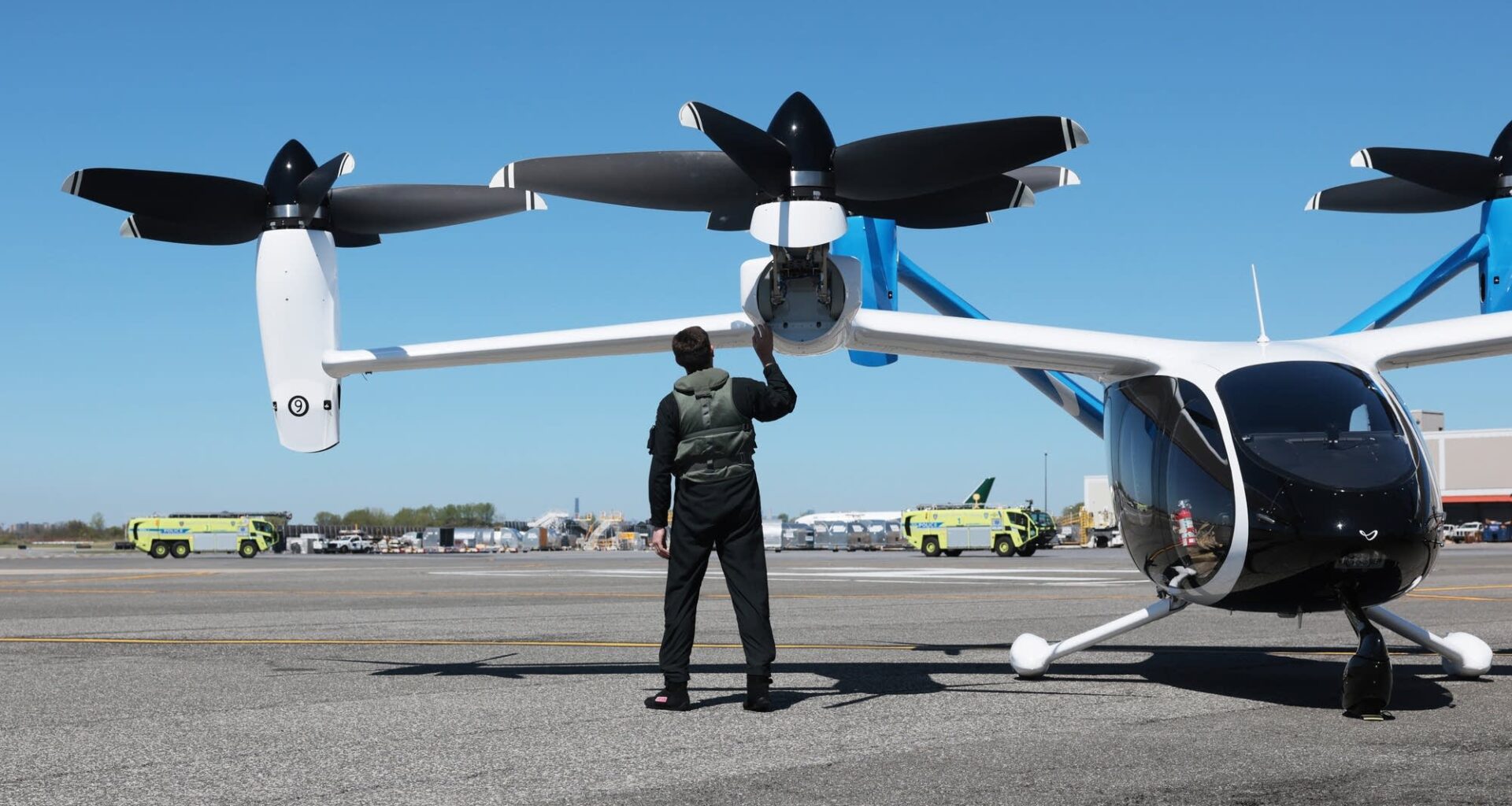
If a small plane and a helicopter had a baby, that’s kind of what these air taxis look like.
“It has a wing, but it has six propellers that can tilt, and they can tilt from pointing up to take off vertically to pointing forward to fly like an airplane,” said Eric Allison, chief product officer at Joby Aviation.
That vertical lift lets the vehicles move nimbly around cities. They’re also much quieter than helicopters, he said: “It’s basically inaudible as it flies overhead.”
Allison said the company is working hard to get its aircraft certified by the Federal Aviation Administration. The demonstration flights this week act as kind of a preview of what hailing a ride on one of these aircraft could look like.
“So you get a car to wherever the nearest takeoff and landing spot is, or if you’re right across the street, you can walk. You get pooled into the Joby aircraft with other people,” he said. “And then, and then you can fly up to 200 miles-an-hour to your final destination.”
One key question is how much this ride to the airport — or wherever — will ultimately cost. Allison said the goal is to be on par with a premium car service.
The air taxi business does face some real hurdles, according to Samuel Engel with the consulting firm ICF.
There are only so many places you can land an aircraft in a city, even a small nimble one. And those aircraft are small — Joby’s taxis fit four passengers plus a pilot.
“You can assume that the demand is going to have peaks at particularly popular times, and these small vehicles will have a hard time providing enough seats for all of the people who want to take them at those popular times,” Engel said.
One way to make space, said Bloomberg Intelligence analyst George Ferguson, is to try to make these vehicles autonomous. That means they don’t have to save room for a pilot.
“If you have a four-seater or a five-seater, you don’t want to occupy 25 or 20% of the space with a non-paying passenger.”
But Ferguson said it’ll be a minute before we have autonomous aircraft that’s able and allowed to navigate above crowded cities.
Related Topics