
President Trump has told advisers he is not satisfied with Iran’s latest proposal to reopen the Strait of Hormuz and end the war, according to multiple people briefed on discussions in the White House Situation Room on Monday.
The proposal also called on the United States to end its naval blockade but would have set aside questions about what to do with Iran’s nuclear program, according to U.S. and Iranian officials familiar with details of the negotiations.
Iran has repeatedly rejected American proposals to suspend its nuclear program and hand over its stockpile of highly enriched uranium.
It is not clear precisely why Mr. Trump is not satisfied with the proposal, but he has repeatedly insisted that Iran cannot have nuclear weapons. A U.S. official also said that accepting it could appear to deny Mr. Trump a victory.
The White House declined to comment on Mr. Trump’s thinking, but officials noted that discussions would continue over the war and Tehran’s enrichment efforts.
“The United States will not negotiate through the press — we have been clear about our red lines and the president will only make a deal that’s good for the American people and the world,” Olivia Wales, a White House spokeswoman, said in a statement.
Iran’s proposal to open the strait has been subject to a vigorous debate inside the administration over whether the United States or Iran has more leverage, and which country is better positioned to endure the economic hardship the closure of the waterway has created.
Mr. Trump reviewed the proposal with advisers on Monday after Iran’s foreign minister, Abbas Araghchi, delivered it to Pakistan on Sunday. Mr. Trump rejected another proposal from Iran last week and called off a round of peace talks in Islamabad over the weekend.
U.S. officials say Iran’s leadership has not authorized its negotiators to make concessions on the nuclear deal, frustrating any attempts to forge a compromise or peace agreement.
Mr. Trump has expressed his frustration with Iran and its inability to negotiate with his administration.
“Iran is having a very hard time figuring out who their leader is! They just don’t know!” Mr. Trump wrote on Truth Social on Thursday. “The infighting is between the ‘Hardliners,’ who have been losing BADLY on the battlefield, and the ‘Moderates,’ who are not very moderate at all (but gaining respect!), is CRAZY!”
Delaying nuclear talks could have been a way to reach a quick agreement to ease pressure on global energy and financial markets. But any decision to halt nuclear talks, even temporarily, would be a sign that the war had failed to achieve one major goal: increasing pressure on Tehran to make a deal over its enrichment program.
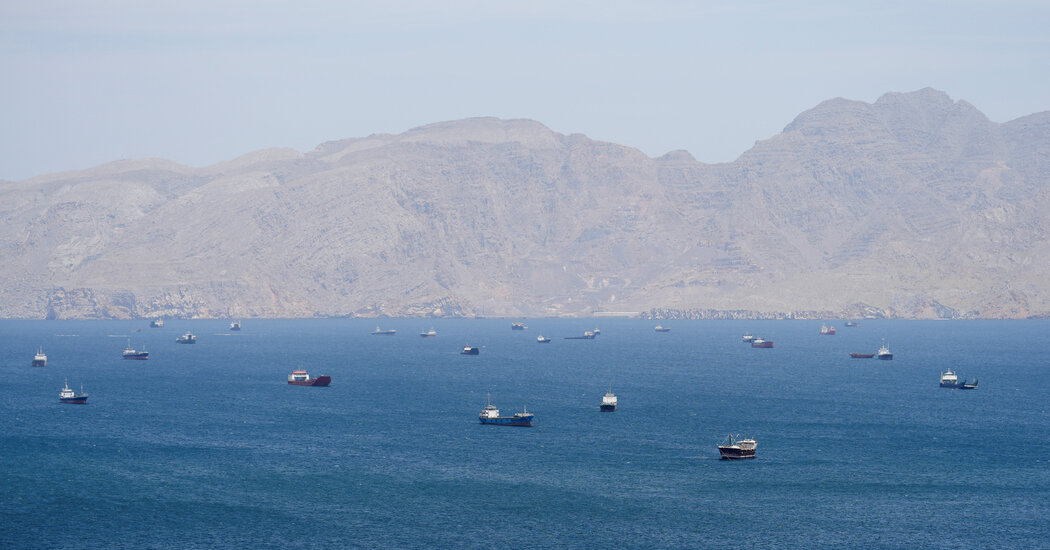
Talks focused on reopening the strait would be fraught as well. The U.S. blockade has sought to cut off Iran’s ability to export its oil. But Iranian threats to attack ships that fail to pay a toll have drastically reduced other oil traffic.
Iranian officials have insisted that any deal to open the strait should allow them to continue to impose a tax or fee on ships that transit it. Historically, the United States has opposed any such restrictions on freedom of navigation in international waterways or straits, but the Trump administration has sent mixed messages.
At the heart of the debate over whether to accept the Iranian proposal were discussions in the Trump administration about the issue of economic leverage and what further American military operations would be needed to get Tehran to make significant concessions in negotiations, according to U.S. officials.
Some administration officials believe that continuing the blockade for two more months would cause significant long-term damage to Tehran’s energy industry. Oil wells cannot be turned on and off, and they would be damaged if they are forced to shut down, incurring costly repairs. Iran, these officials argue, will make a deal to avoid such long-term problems.
But others in the administration have said the assessment is flawed, noting that Iran’s positions have hardened, and that the Islamic Revolutionary Guards Corps has only solidified its hold on power.
The U.S. government has assessed that Iranian negotiators have not been authorized — either by the supreme leader or by senior Revolutionary Guards officials — to make concessions on the nuclear program. Without a resumption of military action, there is little reason to think the Iranian position will shift.
Even if bombing resumed, there is little evidence that would alter Iran’s decision-making process. To increase pressure, Mr. Trump would need to authorize the attacks on civilian infrastructure.
Some administration officials have been skeptical that Iran is ready to make concessions and say making a deal to open the strait is the best way forward.
Farnaz Fassihi contributed reporting from New York.