
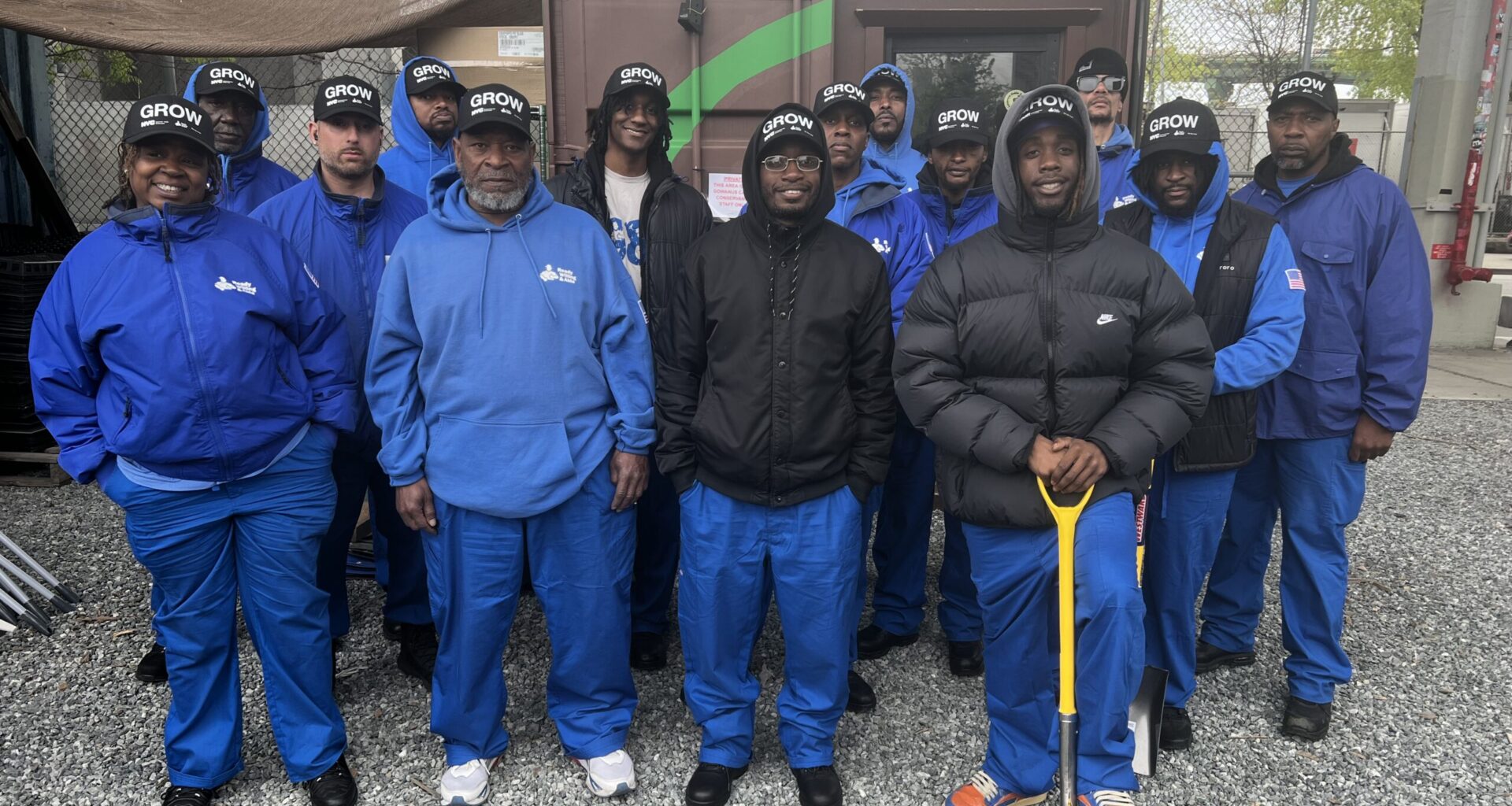

GOWANUS — The New York City Department of Environmental Protection (DEP) and The Doe Fund joined forces to reveal a $4.5 million, three-year pilot program to train New Yorkers for green jobs. The event took place at Lowlands Nursery, Gowanus Canal Conservancy, 25 Ninth St.
In celebration of Earth Day, April 22, DEP Commissioner Lisa Garcia and Doe Fund President and CEO Jennifer Mitchell spoke about the program, which will maintain more than 1,000 rain gardens in Brooklyn and Queens.
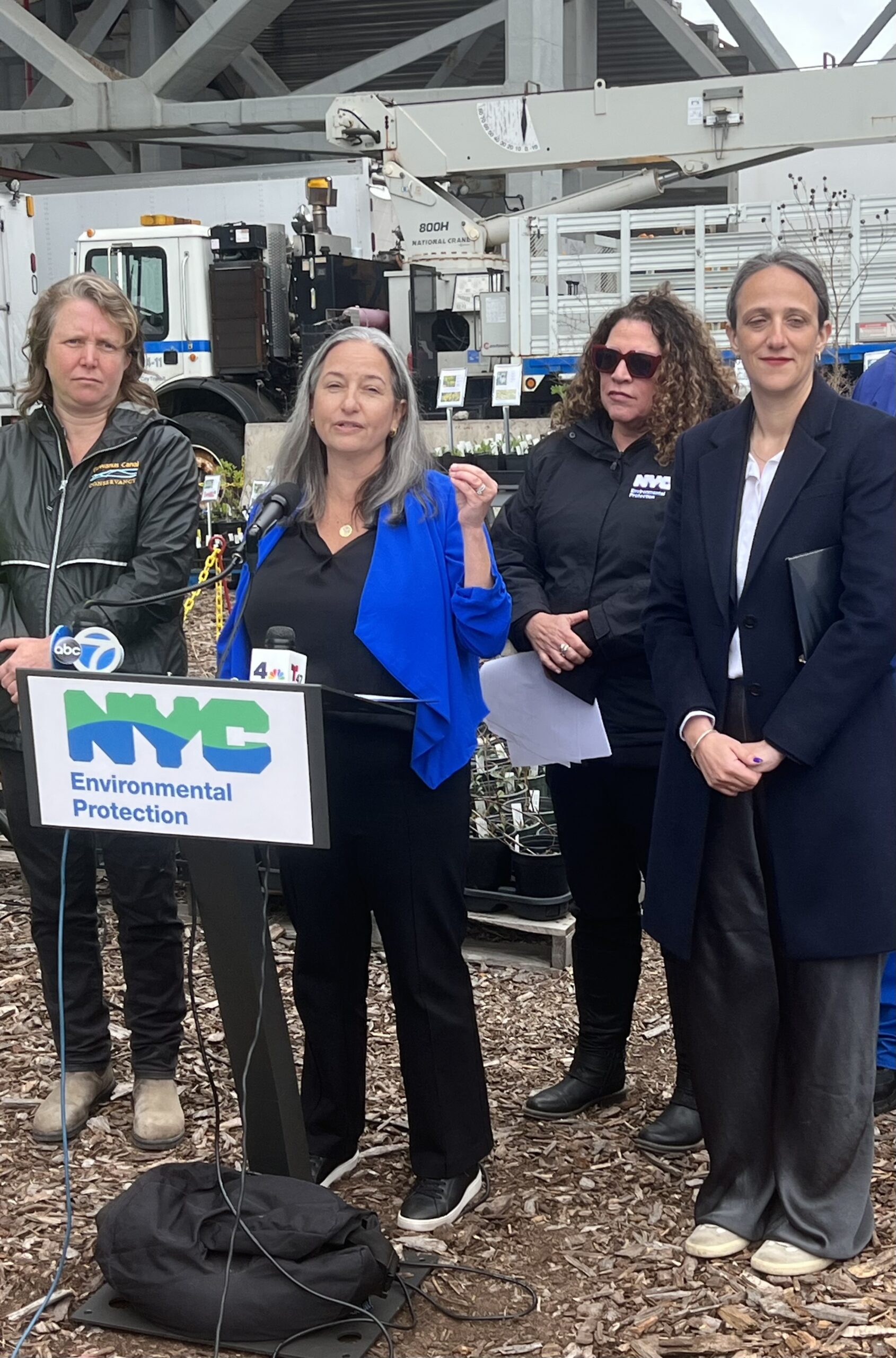 DOE Fund President and CEO Jennifer Mitchell at the podium. Photo: Wayne Daren Schneiderman/Brooklyn Eagle
Approximately half of the gardens are located in East New York. Garcia told the Brooklyn Eagle that the locations chosen were based on need, prioritizing areas more vulnerable to flooding.
Known as Green Readiness Opportunities for the Workforce or GROW, the initiative combines classroom instruction, hands-on training and career development to prepare crew members for green careers in managing stormwater infrastructure. The Doe Fund will manage the program with support from Gowanus Canal Conservancy and Public Works Partners.
Rain gardens are shallow, landscaped depressions in the ground designed to capture and absorb rainwater runoff from roofs, driveways, sidewalks or lawns. Instead of letting stormwater rush into storm drains, a rain garden slows it down, naturally absorbing water into the soil.
A powerful new initiative
“This program will strengthen DEP’s nation-leading green infrastructure work by supporting the care and maintenance of rain gardens,” Garcia said, adding that she was thrilled to celebrate a powerful new initiative growing green jobs.
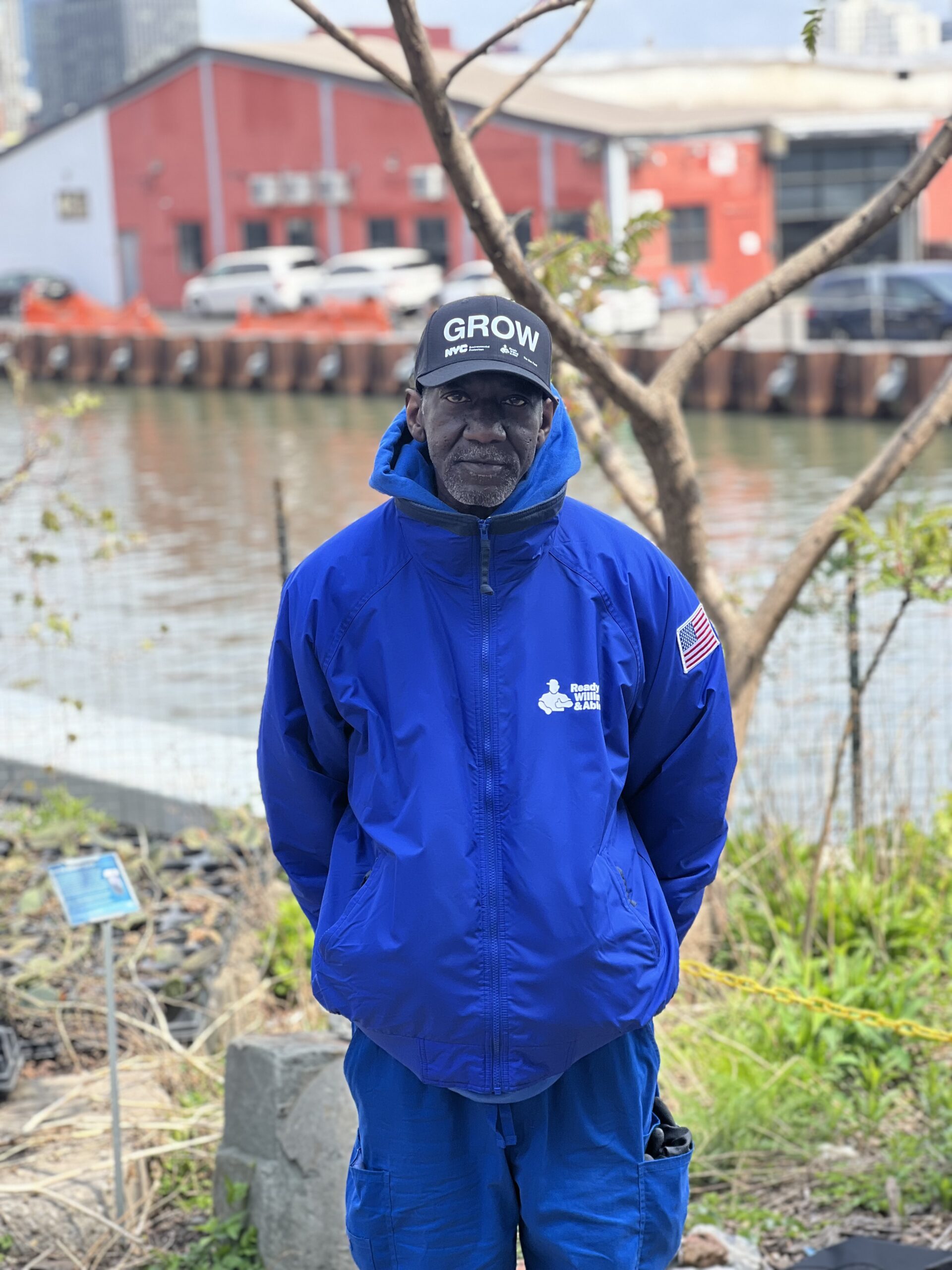 Willie Brimley, a member of the GROW crew, said he applied for the job because he cares about the environment and wants to make the world a better place. Photo: Wayne Daren Schneiderman/Brooklyn Eagle
“Our rain gardens may look like your typical New York City tree bed, but they are engineered especially to absorb up to 2,500 gallons of rainwater.”
Garcia said as communities face more intense and frequent storms, rain gardens are becoming more critical.
“These rain gardens act like sponges, soaking up the rainwater that would otherwise flood our streets. East New York and South Ozone Park have more than 1,000 rain gardens, an incredible network of nature-based infrastructure working quietly every day to reduce street flooding and to protect Jamaica Bay by filtering out pollutants swept off the streets by rainwater.”
Julia Kerson, NYC deputy mayor for operations, said that as green infrastructure expands, the demand for trained workers who know how to care for it increases.
“Today’s announcement highlights a new step in that direction,” Kerson said. “While there is a lot that makes this program special, my favorite part is that it reminds us that every New Yorker has a part to play in building a greener, more resilient city.”
Kerson noted that the program will open doors for neighbors who are too often shut out of the opportunities to lead the work of protecting their communities from change.
“Being part of a movement, taking care of the neighborhoods that take care of us, is one of our jobs as New Yorkers,” she said.
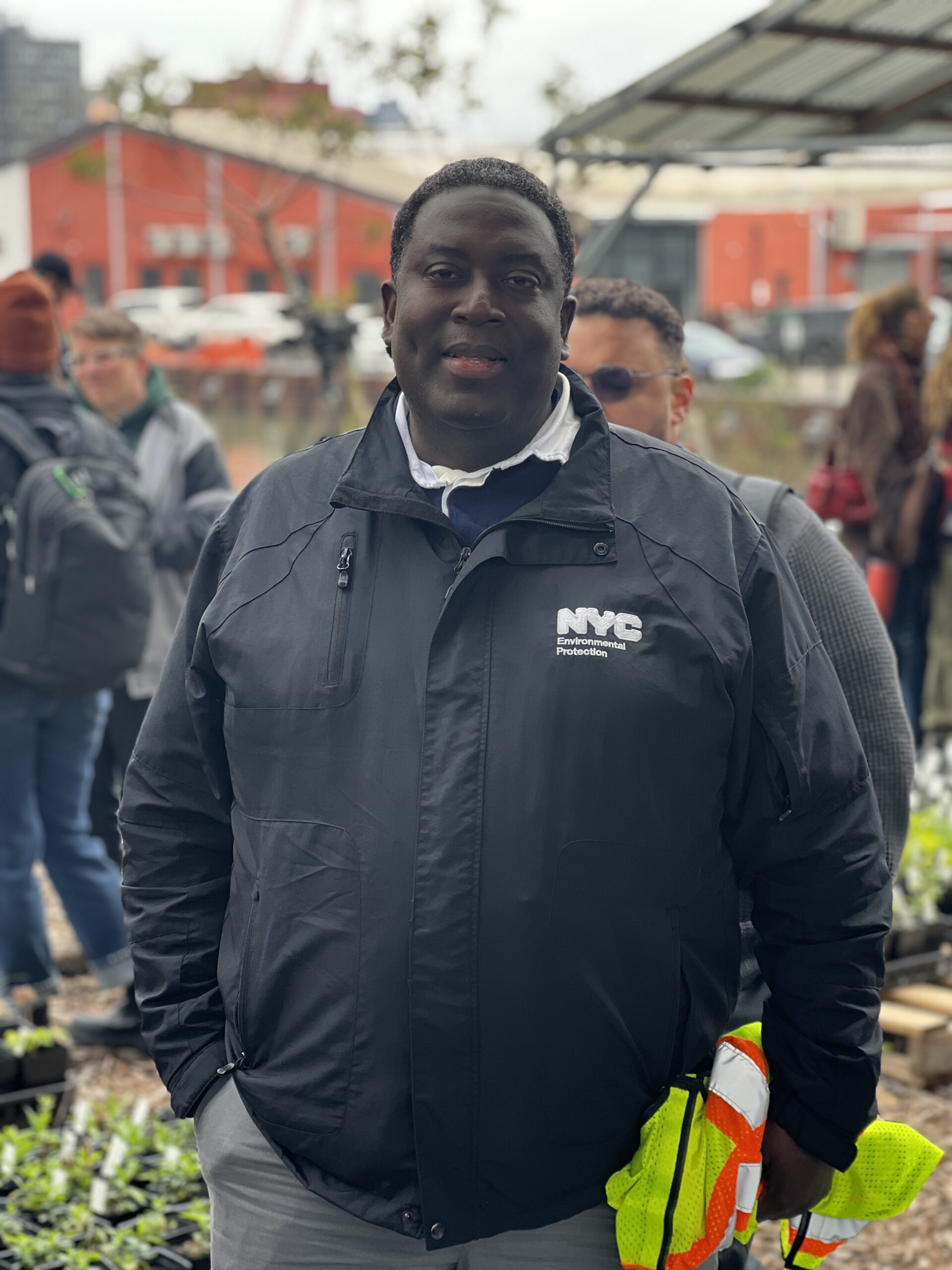 Necolious Shaw, DEP operations coordinator. Photo: Wayne Daren Schneiderman/Brooklyn Eagle
“This is what progress looks like,” Mitchell said. “This partnership is more than about maintaining rain gardens. It’s about creating pathways to green jobs and to the green economy, one of the fastest growing sectors in our city and in our country.”
Mitchell, who majored in Environmental Policy and Sustainable Development, said that the work she does and the new partnership are personal to her.
“On this Earth Day, we should remind ourselves that the future of New York depends on the choices that we make. Today, we’re choosing opportunity, sustainability and investing in people. We’re choosing to build a New York that is not only greener but more equitable, more inclusive and more full of possibility.”
Green jobs: More than just science or government
Green jobs exist across many industries, not just science or government, and often combine technical, construction, policy and business skills. They help protect the environment, reduce pollution or make the economy more sustainable.
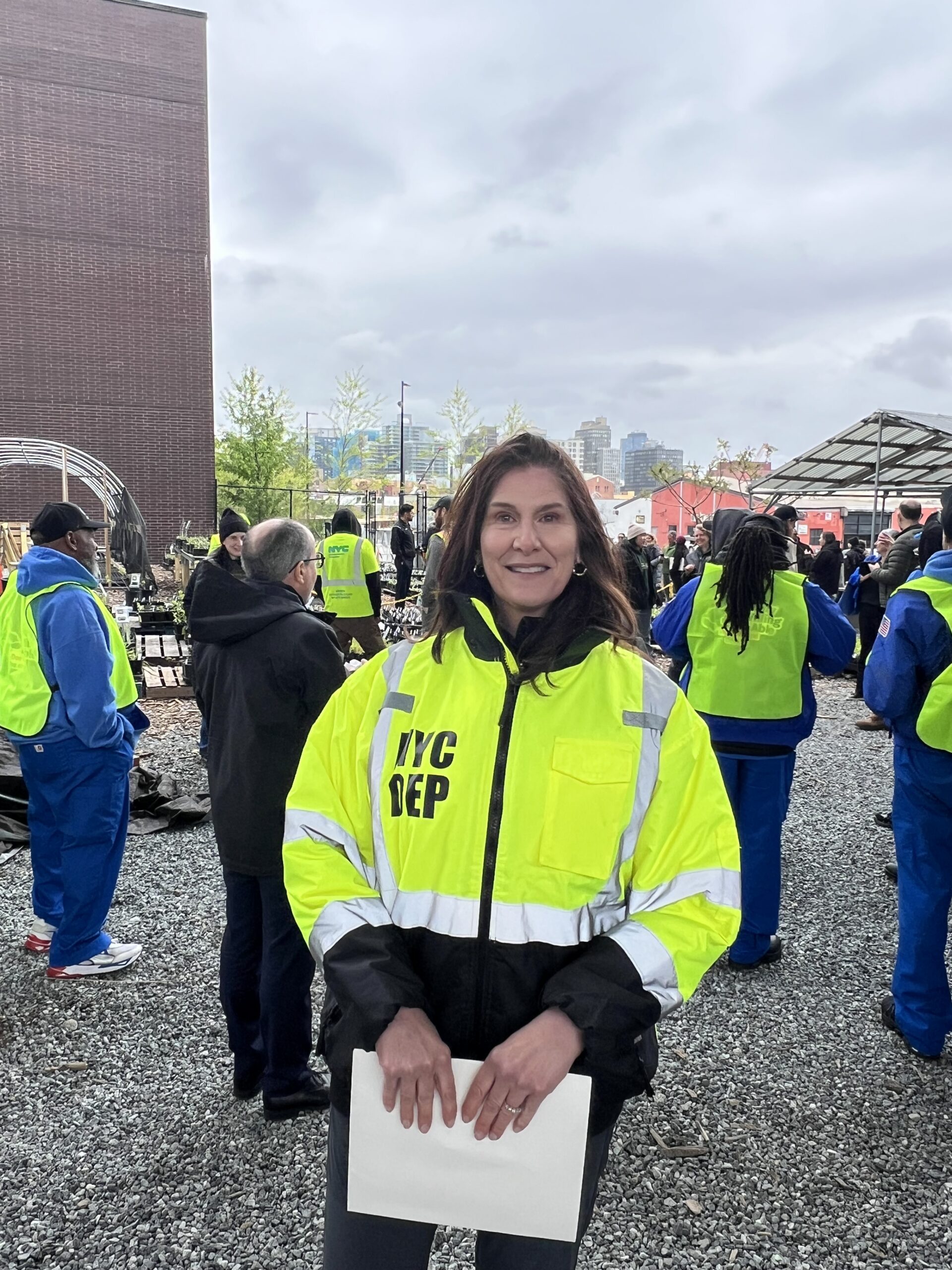 NYC DEP Deputy Commissioner for Sustainability Angela Licata. Photo: Wayne Daren Schneiderman/Brooklyn Eagle
The NYC DEP is predominantly responsible for managing the city’s water supply, sewage treatment systems and reducing air, noise and hazardous materials pollution. Garcia, who was appointed commissioner in February 2026, built a long career in environmental law, policy and governmental leadership.
The Doe Fund is a nonprofit organization that provides paid transitional work, housing, educational opportunities, counseling and career training to people with histories of homelessness, incarceration and substance abuse.
As president and CEO, Mitchell oversees workforce development programs, the expansion of green jobs, and partnerships with city, state and private funders.