
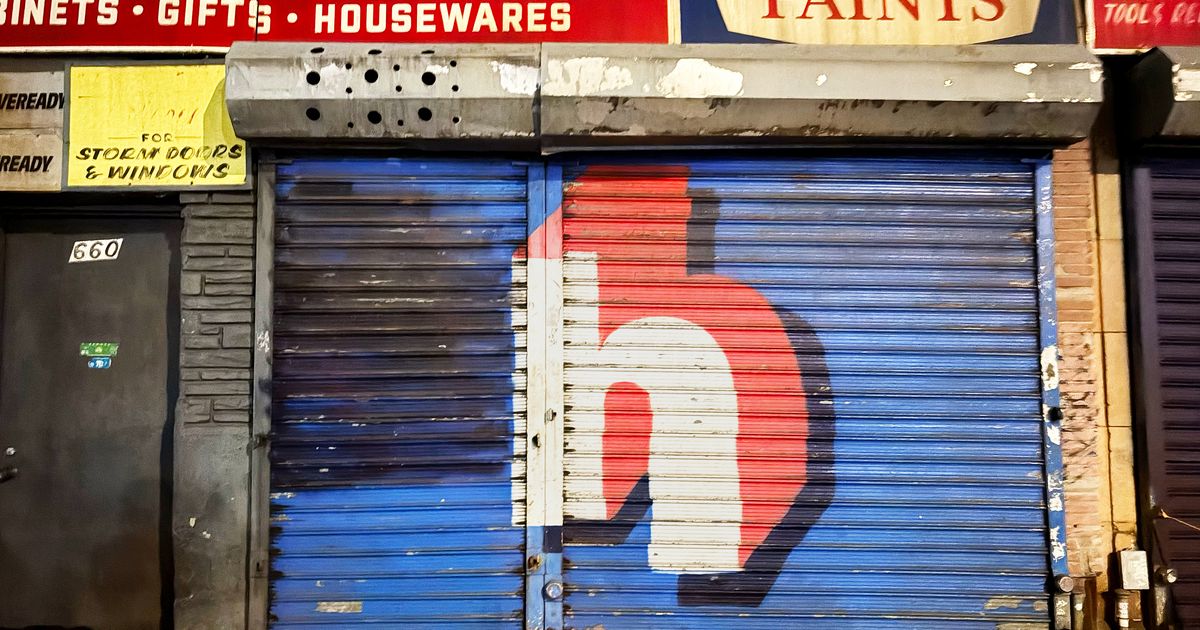
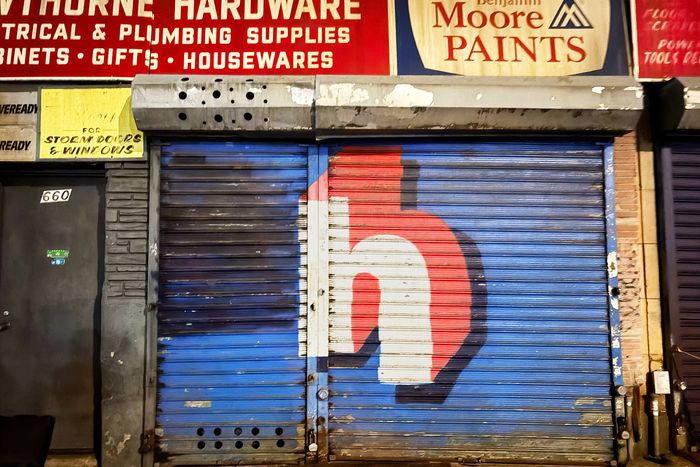
In 2009, Michael Bloomberg was reelected to a third term, Sully Sullenberger landed a plane on the Hudson, and the City Council passed a law banning solid roll-down gates that would go into effect on July 1, 2026. “We wanted to give a reasonable phase-in period to small businesses,” the council’s lawyer said at the time. And now, that date is fast arriving. Councilmembers deemed the metal gates — the ones that cover the front of basically every bodega, bank, and laundromat — unsightly and a magnet for graffiti. Instead, storefronts were being asked to install “grill gates,” which look like oversize chain links, with at least 70 percent visibility. Except, it seems, no one has really done it. We reached out to Vincent Greco, the owner of City Gates, a roll-down-gate manufacturing company, to talk about the 17-year-old law, what he’s hearing from businesses, and whether people are rushing now to replace their gates.
This interview has been edited and condensed for clarity.
I like the motto on your website — “Have a GATE day!”
I’m working on “Have a GATE weekend!” but I’ve gotta trademark “Have a GATE day!”
It seems like a lot of gate owners probably aren’t having “a GATE day” right now. Have you gotten a lot of calls about this law?
It was only a couple of weeks ago where someone posted something online, and then a news channel picked it up. I started receiving notices from Business Improvement Districts that had sent out a couple flyers to the members of their organization. Then people just started calling, and it’s picking up a lot of traction. People really didn’t think about it, but they knew it was coming, since it was introduced back in 2009.
How many orders for new gates have you gotten so far?
Last week I probably got about 15 to 20 orders in and I probably got around 50 to 60 inquiries.
Were your customers even aware of this law, given that it’s 17 years old?
I think they’re just learning about it now. We do a lot of work for national retail stores, and I don’t think that this was on their bingo card because they’re kind of struggling right now. I’ve been reaching out to my larger customers with multiple stores just to let them know, “If you really are serious about changing, we’d like you to get onboard now because we’re definitely going to see an overwhelming influx of people who are going to have to change once July 1 comes.”
Are you going to be backed up when that happens?
We actually started ordering a bunch of material in preparation. The grill gates are all made by hand. I can hire more people, but it still takes time cutting the material and assembling it. It’s like knitting — one ten-foot-by-ten-foot storefront gate probably takes someone an hour and a half to make. What I’m hoping for is that if the city does a summons, they give the owner a 30-day stay and the owner can place an order and then they can give them time. These gates are not readily available, they have to be made and this is affecting every retailer. It’s an incredible task, so I can’t believe they actually passed it, it’s going to be so expensive to every retailer. All the bodegas are solid, so I don’t know where they’re going to get the money to do this.
How much does a grill gate cost?
Back when the law passed a grill gate was a bit more expensive than a solid gate but over the course of time material has gone up substantially for solid gates, so now they’re right on par. An average ten-foot-by-ten-foot storefront gate is anywhere from $2,000 to $3,000. If you have a functioning solid gate that works, we have the ability to take out the panels and put in a grill so they don’t have to replace the whole unit. That would be around $1,500 to $2,000.
How many gate manufacturers are there in the city to make these?
Although there seem to be a lot of gate companies, only a handful of us actually manufacture.
Do you remember the law passing? What was the reaction back then?
Yeah, I’ve been doing this for 45 years. When it first came out, because it was going to be so many years prior to the law going into effect, only a handful of people used the law to make a decision. It was like, “We don’t know what’s going to happen next year, never mind in 15 to 16 years.” Most people want to be protected and lock down their door at night. There’s a real fear among retail-store owners that they’re going to be totally exposed. When you have a grill gate, it’s nice to display the product at night and leave the light on, but in certain neighborhoods I don’t think you want that exposure. They’re more vulnerable and easier to cut.
The Department of Buildings said it would give people a summons only if they get a 311 call about a gate. Do you think most people just won’t change it until they get a summons?
I don’t think they’re going to change it until they get three or four summons.
Is this big news in the gate world?
My men are excited, they’re like, “Oh, we can work overtime.”
Right, this will be good for your business obviously.
Hopefully it will be. I’m not going to lie, of course I’d like to increase my sales. I know it’s going to increase, I just can’t say if it’s going to go up 100 percent or 1,000 percent. I just don’t want to get put in a situation where all of the sudden I get ten bad Yelp reviews because I’m not moving fast enough or I’m backed up and not responding.
That would be so unfair.
We already have our regular workload that we’re busy with. But come July 1, the phone’s going to be going crazy. Once someone gets a summons, it’s going to run like wildfire.
Sign Up for the Curbed Newsletter
A daily mix of stories about cities, city life, and our always evolving neighborhoods and skylines.
Vox Media, LLC Terms and Privacy Notice
Related