
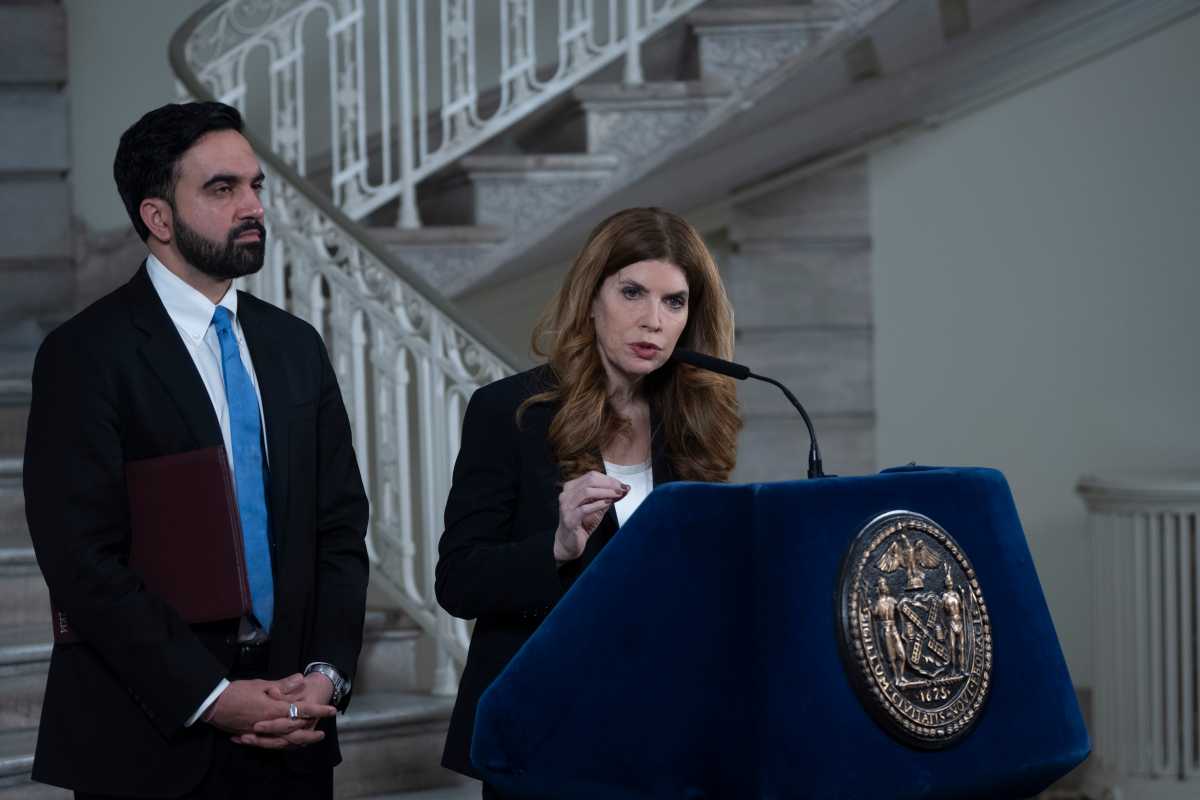
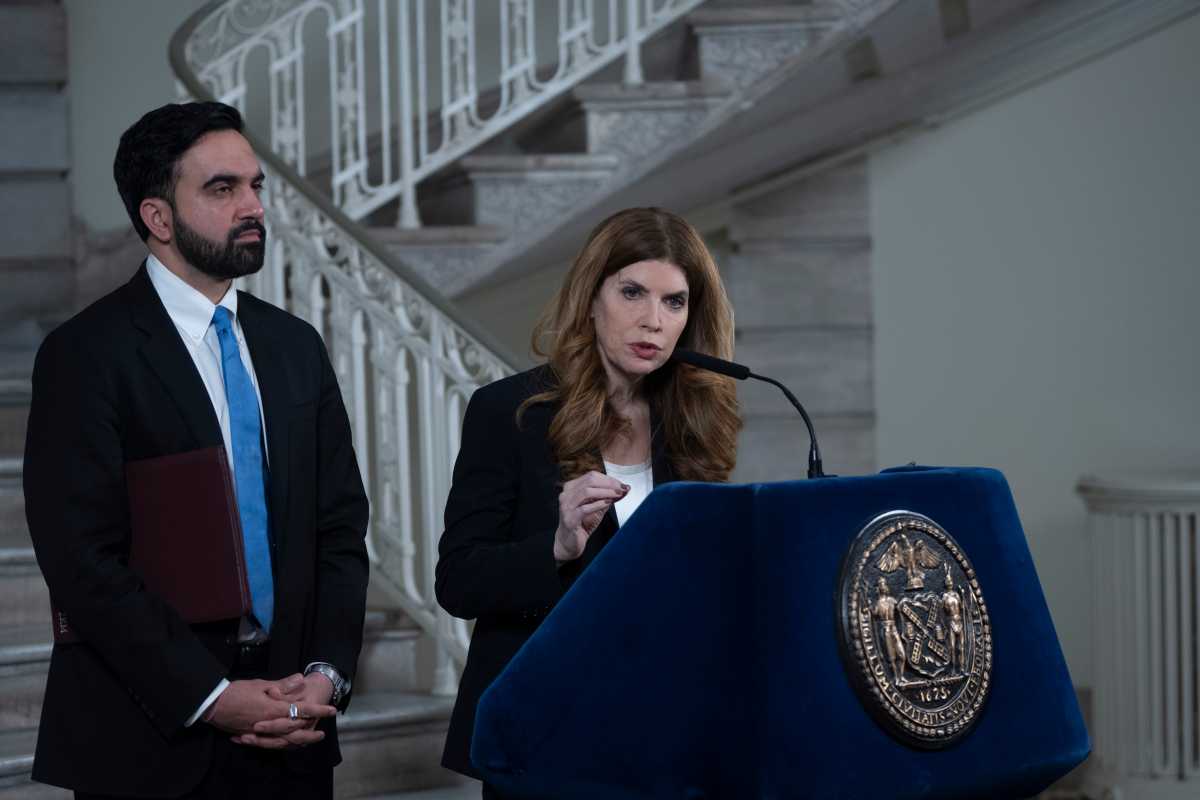
On Tuesday, Mayor Zohran Mamdani and City Council Speaker Julie Menin appeared together in the City Hall rotunda, and the dynamic between them appeared to be more unified on solving the city’s budget crisis than before.
Photo by Lloyd Mitchell
We know that New York City is the economic engine of New York State, and whenever it is sputtering, the entire state, if not all of the United States, soon finds itself broken down.
This is why it is unacceptable to have a $5.6 billion hole in the city’s budget, and why Mayor Zohran Mamdani and City Council Speaker Julie Menin are frantically trying to close it. This is also why their ability to find a proper way to close that gap before the mandated June 30 deadline is also crucial.
On Tuesday, Mamdani and Menin appeared together in the City Hall rotunda, and the dynamic between them appeared to be more unified on solving the city’s budget crisis than before. They both embraced the idea of cutting more fat in the budget to help close the deficit, but they also sought more financial aid from Albany to ensure that the city received its “fair share” of funding.
Getting that “fair share,” Mamdani and Menin said, would be accomplished by convincing Albany to temporarily reduce the passthrough entity tax credit (PTET) to 75%, a change the speaker and mayor said would generate nearly $1 billion in additional revenue.
The PTET credit lets members and shareholders of partnerships or S corporations pay state income tax at the entity level and avoid limits on the federal SALT deduction. But right after Mamdani and Menin made the appeal, Gov. Kathy Hochul threw cold water right on it — bluntly saying at a press conference, “It’s not happening.”
But that was only the lesser part of the joint Mamdani-Menin message from City Hall. The underlying message from them was the imbalance between the tax money sent to Albany and what the city receives in return.
This imbalance is no secret and is generally accepted as a way of life in New York, but it is a costly one for all of us who live here.
A CUNY Institute for State & Local Governance study published in December found that city taxpayers contributed 58.7% of the state’s $70.7 billion in income tax revenue last year, but received just 40.5% ($47.6 billion) of the state’s operating expenditures.
Meanwhile, the state budget is nearly a month overdue; Hochul, the Assembly and the state Senate still can’t figure out how much the state will spend this year, or how much of it will go to the city and the other municipalities. The state could afford to blow past its April 1 budget deadline; the city cannot do that under the state constitution come June 30, lest they risk a state takeover.
New York City cannot tax-and-spend its way out of this one, as we have said before in this space. Mamdani and Menin seem prepared to make cuts without jeopardizing vital services, but they know that’s not enough. Hochul and other Albany leaders know that, too.
If Hochul wants to end the annoying tax talk from Mamdani, then she needs to meet the city halfway and adjust the funding imbalance enough to help a financially responsible New York City close the budget.