Posted by Wei Min Tan on April 29, 2026

Top Condominium Buildings in Manhattan
A capital allocation perspective on where liquidity, durability, and relevance converge
Manhattan’s condominium market is often framed around price per square foot or headline sales. That lens misses the point.
When guiding our clients, who are always sophisticated buyers, the question is not simply “what is the best building,” but rather:
Where does capital consistently transact?
Which assets maintain liquidity across up and down cycles?
Which properties remain relevant 10–20 years from now?
Below is a structured view of Manhattan’s top condominium segments—based on asset behavior, not labels.

Read about Wei Min’s style in Best Manhattan property agents and Role of a buyer’s broker.
1. Trophy / Global Store-of-Value Assets
Scarcity-driven, globally recognized trophy product
Examples:
These assets function less as housing inventory and more as global store-of-value real estate.
Common characteristics:
Limited supply at the very top of the market
Distinct architectural or locational positioning (eg direct Central Park view from 68th floor)
Consistent visibility across global capital markets
Observed market behavior:
Transaction volume is episodic, but pricing can reset at the top end
Not dependent on rental yield
Often held with a long-duration mindset
Wei Min’s article, Why Billionaires Buy Luxury Manhattan Real Estate
2. Downtown Luxury (Tribeca / West Village Corridor)
End-user demand aligned with investment performance
Examples:
This segment has seen increasing transaction depth over the past decade.
Common characteristics:
Strong rental demand supporting ownership optionality
Layouts and finishes aligned with current buyer preferences
Proximity to employment centers and waterfront access
Observed market behavior:
More consistent resale activity relative to some Midtown segments
Rental demand provides a degree of downside support
Performance varies meaningfully by unit line, view, and floor level
New launches can happen when a developer buys up a parking lot, accumulates air rights over many years from neighboring landlords and then plans a new project. It’s a process that takes years or even decades before the marketing activities even starts. Below: Client’s condo at 111 Murray Street, reserved at pre-construction, waited for completion and rented out immediately after.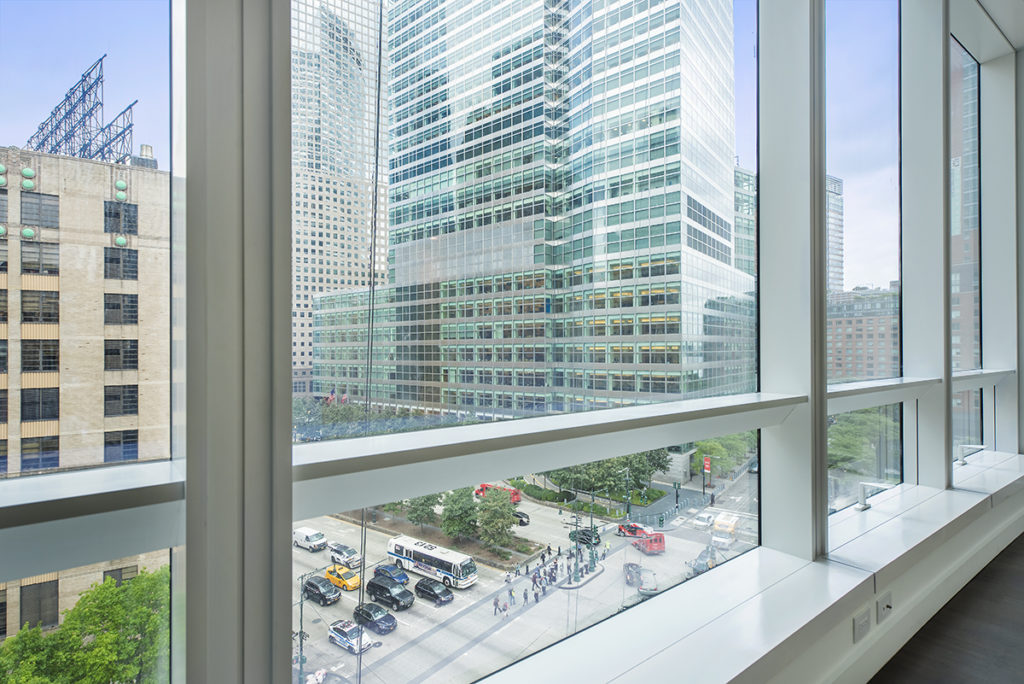
3. West Side / New Development Product
Institutional-scale developments with modern specifications
Examples:
These developments reflect a shift toward amenity-driven, turnkey product.
Common characteristics:
Full-service amenity packages (wellness, concierge, shared spaces)
Larger-scale developments with multiple unit types
Designed for immediate occupancy with minimal additional work
Observed market behavior:
Strong absorption when pricing aligns with market expectations
Broader buyer pool due to standardized product
Greater internal competition across comparable developments
4. Boutique / Architectural Condominiums
Design-driven assets with limited supply
Examples:
These buildings are defined by architectural authorship and scale.
Common characteristics:
Smaller unit counts
Distinct design identity
Limited direct comparables
Observed market behavior:
Lower transaction frequency
Pricing can be less linear due to scarcity
Outcomes often depend on alignment between asset and buyer preference
Wei Min’s article, Manhattan Real Estate for International Investment Buyers
5. Upper West / Upper East Side New Condos
Traditional locations with updated product
Examples:
This segment reflects the integration of new condominium product into established neighborhoods.
Common characteristics:
Consistent baseline demand
Familiar location profiles within Manhattan
Increasing acceptance of new construction formats
Observed market behavior:
Stable transaction activity
Pricing tends to be less volatile than more niche segments
Driven primarily by local market demand rather than cross-border flows
Key Takeaways (Capital Allocation Lens)
1. Manhattan is a set of sub-markets, not a single market
Each segment behaves differently in terms of liquidity, pricing, and demand drivers.
2. Scarcity and positioning drive long-term relevance
Assets that are difficult to replicate tend to retain attention across cycles.
3. Downtown has gained transaction share
Recent years have seen deeper activity in Downtown segments relative to historical Midtown concentration.
4. New development dominates transaction volume
Turnkey product with modern specifications continues to attract consistent demand.
5. Entry price remains the primary driver of performance
Even within top buildings, outcomes vary significantly based on basis.
Deal Example: Investor client’s condo at Devonshire House, one of Manhattan’s distinguished prewar condos designed by Emery Roth. Rented out in 2 days after receiving multiple applications. This was our prewar condo investment strategy and it worked out tremendously well.

Bottom Line
The “top condos in Manhattan” are not defined solely by price or height.
They are the assets where:
Capital consistently returns
Liquidity persists across market cycles
The asset remains relevant over time
That is ultimately what sophisticated buyers are underwriting.
What We Do
We focus on global investors buying Manhattan condos for portfolio diversification and long term return-on-investment.
1) Identify the right buy based on objectives
2) Manage the buy process
3) Rent out the property
4) Manage tenants
5) Market the property at the eventual sale