
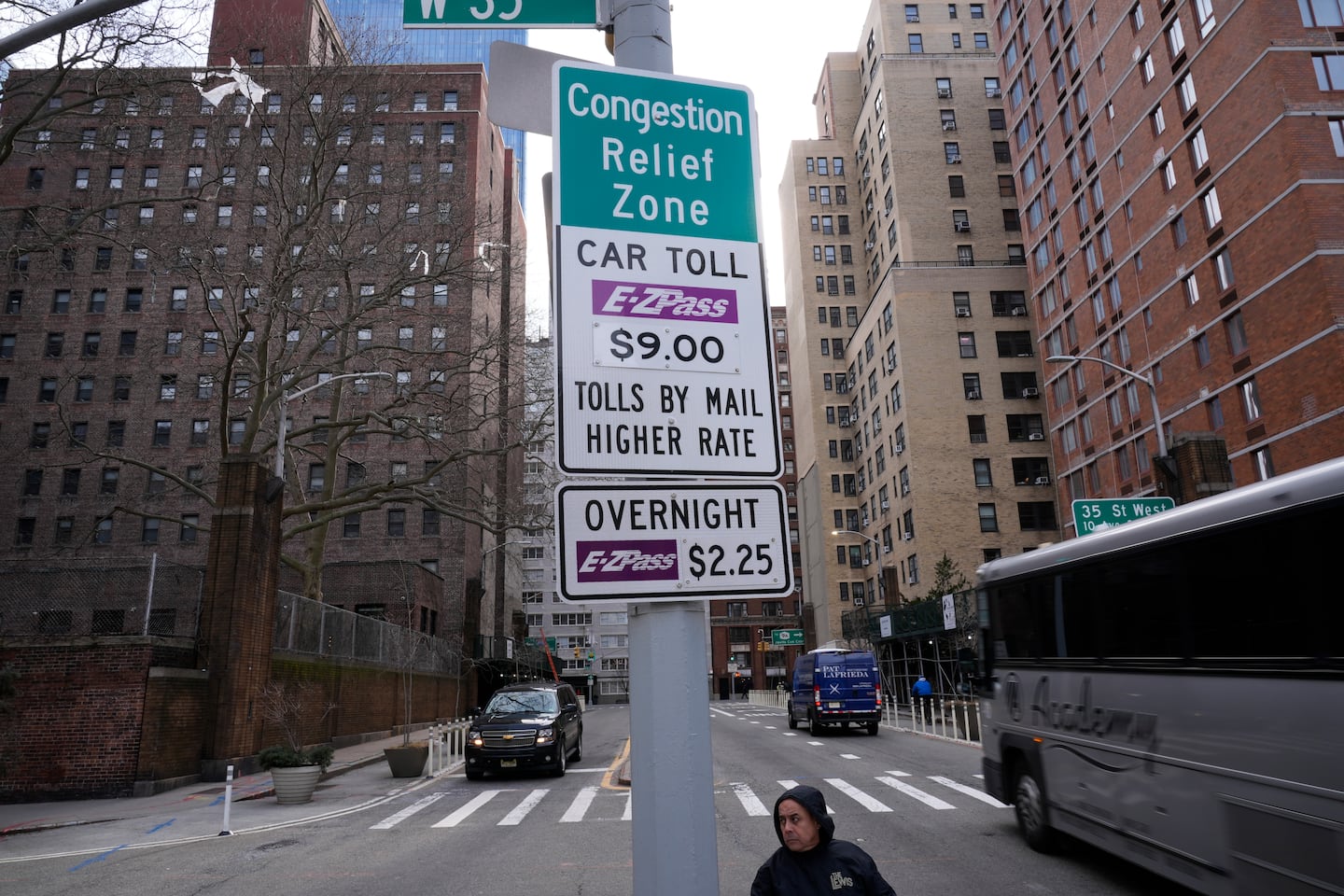
Congestion pricing works, and Boston shouldn’t be afraid to explore bringing it to the Hub. Mayor Michelle Wu’s administration floated the idea in a recent report, and while many details would have to be ironed out, business and civic leaders should resist the temptation to dismiss a solution to the city’s traffic woes out of hand.
Instead, they should ask the city to develop a specific, concrete proposal, showing where and when congestion pricing could be enacted, how much drivers would be charged, and how specifically the city would spend the revenues.
The logic behind congestion pricing is simple: By charging people a toll to drive into designated areas, cities can slash traffic and pollution and create a revenue source for transit alternatives. The experience of New York City, which implemented congestion pricing last year, shows that it can help almost everyone.
In New York’s system, cars driving south of 60th Street in Manhattan pay a toll of $9 between 5 a.m. and 9 p.m. on weekdays (enforcement is by camera; there are no physical barriers to the zone). The toll dissuades some trips, which means that drivers who do pay the toll get smoother commutes because there’s less traffic.
Get The Gavel
A weekly SCOTUS explainer newsletter by columnist Kimberly Atkins Stohr.
For those who take public transportation, meanwhile, buses are moving faster because the streets aren’t gridlocked. Though retailers in the zone feared they’d see less foot traffic, business is actually up — perhaps because walking in lower Manhattan no longer feels so dangerous. The toll revenues are paying for upgraded train and bus service into the city.
“Congestion pricing has been a once-in-a-lifetime success story,” said New York’s governor, Kathy Hochul, who took the risk of implementing the plan despite its initial unpopularity.
The downside is self-evident, though: Nobody likes paying for something they perceive to be free.
Now, driving into Boston is actually not quite free: During business hours you typically pay with your time because of the traffic, and you generally pay for parking, too. By one reckoning, the average Boston resident paid $2,270 in wasted time and fuel because of traffic per year. Garage parking can easily cost more than $40 a day.
In New York, drivers got some of their time back, and there’s some evidence that parking garage operators in the congestion-pricing zone have had to cut their prices, reducing the net financial impact of congestion pricing on drivers.
Most other cities that have adopted congestion pricing policies, like London and Singapore, also regard them as successful.
Wu broached the idea of following their lead in a climate action report released this week, in which the city said it would “evaluate and explore” financial mechanisms that could reduce traffic.
In the past, some business groups and politicians have pushed back at the mere mention of congestion pricing, arguing that it could hurt businesses and low-income workers. At least one city councilor, Ed Flynn, threw cold water on the idea this week, citing the struggling economy and saying, “now is not the time for an expensive expansion of city regulations.”
But New York’s success should change the conversation, and put to rest some of the scary hypotheticals.
Yes, Boston is smaller than New York and yes, the T is not nearly as extensive as New York’s subway system. But those are reasons to tailor congestion pricing to Boston, not reasons to rule it out completely.
For instance, Boston could impose congestion pricing in a smaller geographic area, such as the downtown area, which has the strongest transit connections. New York charges fees on weekends, too (albeit for fewer hours), which may not be necessary in Boston.
The city would also have to show that the proceeds were genuinely being invested in improving transit connections for the commuters covered by the charge. In the report, the Wu administration said it would study ways to use the money for “equitable transportation decarbonization programs and strategies that improve and expand low-or-no carbon travel options.” The best way to assure political support for congestion pricing is to laser-focus the money on improving transit that serves the zone.
The only way to have the discussion about those details, though, is to move beyond the knee-jerk opposition to the very idea.
Before it began congestion pricing last year, New York heard all sorts of hyperbolic arguments that the system would doom the city. President Trump famously said it would make Manhattan a “ghost town.”
The fact that after all that scaremongering Manhattan survived just fine doesn’t mean concerns about congestion pricing in Boston shouldn’t be taken seriously. But now that a major US city has made the plunge, the discussion in Boston should be about whether we can make congestion pricing work for us — not whether it works at all.
Editorials represent the views of the Boston Globe Editorial Board. Follow us @GlobeOpinion.