
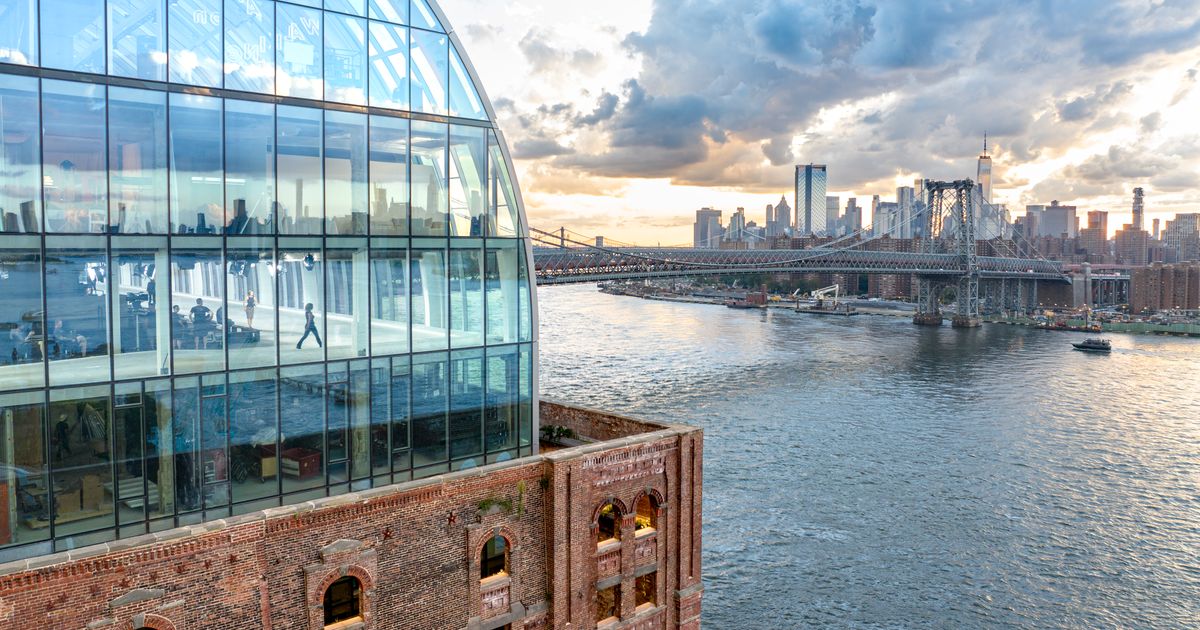
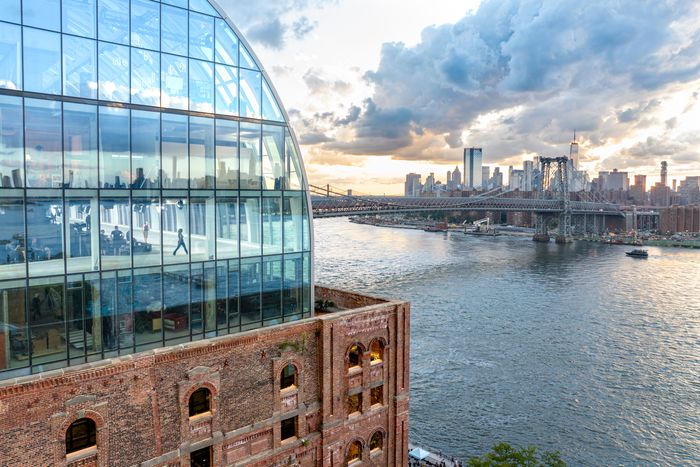
If any Brooklyn office building could figure out how to beat the odds of a sluggish market, it was going to be the Refinery: 450,000 square feet of class A office space and high-end amenities inside the 19th-century brick landmark anchoring the Domino Sugar complex. It doesn’t hurt that the developer is Two Trees, which transformed Dumbo into its own unlikely office destination decades ago and spent the past decade investing billions in the Williamsburg waterfront.
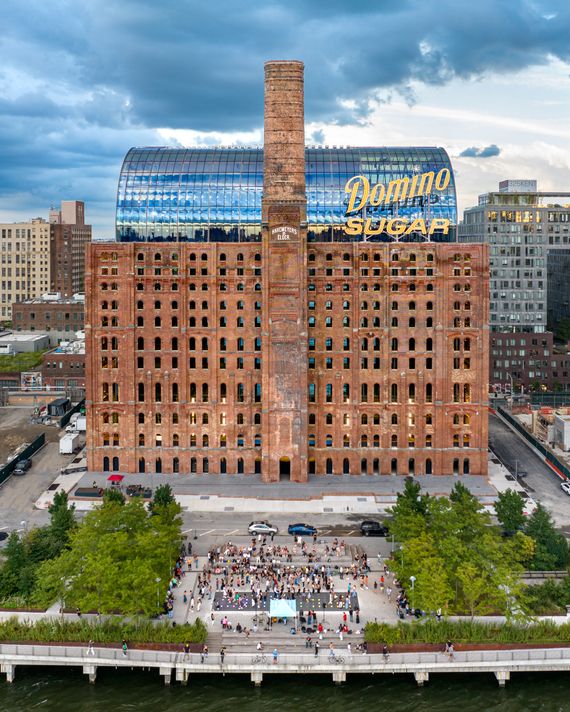
Photo: Max Touhey
But a year after opening, the Refinery was only about a quarter leased and, as of last summer, had gotten the total up to just over half, about 60 percent. Now, nearly four years in, Two Trees has announced that the Refinery is 90 percent leased, with the retail portion of the building fully leased. But it’s not exactly in the way it envisioned. Back then, in the early years of the return to office post-COVID, Two Trees bet on an anchor tenant. “A large creative company — someone whose employees want to be in Williamsburg or are already there — or a large corporate tenant who wants to make a statement,” Jeff Fischer, executive vice-president at CBRE, said at the time.
It didn’t quite work out like that. There are 56 tenants currently in the building, with the “sweet spot” lease coming in around 2,500 square feet, according to Alyssa Zahler, managing director of commercial leasing at Two Trees. It has had to break up the full-floor, 30,000-square-foot plans to make it work. “A bigger, sexier tenant would have done great things for Brooklyn and us, but we’re also happy with a diversity of small tenants,” Two Trees principal Jed Walentas says.
Two Trees isn’t alone. As companies expanded return-to-office requirements and New Yorkers began commuting again, commercial developers were banking on companies relocating to Brooklyn to be closer to their employees. In 2022, over 1.5 million square feet of office space was under construction in the borough. But many executives still live in Manhattan, and the commute to Brooklyn can quickly feel untenable for employees who don’t live there. “Brooklyn is not going to be considered trophy office space if most of your office workers are coming in from Westchester or Greenwich,” says Ruth Colp-Haber, president and CEO of Wharton Property Advisors.
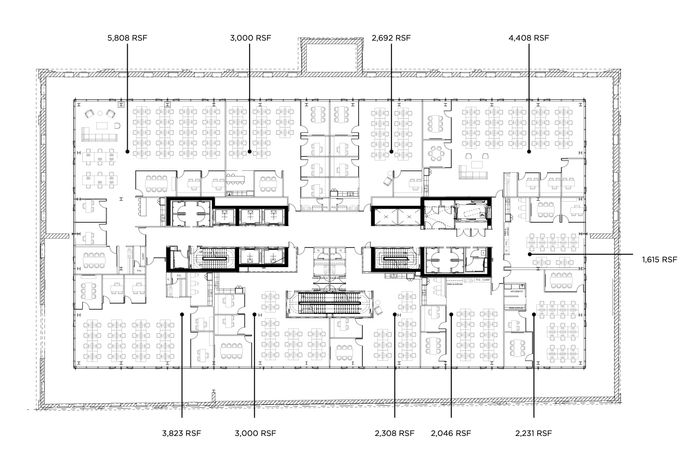
A Refinery floor plan subdivided into many smaller offices.
Photo: The Refinery at Domino
And it’s a different market than the days of the Dumbo office boom. “Dumbo was one of the first places to take off with all those cool old industrial buildings, but it was cheap, like half the price of Manhattan,” Colp-Haber points out. “Brooklyn is a victim of its own success … from a residential standpoint, you can live in Brooklyn and commute to Manhattan, but from a commercial standpoint, it gets more complicated.”
Those complications quickly showed themselves in the market. By 2024, most new leases in New York were linked to traditional office markets like midtown Manhattan, according to The Wall Street Journal, and Brooklyn’s supply began to outpace demand. By the first quarter of this year, commercial-leasing activity in the borough declined more than one-third compared with the prior quarter, according to brokerage firm Colliers, and average asking rents dropped for the fifth quarter in a row, down from approximately $46 per square foot in the fourth quarter of 2025 to about $44.50.
Two Trees is leasing the Refinery at around $70 per square foot, but Colp-Haber believes it isn’t hitting the profits it hoped for from a large anchor tenant. “Landlords love leasing big spaces; it’s the economies of scale,” she says. “But smaller deals are much easier — they happen much more quickly.”
Perhaps unsurprisingly, almost half of the Refinery’s tenants — 25 of the 56 companies leasing space — are linked to AI. (Other tenants include Graza Olive Oil and the hair company Beachwaver Co.) The AI company Flora and the crypto company LayerZero recently doubled their 3,000-square-foot leases up to 6,000 square feet, says Zahler. “A lot of companies have clients in the neighborhood, or it’s driven by a founder base that lives locally and wants to be nearby their work,” she says. Some of it is also helped by savvy marketing. Two Trees hosts a NYC AI Demos series at the Refinery once a month, to get tech and AI companies inside the building. The developer also has the benefit of in-house construction and generic-enough layouts that have made it easier to customize spaces for tenants.
Other landlords and developers made more dramatic pivots. The landlord of another large Williamsburg office, the former Vice Media headquarters on Kent Avenue, is reportedly in the process of converting the site for mixed-use development to construct residential towers there. The sprawling Watchtower HQ in Dumbo, originally slated to become a sleek office complex, is also preparing to go through a land-review process to become over 600 units of housing. Downtown Brooklyn’s 141 Willoughby Street was an under-construction residential tower when the developers flipped their plans in 2019, converting it to an office build and recasting it as the borough’s next big business hub. The 24-story tower sat empty in 2023; two years later, the owners defaulted. BH3 Management and Capstone Equities snatched up the property last year. They plan to keep some commercial space but will convert the upper floors to apartments as well, says Adam Falk, principal and co-portfolio manager of BH3.
Falk hasn’t entirely given up on the concept of filling the office space; he’s also wooing tech tenants. But he isn’t willing to take the commercial risk that Two Trees was: “It is almost always a less risky proposition to build residential than office space.” It seems Brooklyn as an office town will take some time yet. As Falk admits, “I think the emergence of Brooklyn as an office market has taken longer than the city and developers had hoped.”
Sign Up for the Curbed Newsletter
A daily mix of stories about cities, city life, and our always evolving neighborhoods and skylines.
Vox Media, LLC Terms and Privacy Notice