
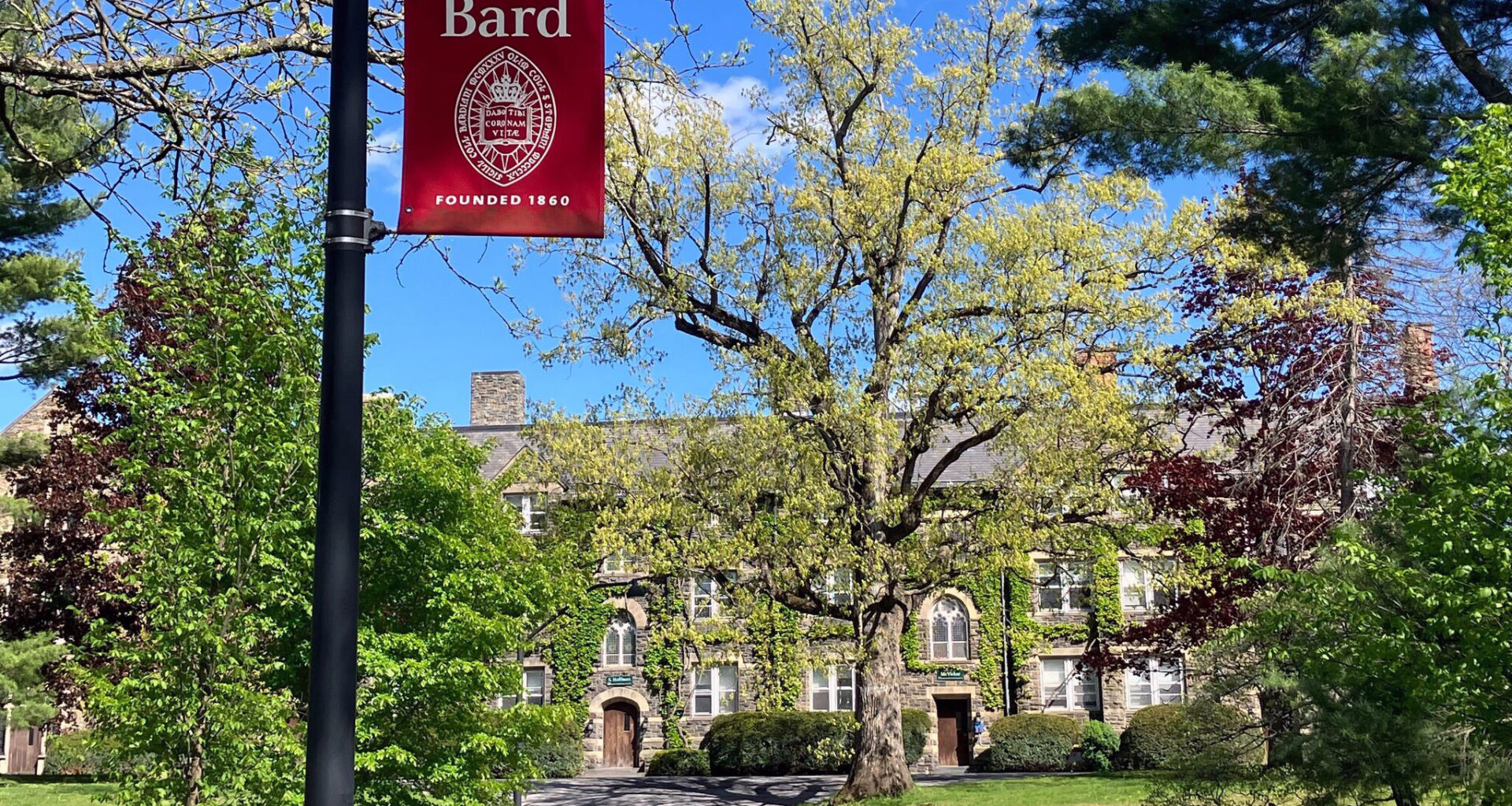
Leon Botstein, the longtime leader of Bard College, above, announced Friday afternoon that he was stepping down as president following an internal legal review of his relationship with Jeffrey Epstein.
Nora Mishanec/Times Union
ANNANDALE-ON-HUDSON — Bard College President Leon Botstein’s announcement on Friday that he would step down at the end of June capped a tumultuous semester at the liberal arts college that included intense scrutiny of his leadership, fundraising practices and ties to Jeffrey Epstein.

Long lauded for his success in soliciting billions of dollars to fuel the school’s growth, Botstein leaves behind a campus divided over his legacy and a reputation for ruthless fundraising that ultimately led him to Epstein’s orbit.
Article continues below this ad
“This is like a tale out of Greek tragedy,” said James Romm, the director of Bard’s Classical Studies program.
In an email to the Bard community on Friday afternoon, the Board of Trustees released the results of an independent legal review of communications between Botstein and Epstein. The three-page summary report, compiled by the law firm WilmerHale, said the college president “did not see a risk to Bard’s reputation in pursuing Epstein or the potential risk to Bard students of exposure to Epstein, nor did he consider that his actions could validate and legitimize Epstein to potential victims or their parents.”
“His view was, ‘I would take money from Satan if it permitted me to do God’s work,’” the report said.
Make the Times Union a Preferred Source on Google to see more of our journalism when you search.
Add Preferred Source
In the wake of Botstein’s announcement, students and faculty said they were still grappling with the news that the college would have its first new president in 51 years. Many had assumed Botstein, who became president in 1975 at age 28, would remain at the helm until the college chose his successor.
Article continues below this ad
At Kline Commons Dining Hall on Sunday, a group of freshmen said they did not expect their first year to be marked by a national scandal. They said they were unsure how Botstein’s association with Epstein would affect the college’s standing among prospective students, but agreed his departure was for the best.
“If you care about the school, you don’t want that stain on it,” said Cole Marshall, 19.
Chiara Cosentino agreed and said Botstein’s announcement had created some uncertainty among students.
“It’s scary,” said Cosentino, 18. “I don’t know what’s going to happen or what direction the school is going to go in.”
Article continues below this ad
The Board of Trustees has provided few answers. None of its 35 members responded to questions about their decision-making process or next steps. As of Monday afternoon, the board had not named an interim leader for the next academic year or outlined a timeline for selecting a permanent president.
Botstein will retire from the presidency but plans to remain on the faculty as a teacher and musician. He also said he will continue to run the Bard Music Festival, SummerScape, the Bard Conservatory and The Orchestra Now, Bard’s graduate-level classical music program. Botstein intends to leave the President’s House at the center of campus and move to Finberg House, a large college-owned residence about a half-mile from campus.
“It’s definitely going to be a transition for the college,” said Karen Sullivan, a professor of literature and culture who joined Bard in 1993. “He has been a transformative president.”
Bard College President Leon Botstein said he intends to leave the President’s House at the center of campus to move to Finberg House, seen here.
Nora Mishanec/Times Union
Sullivan said she expects Botstein will remain accessible to faculty after stepping down. She recalled his willingness to read drafts of her work and offer detailed feedback over the years, even while overseeing fundraising and expansion. Under his leadership, Bard grew to include graduate programs, international partnerships, early college high schools and degree-granting programs in seven prisons across New York state.
Article continues below this ad
“Leon is a human being; he is not a bureaucrat,” she said. “It’s extraordinary that a president would be that generous with his time and energy.”
Ann Lauterbach, a professor of languages and literature, said Botstein’s contribution to liberal arts education in America would transcend the circumstances of his retirement.
“His loss to the college will be felt, but his legacy will endure,” she said.
In meetings with faculty, staff and students over the past three months, Botstein had signaled an eventual transition as the inevitable consequence of his age. He will turn 80 in December. Publicly and privately, he maintained that he would not leave the presidency until the board had selected his replacement and he continued to insist that his connection to Epstein was solely for fundraising purposes.
Article continues below this ad
But the fallout to the Justice Department’s release of files in January — in which Botstein was named more than 2,800 times — led to mounting pressure on the aging president. Some Bard faculty urged trustees to use the Epstein-linked funds for sexual violence initiatives. The college also postponed a spring gala that was meant to celebrate Botstein’s five decades in charge.
Over the weekend, some students said Botstein’s age — as much as his ties to Epstein — underscored the need for new leadership at Bard.
“He made the school what it is today,” said Jonathan Kotler, 18. “Good on him, but he’s 80 years old. It’s time to go.”
Article continues below this ad
Sarah Trafton contributed reporting.
Our coverage of the Botstein-Epstein story