
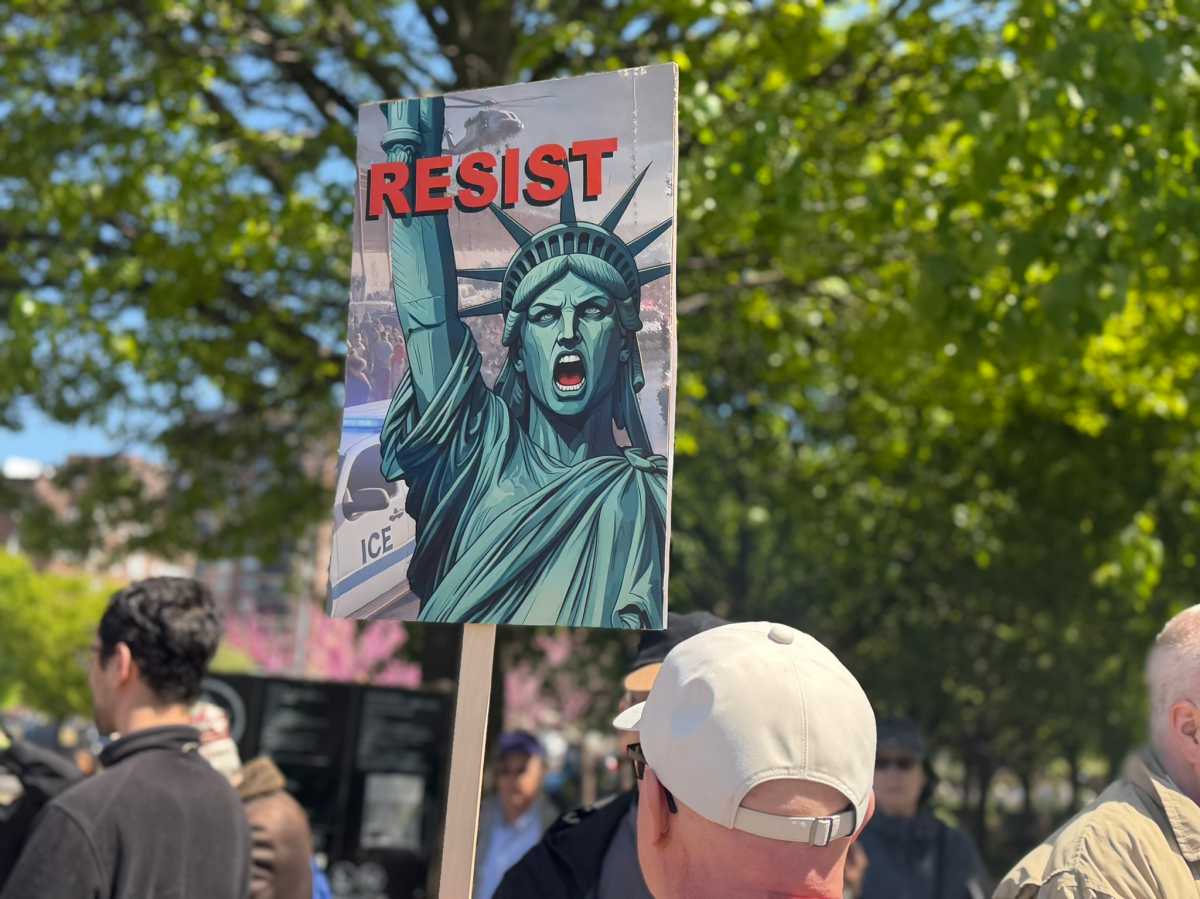
Queens residents on Friday, May 1, rallied for workers rights in honor of May Day, or International Workers’ Day, which is observed in 80 countries around the world.
However, the holiday is not officially recognized by the United States despite its roots in the country’s labor movement, famously commemorating the 1886 Haymarket Riot in Chicago in which laborers were demanding the 8-hour work day.
The first international demonstrations occurred in 1890, and the holiday has continues to be celebrated globally every year on May 1.
The Queens event was organized by members of Queens Says No Kings (QSNK), the Beacon and Hands Off NYC, which hosted a peaceful protest at Macdonald Park in Forest Hills.
The park has been the site of the past three No Kings marches hosted by QSNK.
“Macdonald Park is becoming our Union Square, or our Washington Square, here in Queens,” said Ruth Gursky, the chapter leader of the Beacon in Forest Hills.
Gursky, who joined the nonpartisan interfaith nonprofit in January 2025 after the inauguration of President Donald Trump, said she was inspired to fight against authoritarianism and fascism in the wake of his second term.
Led by the teachings of Martin Luther King Jr. and Ghandi, Gursky said nonviolent resistance is a crucial part of the Beacon’s mission, which partners with community organizations for a variety of causes.
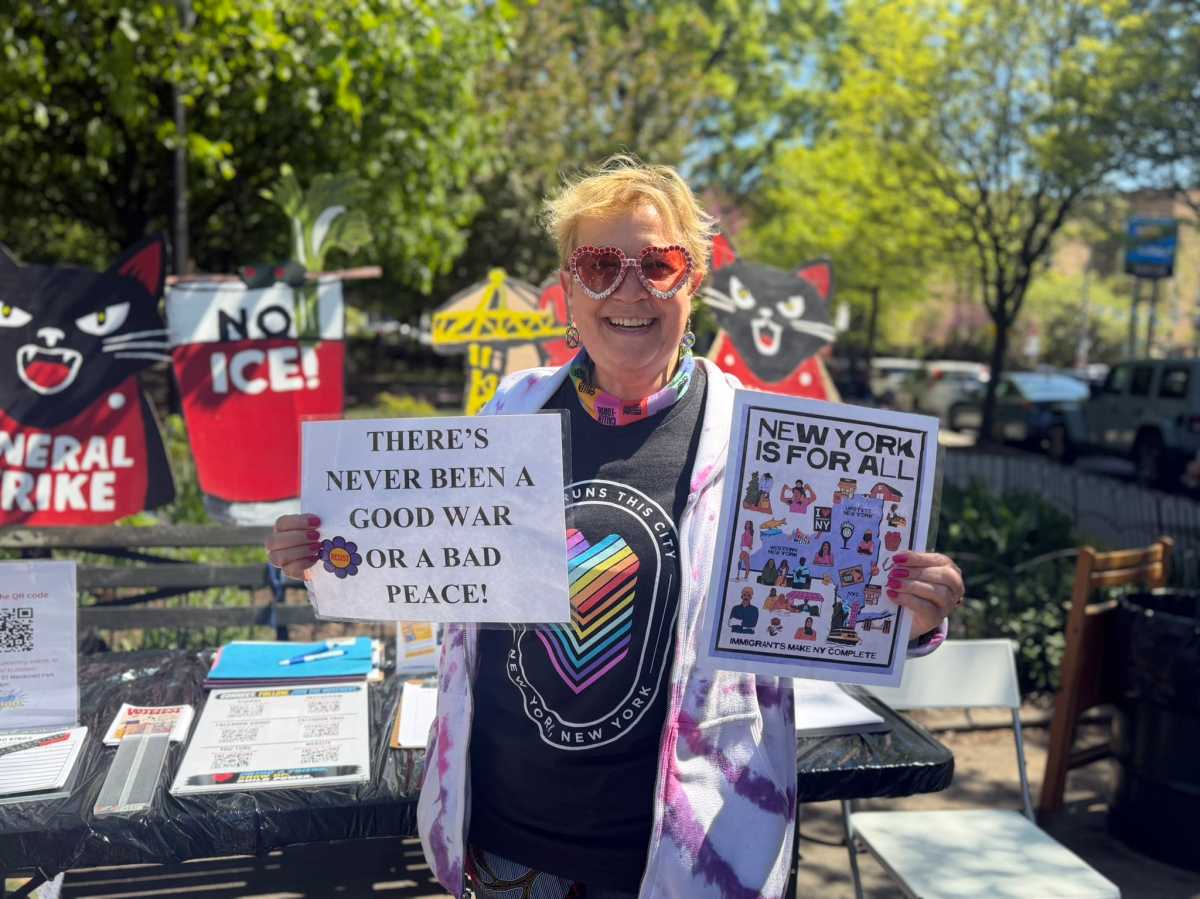 Ruth Gursky, the chapter leader of the Beacon in Forest Hills, said we can thank unions for the 5-day, 40-hour work week.Photo by Renee DeLorenzo
For May Day, Gursky said she went up and down the shops on Austin Street asking businesses if they were willing to close even for an hour on Friday to observe the holiday.
“You know, I know local mom and pop shops can’t close all day,” she said. “But if they could close for one hour, that would be very powerful.”
When Gursky thinks about the labor movement in the U.S., she thinks of the infamous Triangle Shirtwaist Factory fire that occurred in Greenwich Village over 100 years ago.
The factory employed over 500 workers that were primarily Jewish and Italian immigrant women between the ages of 13 and 23. They worked 52 hours per week, locked in rooms on the 8th, 9th and 10th floors of the building to prevent them from taking unauthorized breaks.
When the building caught fire in 1911, workers were trapped as the flames spread. Some even jumped out of windows, desperate to escape the fire and smoke.
A total of 146 workers died — 123 of which were women.
“Women burned to death, and some jumped out of windows to save themselves,” Gursky said. “It really was a tragedy of epic proportions.”
The disaster prompted a labor movement that not only helped pass legislation requiring safety standards in buildings, but it improved the working conditions in sweat shops through union organization and collective bargaining.
Without the workers, Gursky pointed out, the country couldn’t survive. Whether it’s the nurses working in hospitals, or engineers and conductors working on the railroad, she said the world needs them and must respect them.
“Whether you believe in the union movement or not, unions created the holidays we’re all used to enjoying,” she continued. “Unions created the five day, 40-hour work week. I believe in the union movement because I believe that everybody should have a safe place to work.”
She also encouraged anyone interested in joining the Beacon to join them at the park every Thursday evening from 7 to 7:30 p.m. to hold signs and advocate for their rights.
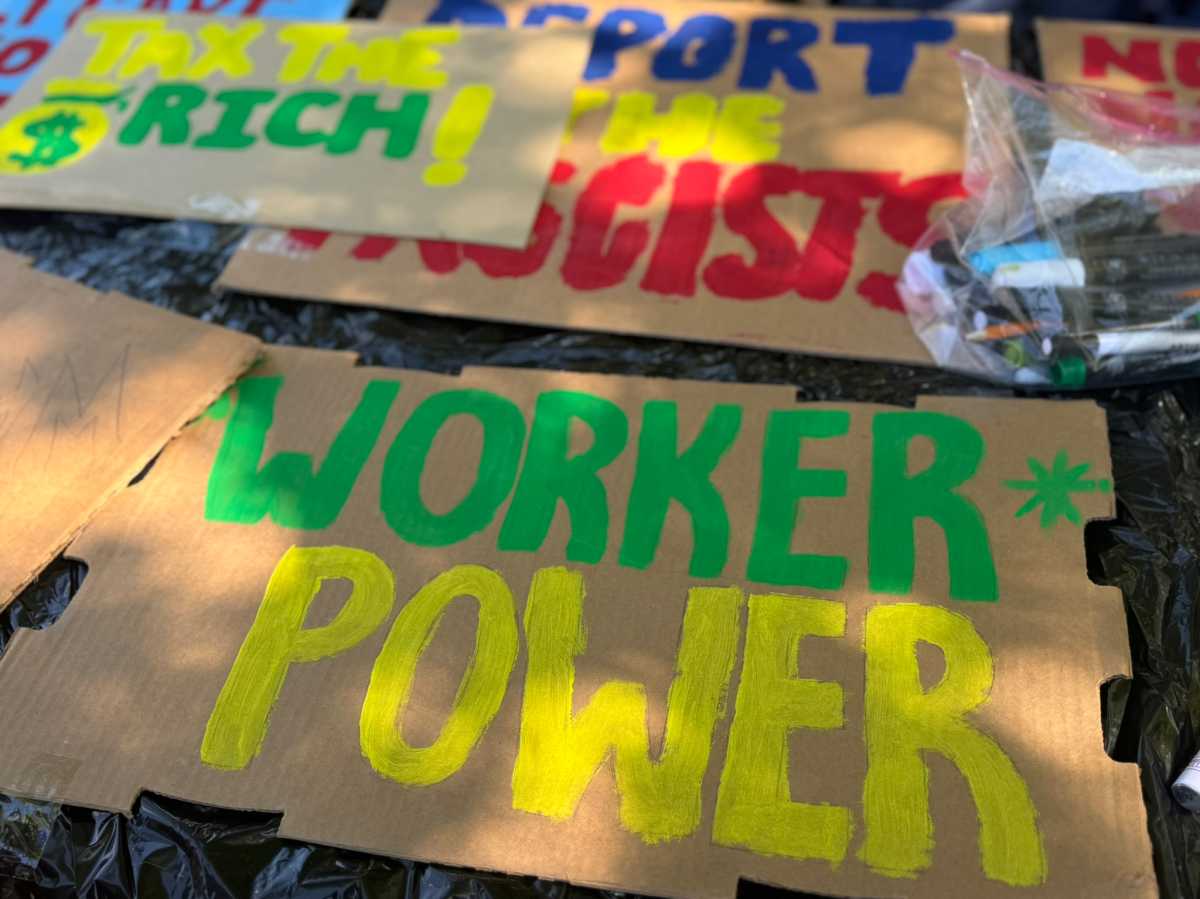 Attendees of the May Day event made signs in support of workers’ rights and called for a general strike to demonstrate the power of labor.Photo by Renee DeLorenzo
Alyce Wittenstein, a longtime activist in the community, said the May Day event is a spin-off of May Day Strong, a national network of organizations aimed at standing together against the billionaires waging a war on working people.
She said the group began organizing community events, which it calls “strike picnics.”
“It’s so important to connect with the community,” she emphasized. “May Day is not as popular in the United States as it is in other countries.”
Wittenstein pointed out that the U.S. instead celebrates Labor Day, which she said was established to “defuse” the labor movement. “The system in the United States is rigged against workers,” she said.
According to the history of May Day outlined by the Economic Policy Institute, Labor Day was created by President Grover Cleveland in order to satiate labor unions in the aftermath of the deadly Pullman Strike.
The strike, which took place in 1894, occurred after the railroad workers’ wages were cut by 30%.
Meanwhile, rents in the company town — which were controlled by the Pullman Company headed by millionaire George Pullman — remained the same.
During the strike, over 30 workers were murdered by federal troops sent by Cleveland, marking one of the most violent and deadliest labor disputes in U.S. history.
Out of fear of what Cleveland saw as radical ties May Day had to communist countries, he created Labor Day in early September to appease workers in the labor movement.
However, Wittenstein said the labor movement can be thanked for the Occupational Safety and Health Administration, a federal agency under the Department of Labor that ensures safe working conditions by setting and enforcing standards in the workplace.
She said she still fights for these rights today because she is worried that the Trump Administration would strip away these protections and further weaken the strength of unions in a country that already exploits its workers.
Trump recently terminated the right to collectively bargain for over one million federal workers, citing a “national security” provision of the 1978 Civil Service Reform Act.
He also signed several executive orders that terminated existing labor contracts for these federal workers which shortened parental leave, removed guaranteed rest periods and gutted union resources.
“They’re erasing all of our workers’ rights accomplishments,” Wittenstein stressed. “We have to be vigilant and make sure that we stop it here and start climbing uphill again. The war isn’t over.”
There’s a lot of work to be done for labor today, she said, pointing out that many people are struggling to find jobs that pay a living wage.
Steven Stringer, who attended the May Day event on Friday and has long been a member of QSNK, emphasized how damaging Trump has been not only in repealing workers’ rights, but the rights of immigrants who helped build the country in the first place.
“I mean, I haven’t protested since the Vietnam War,” Stringer said. “Now I’m 72-years-old, protesting again. I didn’t expect it to be like this — but idiots voted for Trump.”
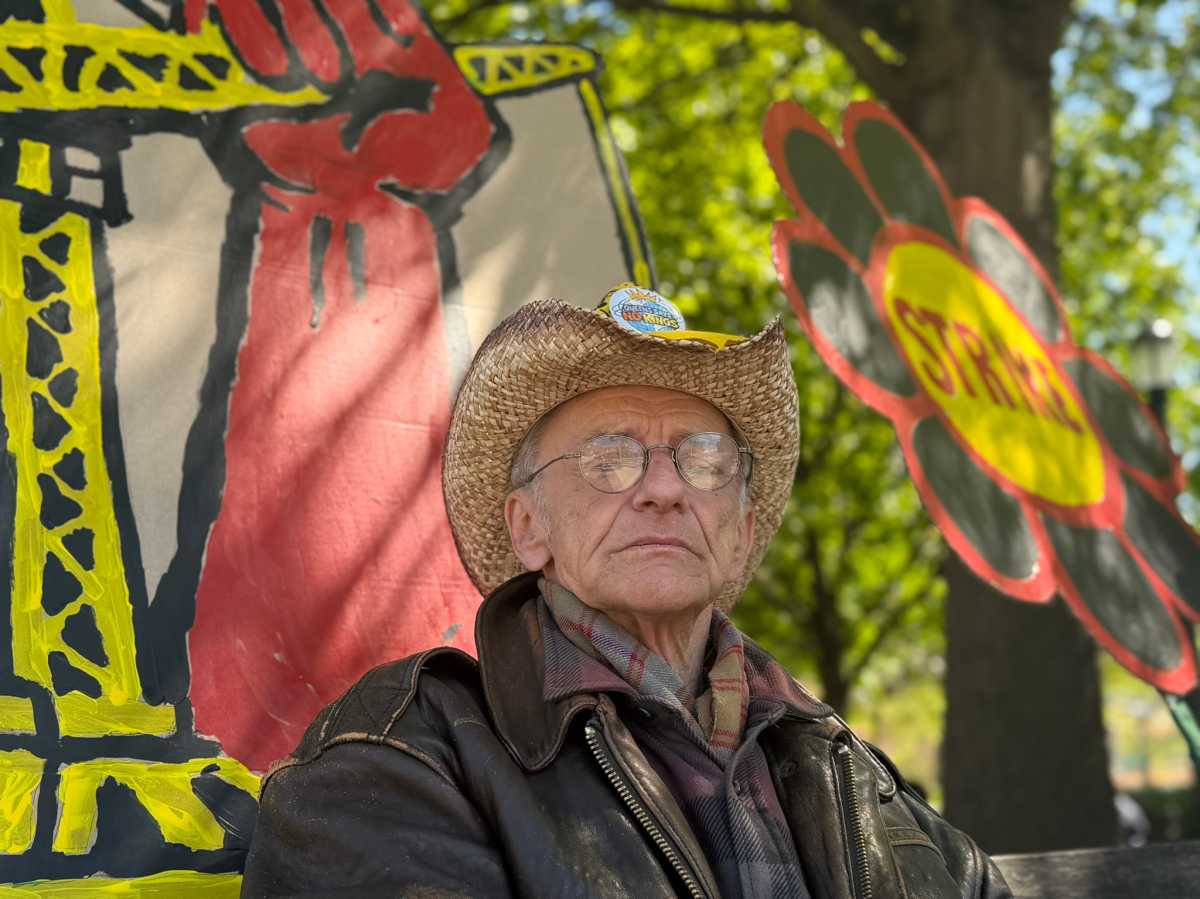 Steven Stringer, a longtime member of QSNK, said workers’ rights still have a long way to go in the United States.Photo by Renee DeLorenzo
Stringer noted the power dynamic of labor in the U.S., pointing out that “oligarchs” simply use workers for labor with no regard for their health.
“Why do you think Trump loves ‘beautiful coal?’” he said. “Do you think he thinks about all the young men that are going to get black lung? Oligarchs don’t care about that — they just use them and throw them away.”
Stringer likened the attitudes of those in power to those that enlisted Chinese slave labor to build the railroads and then banned them from entering the country for 10 years through the Chinese Exclusion Act.
He also pointed to the country’s treatment of its indigenous people, exploiting them for their land and resources and then committing a genocide against them.
“White people suck,” Stringer said, rolling his eyes. “They ruin the f—ing planet.”
That’s why, he continued, it’s important for people to stand up and fight for workers’ rights.
Not only can we thank the workers — who have historically been immigrants — for building the country, he said, but they have improved the working conditions for everyone else.
Stringer said we can thank workers for making all the everyday commodities people take for granted without a second thought. “People buy their stuff and don’t think about how it got there,” he emphasized.
These days, Stringer said a lot needs to be done to address the workers’ plight in the U.S.
For one thing, he said he believes the country must unlink health care from the work place so workers are not fearful of losing care if they are fired or laid off.
“We’re still under the thumbs of the oligarchs, and we hardly have a say about it,” Stringer said. “It’s the plight of the workers.”
To learn more about events hosted by QSNK, visit Mobilize.us, QueensSaysNoKings.com, or the QSNK YouTube, Facebook or Instagram pages.
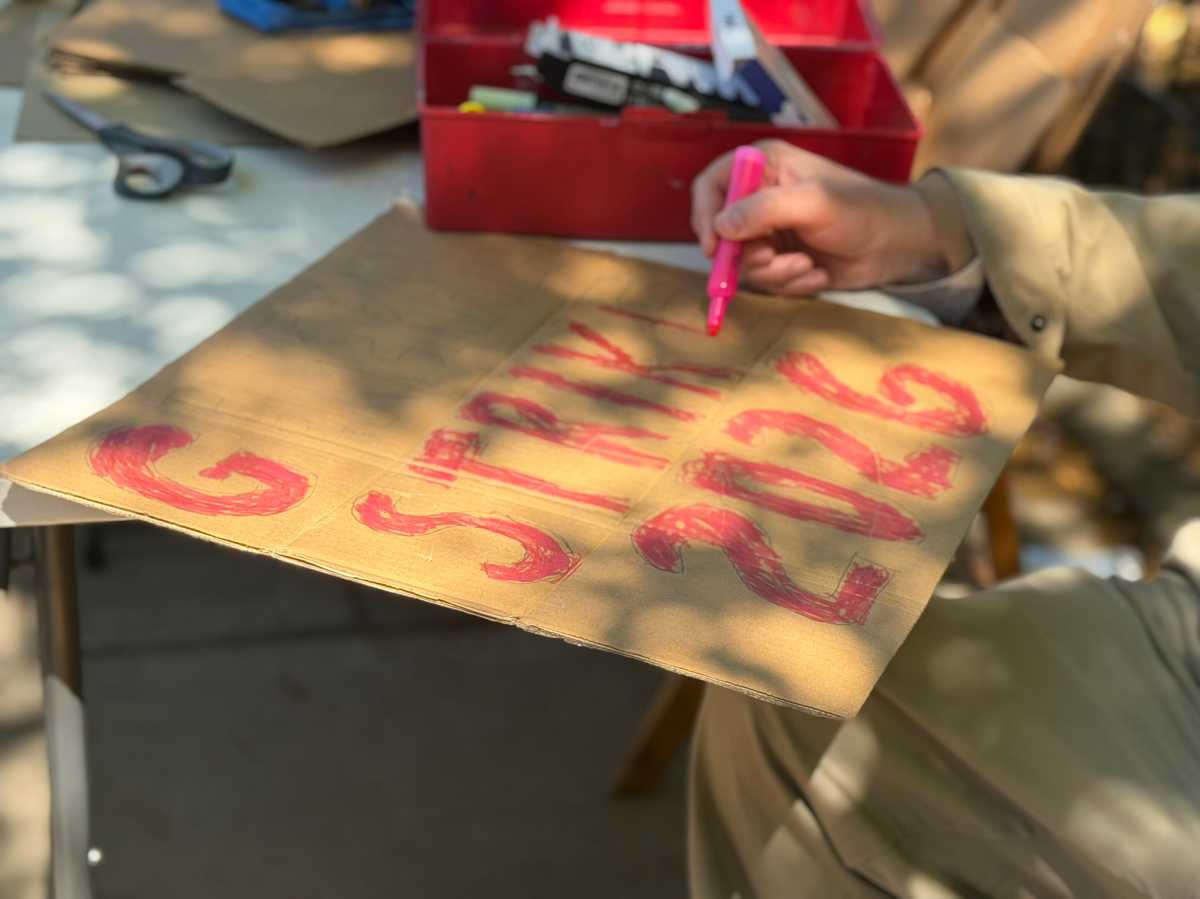 A protester makes a sign calling for a general strike for May Day last Friday.Photo by Renee DeLorenzo
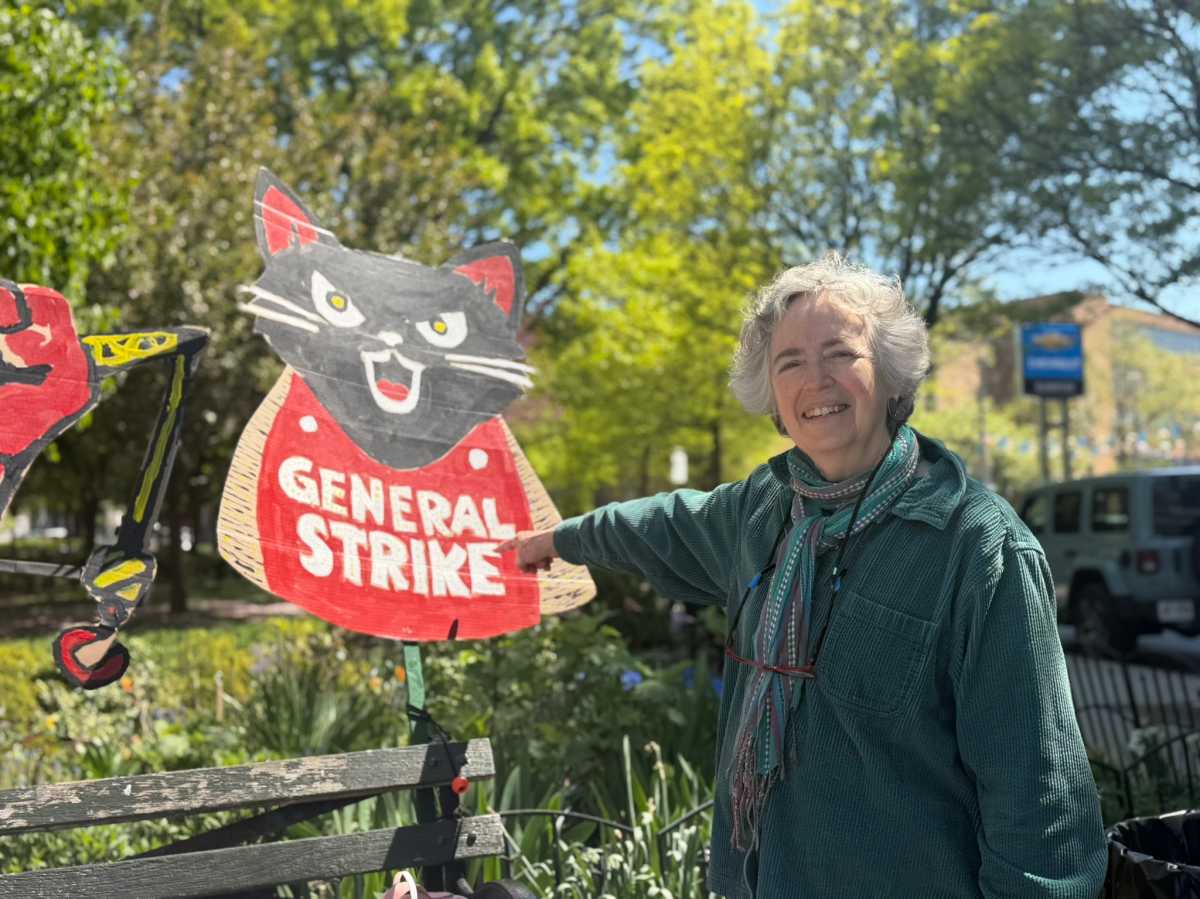 An attendee of the May Day event pointed to a sign she made that was displayed during the event.Photo by Renee DeLorenzo
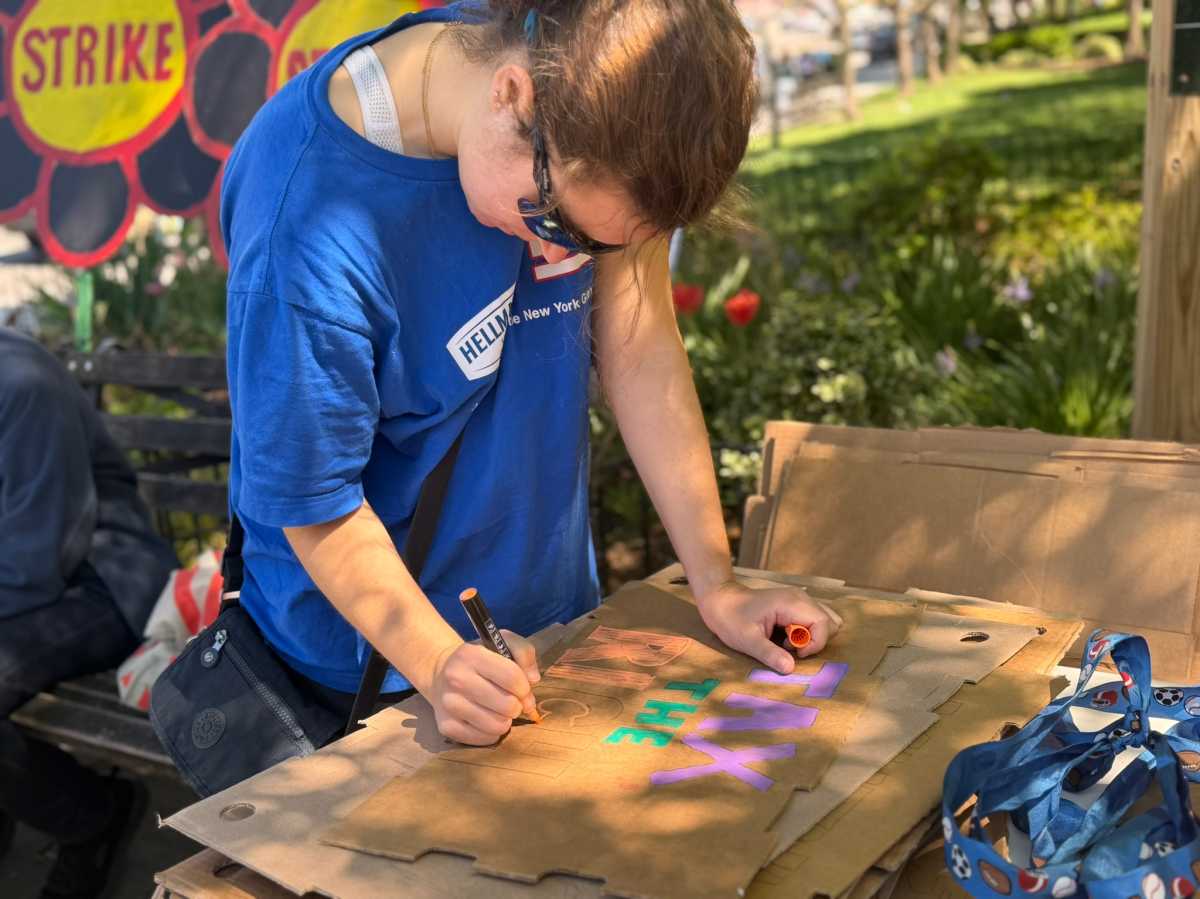 An attendee makes a sign that says “Tax the Rich” during the May Day event.Photo by Renee DeLorenzo