
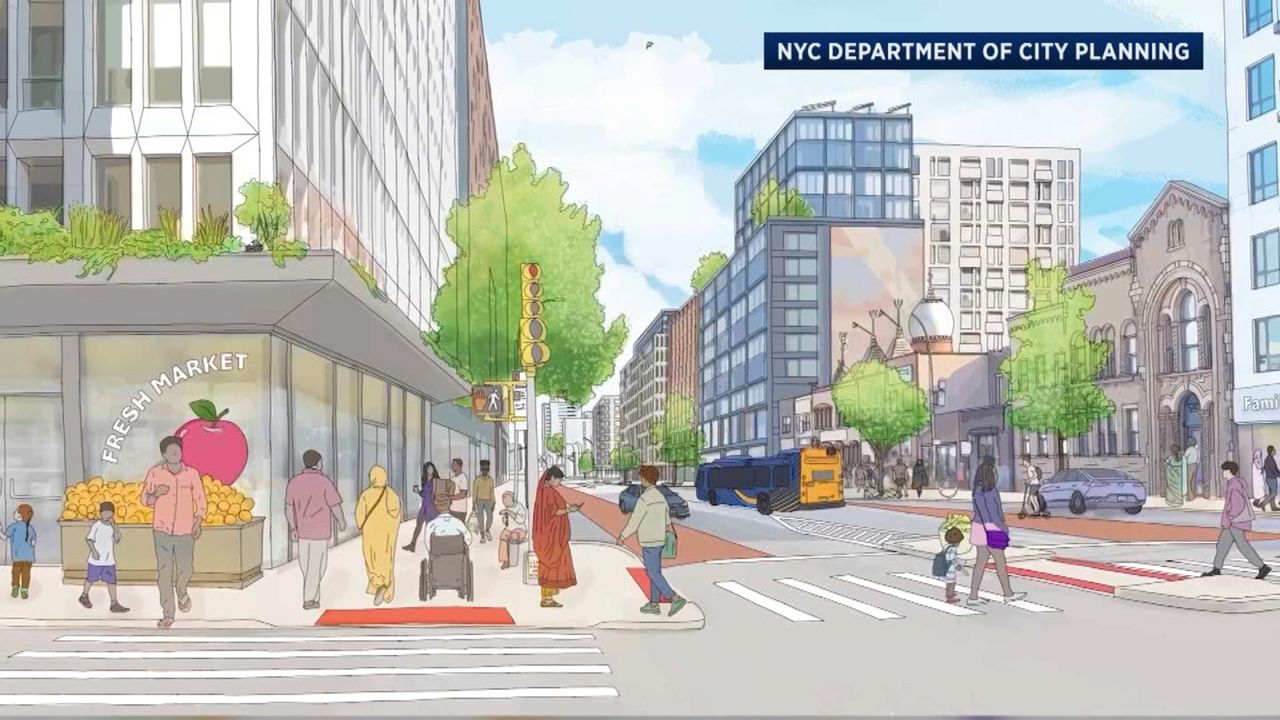
The City Council voted to pass a rezoning plan for Jamaica, Queens, on Wednesday, clearing what may be the final hurdle for a major transformation of around 230 blocks in the multicultural neighborhood.
While there are concerns about gentrification and rent increases pricing people out of the neighborhood, supporters of the plan say it’s a game changer because it will create affordable housing and better jobs.
What You Need To Know
The full City Council voted Wednesday to approve the Jamaica, Queens rezoning plan, which goes into effect almost immediately
The plan will increase the density of new buildings permitted in residential and commercial space, which will generally allow for taller construction
The Department of City Planning says that will lead to the creation of 12,000 new homes, including around 4,000 affordable units
City leaders say there will be upgrades to transit, streets and sidewalks as well
Some are worried the plan will cause gentrification, an increase in rents for existing apartment buildings, and force long-standing small businesses to shut their doors or move out of the neighborhood
Hillside Avenue — also known as Little Bangladesh Avenue — in Jamaica boasts storefront signs in Bangla and English.
Traditional clothes on display, and the aroma of Bangladeshi food lures customers inside the restaurants.
“Being connected to the Bengali food, being connected to the Bengali people, it just makes me feel like it’s Bangladesh all over again,” said Asm Goni, a Jamaica resident.
decadeGoni has lived in the neighborhood for more than a decade, and works for a nonprofit there called BHALO, which aims to help Bangladeshi New Yorkers.
“Jamaica is a neighborhood that is very close to my heart,” Goni said. “That’s something I’m really looking forward to — a much more cleaner neighborhood — as well as something more beautiful: skyscrapers, the tall buildings, the rezoning, those things excite me,” he said.
The plan will increase the density of new buildings permitted in residential and commercial space, which generally will allow for taller construction.
The Department of City Planning says that will lead to the creation of 12,000 new homes, including around 4,000 affordable units.
It will also boost commercial space for businesses. City leaders say there will be upgrades to transit, streets and sidewalks as well, plus two new plazas added to downtown Jamaica.
Mohammed Kabir has been living in Jamaica for half a century. He’s run Jamaica Pharmacy off 169th Street and Hillside Avenue for around two decades.
He says he’s concerned about keeping his small business afloat and believes the rezoning will lead to an increase in his rent.
“[I] worry because [there’s] not business that much [and] because rent I used to pay $3,400, now I am paying $10,000,” Kabir said. “It is very hard to survive our business.”
Salma Haque works with Goni at BHALO. She says she understands the concerns, but she supports the plan.
“I do hear from residents that they are afraid of their taxes going up. There’s worries about gentrification, but as a community-based organization, I think, this is something that’s going to be good for everyone here,” Haque said.
Pastor Latricia Davis of the Community Church of Christ says she prayed for this day to come, and now it’s here.
“The transformation of our community, I believe, that it’s for the [betterment] of our people. And I believe that it will provide more opportunities for our communities, especially the Black and Brown community,” she said.
That’s a message that resonates with community members like Goni.
“I see the great potential in this plan to revitalize this neighborhood,” he said. “They’re putting a lot of money into it, so to a level that we haven’t imagined before.”
Developers can begin construction almost immediately after the mayor’s five-day review period. He can veto the plan, however, that is unlikely, since he appointed the chairman of the city agency that helped create the plan.