
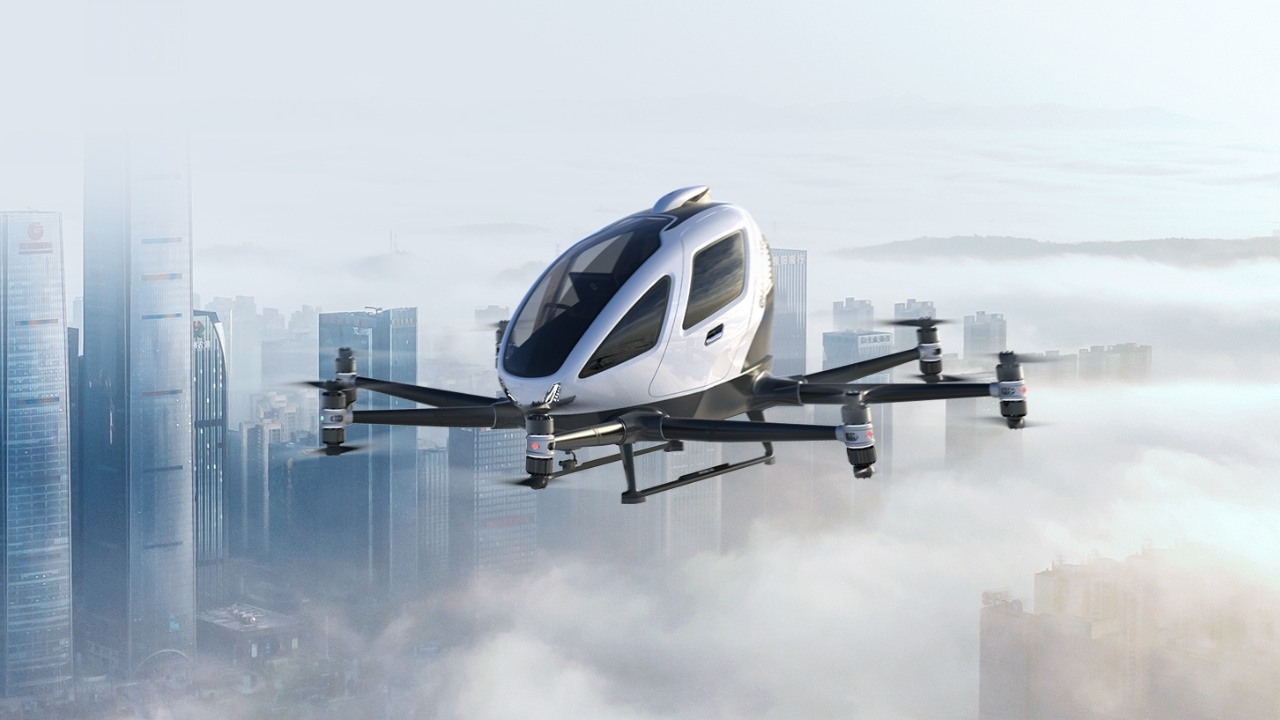
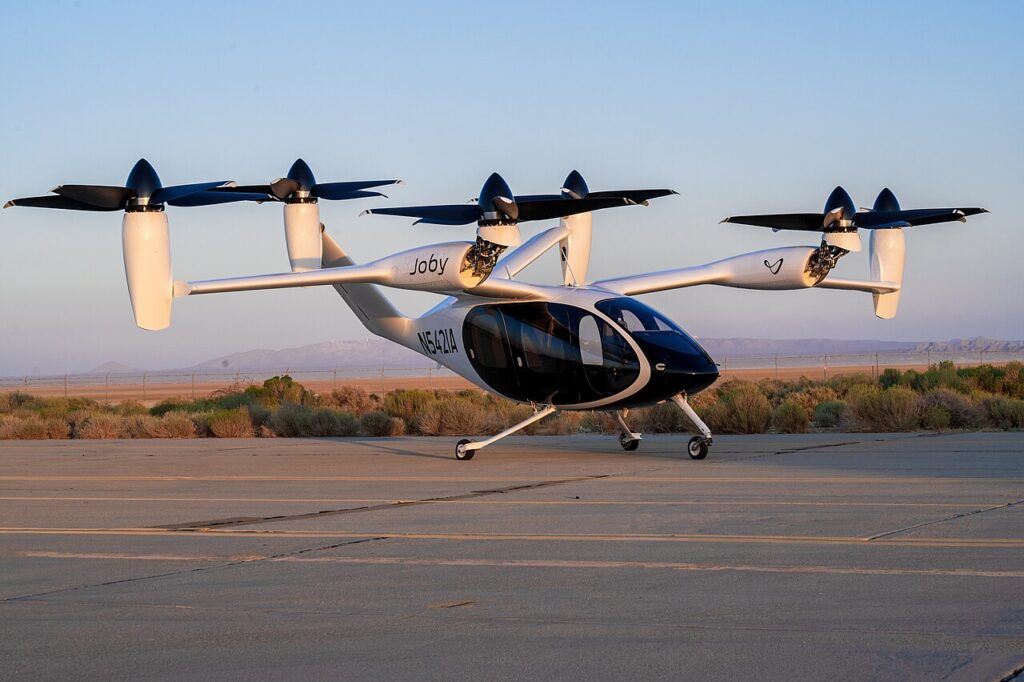
Electric air taxi. Credit: Harlan Huntington / Wikimedia Commons / Public domain
New York City has taken an early step toward transforming urban travel with the first demonstration flights of an electric air taxi linking Manhattan and John F. Kennedy International Airport. The test flights mark a significant moment in the push to introduce faster and cleaner transportation options in densely populated areas.
The aircraft completed several point-to-point journeys across the city as part of a multi-day initiative connected to a federal pilot program. The project is designed to examine how advanced air mobility systems can safely function in one of the most complex and congested airspaces in the world.
The demonstration highlights growing interest in using electric vertical takeoff and landing (eVTOL) aircraft to reduce travel time between key locations. These aircraft are capable of lifting off like helicopters and transitioning into forward flight, combining the flexibility of rotorcraft with the efficiency of fixed-wing planes.
Faster routes could transform airport travel
The test routes aim to connect Manhattan heliports with JFK Airport in less than 10 minutes. By comparison, ground transportation between the same locations often takes between one and two hours, depending on traffic conditions.
The aircraft used in the trial can carry up to five occupants, including a pilot, although no paying passengers were included in the recent flights. Operators report that the aircraft produces significantly less noise than traditional helicopters and operates without emissions during flight due to its electric power system.
I’m NYC just saw its first electric air taxi flight.
Joby Aviation flew from John F. Kennedy International Airport to Downtown Manhattan in 7 minutes, quiet, zero emissions, and a glimpse of traffic-free travel. pic.twitter.com/XlQNtrBjuu
— Science girl (@sciencegirl) April 29, 2026
While the technology shows promise, commercial operations will depend on regulatory approval. Until then, these early demonstrations remain focused on performance, safety, and operational feasibility.
Real-world testing in crowded airspace
The New York trials are providing officials with valuable data on how electric air taxis interact with existing aviation systems. Authorities are examining factors such as noise impact, flight routing, and coordination with current airport and heliport traffic.
The Port Authority of New York and New Jersey has supported the initiative, viewing it as an opportunity to explore how emerging aviation technologies could reshape regional transportation networks. Unlike earlier tests conducted in controlled environments, these flights involve active routes, offering a more practical assessment of real-world conditions.
The effort is part of a broader federal program launched by the U.S. Department of Transportation and the Federal Aviation Administration in March 2026. The initiative includes eight pilot projects across 26 states, covering applications such as passenger travel, cargo delivery, and emergency response.
Officials say the program will help establish safety standards and regulatory frameworks for next-generation aircraft. Although companies involved are advancing through FAA’s certification process, final approval remains a critical step before commercial passenger service can begin.