
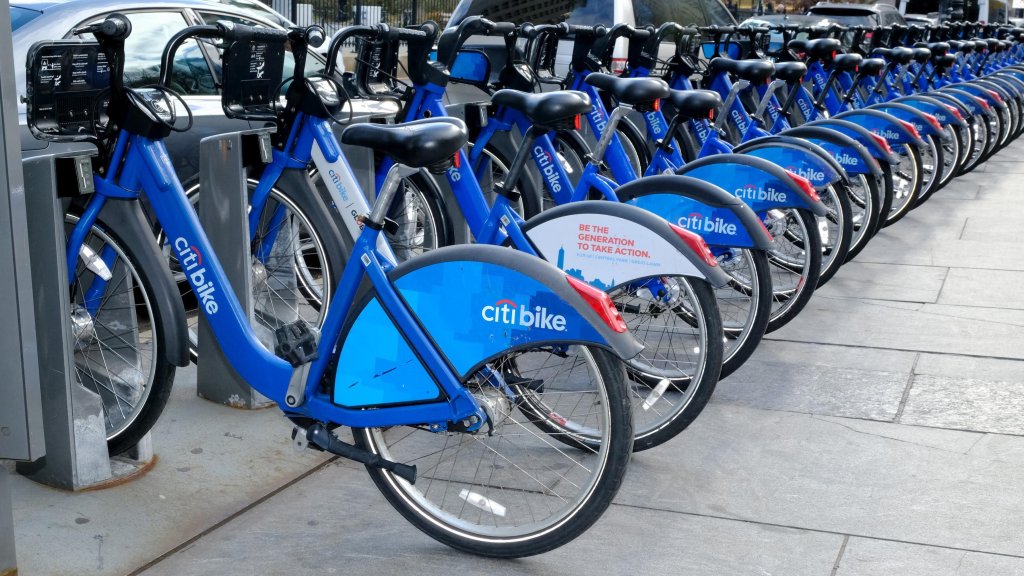
The Mamdani administration is asking Lyft to abandon its Adams administration-era efforts to use facial recognition to verify the age of Citi Bike riders, the Daily News has learned.
Multiple sources confirmed that the administration is asking the ride-share giant — which administers the Citi Bike program for the city — not to roll out a system that would utilize facial-recognition technology to ensure riders are above the minimum age of 16.
A City Hall spokesman confirmed Wednesday that the administration is concerned Lyft’s system could put the biometric data of Citi Bike riders, especially minors, at risk of being hacked.
“The safety of young New Yorkers is our top priority, whether they’re on a bike or online,” Jeremy Edwards said in a statement. “We appreciate Lyft’s efforts to protect young riders and to explore age-appropriate access to Citi Bike that preserves data privacy, security, accuracy and equity.”
Sources told The News that city officials have also expressed concern regarding facial recognition’s tendency toward misidentifying the age of younger users — a tendency currently being studied by the National Institute of Standards and Technology.
The system would have used photos or videos of prospective riders’ faces in an effort to verify they were old enough to use a Citi Bike, sources told The News.
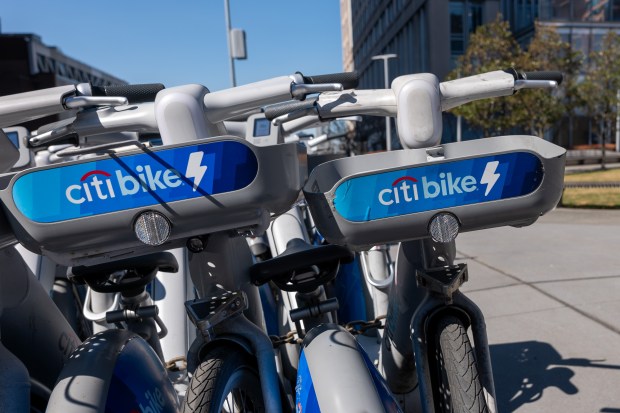 Rental Citi Bikes sit at a bike dock in Manhattan on March 1, 2024, in New York City. (Photo by Spencer Platt/Getty Images)
Lyft first announced it would be requiring age verification last August, after a request from the administration of then-Mayor Eric Adams.
Adams’ first deputy mayor, Randy Mastro, had directed the firm to find a way to keep underage riders off of Citi Bikes, citing an Op-Ed in this newspaper by venture capitalist and political strategist Bradley Tusk.
Both men had suggested the company use government-issued IDs to verify riders’ age. But a Lyft spokesman told The News Wednesday that simply uploading IDs would not be enough to prove age.
As an Assembly member, Mamdani was critical of digital surveillance, especially by the NYPD. He sponsored state legislation that would have prohibited law enforcement from creating fake electronic communication service accounts and collecting users’ account information — legislation that ultimately failed.
As mayor, though, Mamdani has said little about the Police Department’s surveillance practices and has not taken any public steps to change the NYPD’s use of facial-recognition technology, drones and other surveillance devices.
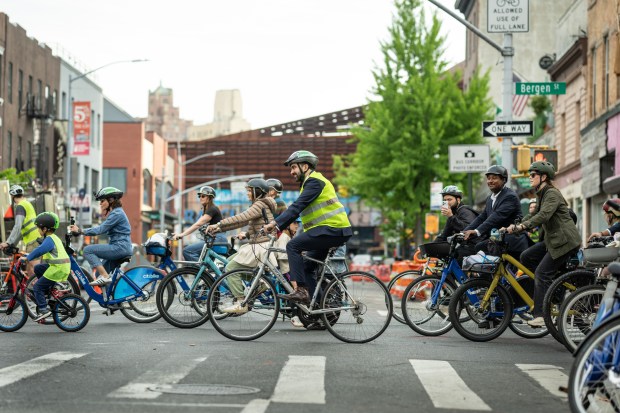 Mayor Zohran Mamdani joins the Bergen Bike Bus in Brooklyn as he participates in National Bike & Roll to School Day on Wednesday, May 6, 2026. (Michael Appleton / Mayoral Photography Office)
Last month, in response to reporting by Wired Magazine on the use of facial recognition for surveillance at Madison Square Garden, Mamdani called such monitoring a “point of immense concern.”
“It’s deeply troubling, these reports of the extensive nature of surveillance,” he said about the article, which detailed how MSG owner Jim Dolan’s security team has snooped on attendees by using facial recognition both inside and even outside the bounds of the arena.
Mamdani’s stance stands in contrast to Adams, who championed the use of drones and facial-recognition technology.
“Many of our electeds are afraid,” Adams told Politico in 2022. ”Anything technology they think, ‘Oh it’s a boogeyman. It’s Big Brother watching you.’ No, Big Brother is protecting you.”