
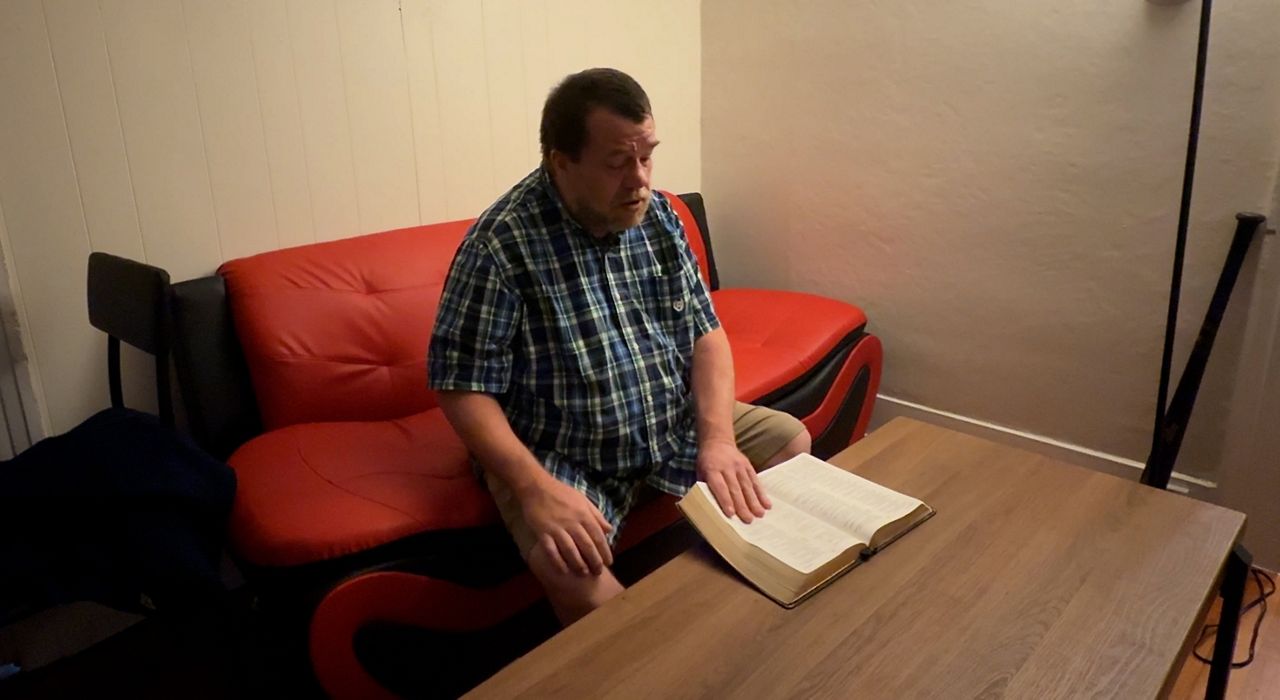
Four years ago, Richard Davenport says the idea of having an apartment of his own felt impossible.
He had spent years homeless, then bounced between unstable housing and arrests tied to his drug use. He figured that cycle, or something worse, would continue.
That changed after one encounter with law enforcement. Instead of sending him back to jail, an Albany officer connected him to a diversion program that pairs people with case managers and services rather than pushing them deeper into the criminal justice system.
“One lieutenant, who’s since retired, asked for my Social Security number,” Davenport recalled. “I wasn’t giving my Social Security number to nobody. And I’m glad I did, because he said, ‘This is going to help your life,’ and it has since then.”
Davenport, who once expected to spend much of his life behind bars, now lives in his own apartment, leans on his faith and stays in close contact with his case manager as he works to remain stable.
State and local officials say his story illustrates what diversion programs are designed to do: Treat mental health and addiction as health issues first, reserving jail for situations where there is real danger.
At a recent event marking the 10th anniversary of one such diversion effort in Albany, officials highlighted early results they called promising. In one cohort, roughly 80% of participants secured permanent housing; about two-thirds were not rearrested within a year; and 80% were not reincarcerated within five years.
“Those numbers represent lives changed,” said Joe Popcun, executive deputy commissioner at the state Division of Criminal Justice Services. “They represent families that stayed together. They represent a different vision of what public safety can look like.”
Albany officials say that vision relies on collaboration among police, case managers, peer workers and housing providers.
“Sometimes, the solution is a jail cell. That’s where we are sometimes in society,” said former Albany Police Chief Brendan Cox, who now works closely with diversion initiatives. “But many times, the solution is to get that case manager out and get that person whatever service it is that they need.”
Community advocates say housing is often the turning point.
“If you don’t have housing, how do you eat? How do you take care of yourself?” said Daquetta Jones-Johnson, chief executive officer of Trinity Alliance of the Capital Region, which works with case managers and diversion participants. “Everybody deserves to have shelter — and not just shelter, but adequate shelter that is safe, permanent and affordable.”
Jones-Johnson said local shelters are frequently at capacity, and the region’s affordability crunch makes it harder for people with criminal records or unstable income to secure a lease. Without a stable place to live, she added, it is difficult to keep a job, attend treatment or follow through with court requirements.
“What I heard again and again from people involved in these programs is that there’s no simple, one-size-fits-all fix,” Davenport said. “People have to buy in before anything really changes. Once they do, housing and support can keep them from sliding back into the same cycle.”
Supporters of diversion say the stakes are high for communities as well as individuals. They argue that steering people toward housing, counseling and employment support can reduce repeat offenses and lighten the load on courts, jails and emergency rooms.
For Davenport, the impact is personal and ongoing.
“I’m far from perfect — I never will be — but I’m trying to make strides,” he said. “I’m trying to be better.”