
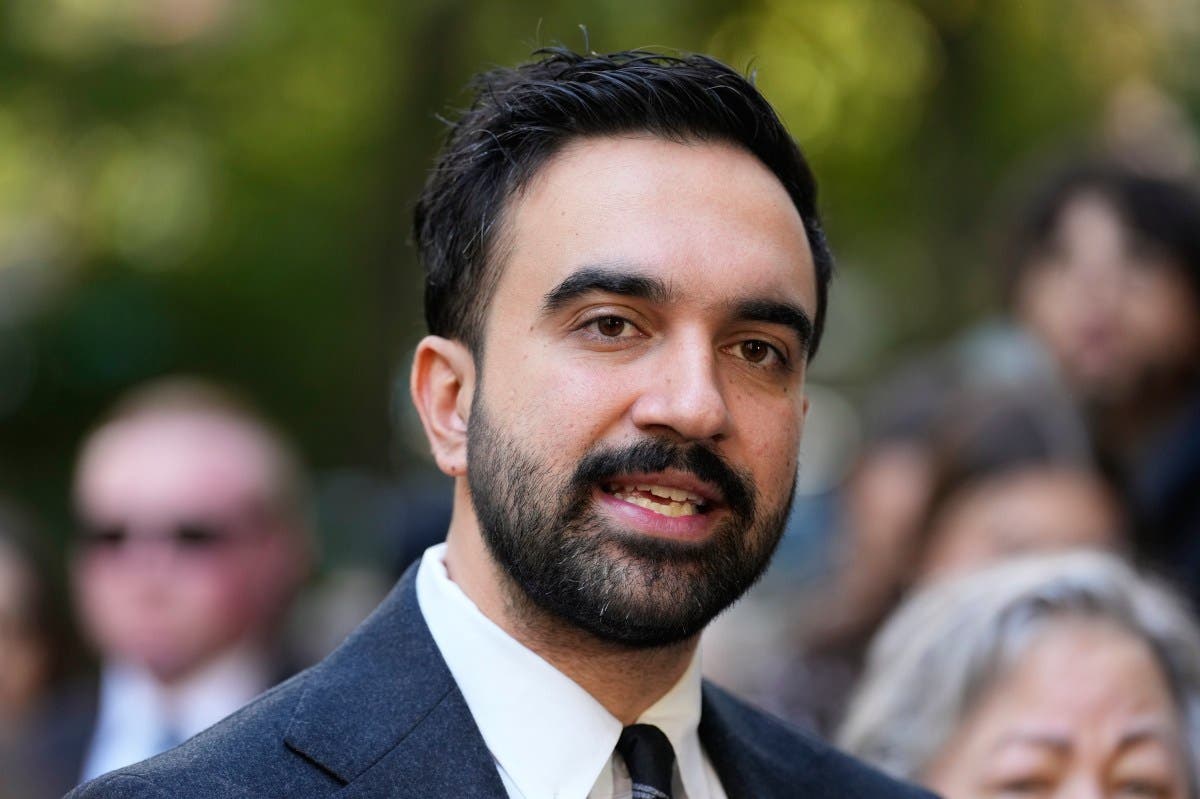
Zohran Mamdani continues to be the frontrunner in New York’s mayoral race, with polling suggesting he could be headed toward a commanding victory.
Betting platform Polymarket shows that Mamdani currently has a 44 percent chance of winning 50 to 60 percent of the vote. If such a result occurs, Mamdani could be in store for a landslide victory over his main opponent, New York Governor Andrew Cuomo.
But polls show that while a double-digit victory is on the cards for Mamdani, a landslide is less likely.
Why It Matters
The New York City mayoral race has drawn national attention as voters prepare to choose a leader who will set the city’s direction on key issues, including housing affordability, public safety, and relations with both President Donald Trump and the Democratic establishment. The result is expected to influence not only local policy, but also the broader political tone of the country’s largest city.
Assemblymember Zohran Mamdani has become the leading progressive candidate in the race. His platform includes rent freezes and the establishment of publicly owned grocery stores to address rising living costs. His campaign has gained significant momentum through endorsements from New York Democratic Representative Alexandria Ocasio-Cortez and independent Senator Bernie Sanders, positioning him as the main representative of the city’s progressive movement.
Odds Point to a Narrower Win for Mamdani
There is no precise definition of a landslide victory. According to Politico, a landslide election generally refers to a race in which the winning candidate defeats their opponent by a margin of at least 10 percentage points. Political scientists Gerald N. Hill and Kathleen Thompson Hill define a landslide as an election in which a candidate captures roughly 60 percent of the popular vote. Such a win “means exceeding expectations and being somewhat overwhelming,” Hill told The Associated Press.
But Polymarket suggests that it is more likely that Mamdani will win 40-50 percent of the vote, with the website assigning a 49 percent probability to that scenario.
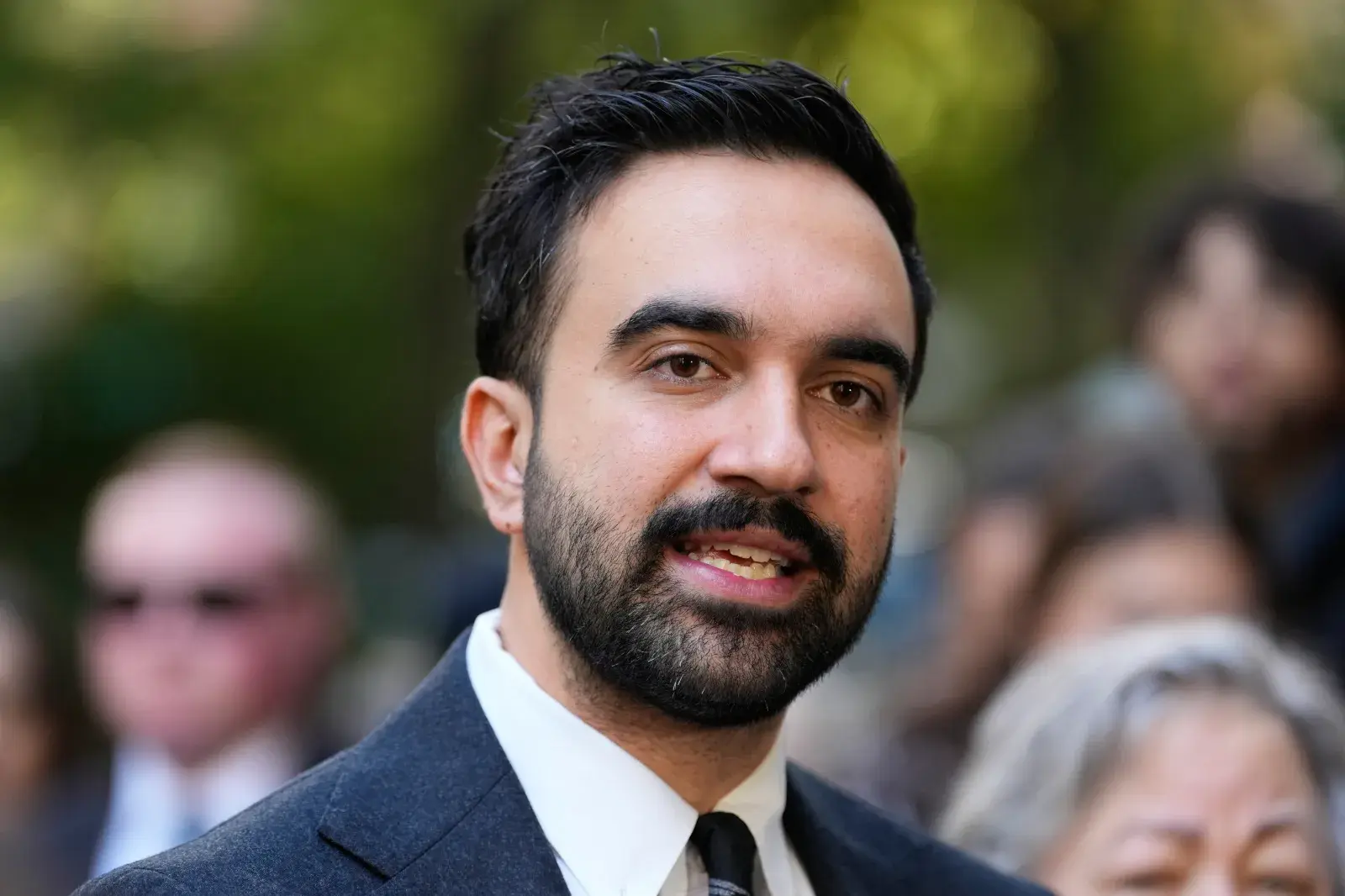
Meanwhile, there is a 3 percent chance that he will win just 30 percent of the vote, and a 5 percent chance that he will win 60-70 percent. There is a 1 percent chance he will win more than 70 percent of the vote, according to Polymarket.
Polls have generally shown Mamdani’s support registering in the low-to-mid 40s, while Cuomo has polled in the high 20s to low 30s and Republican candidate Curtis Sliwa in the mid to high teens.
The most recent Suffolk University poll put Mamdani on 44 percent in a three-way race, with Cuomo on 34 percent and Sliwa on 11 percent. This would give Mamdani a 10 percent lead over Cuomo.
However, Mamdani’s lead has been cut in half since September, when he had a 20 percent lead over Cuomo.
Newsweek’s tracker, based on the 10 most recent polls, shows Mamdani with an even larger lead over Cuomo of 15 points. According to the tracker, Mamdani is currently averaging at 45 percent, while Cuomo is averaging on 30 percent and Sliwa on 15 percent.
Mamdani’s Coalition Skews Young and Progressive
Mamdani’s base is anchored among younger, progressive, and foreign-born New Yorkers. Fox News polling shows he holds 78 percent support among very liberal voters, 67 percent among those under 30, and 63 percent among Democrats. Women under 45 back him by 62 percent, and Patriot Polling finds he draws 62 percent support from foreign-born voters, compared with 31 percent among U.S.-born residents.
Mamdani performs strongly in Brooklyn and among Muslim, Hindu, and atheist voters, but trails among Catholic and Jewish constituencies. He leads among nonwhite voters, including majorities of Black (51 percent) and Hispanic (52 percent) voters.
However, the Suffolk University poll showed that some of Cuomo’s largest gains this month were among Hispanic voters. The October poll shows that 39 percent of Hispanic voters back him. That is compared to 22 percent in September.
But generally, Cuomo’s support skews older and more moderate. Fox News reports he earns 44 percent among moderates and seniors over 65, and 42 percent among women over 45. He performs best among Jewish voters, where Patriot Polling shows him narrowly ahead of Mamdani, 42 percent to 38 percent.
Sliwa’s backing comes primarily from Republicans and Trump-aligned voters, winning 60 percent of Republicans and 58 percent of Trump supporters. Staten Island remains his strongest area, where he and Cuomo both outperform Mamdani.
Low Favorability Across the Field
But all three candidates still face the challenge of negative favorability ratings. For the latest Victory Insights poll, voters were asked to rate Mamdani, Cuomo, and Sliwa on a 5-point scale, with 1 indicating a very negative view and 5 indicating a very positive one. Mamdani received an average score of 2.99—slightly below the neutral midpoint of 3—but still higher than his rivals. Sliwa scored 2.72, while Cuomo trailed at 2.40.
Meanwhile, Quinnipiac polling found that 43 percent of voters view Mamdani favorably versus 35 percent unfavorably, while Cuomo and Sliwa lag at 37-52 and 27-40, respectively. Seventy-five percent of Mamdani’s supporters say they are highly motivated to vote—well above Sliwa’s 59 percent and Cuomo’s 43 percent.
What Happens Next
The New York City mayoral election takes place on November 4.