
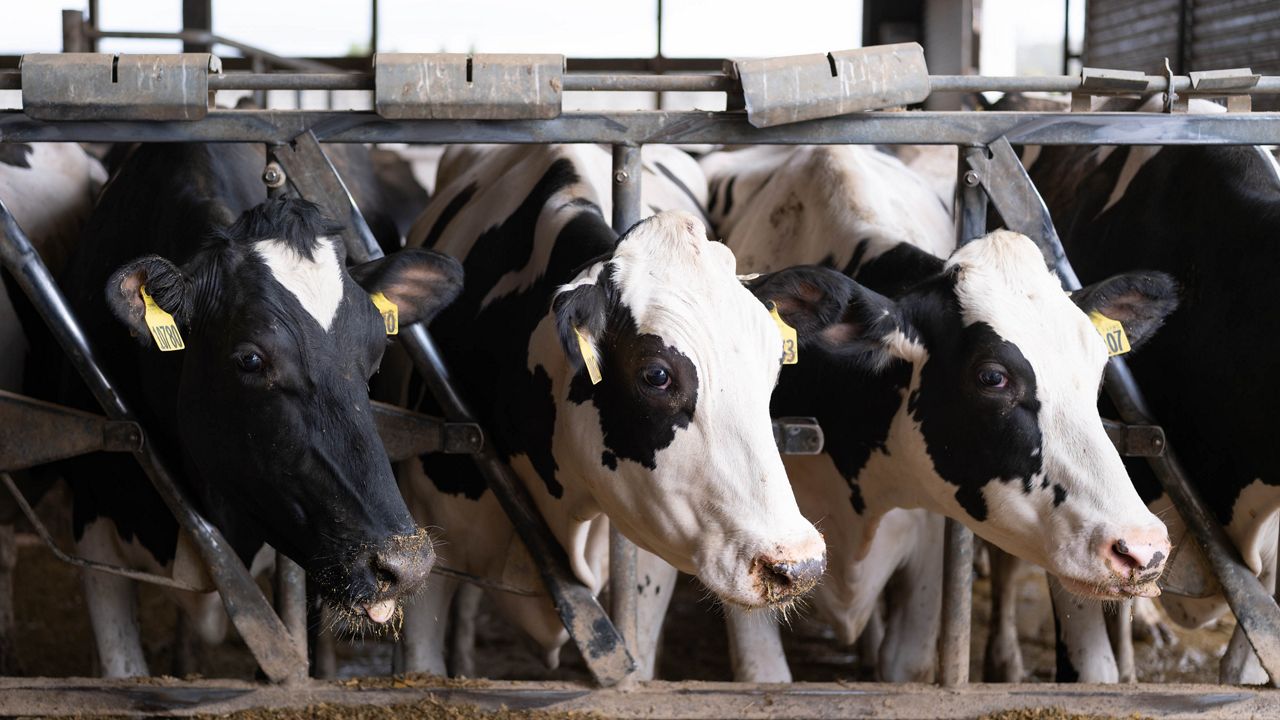
New York dairy farmers and agriculture advocates continue to push for comprehensive immigration reform that allows year-round farms to utilize the federal H-2A program and bring workers to the United States legally.
“As a dairy farmer, if I could milk all the cows myself, I would because I really enjoy milking cows, but I need to rely on people, whether they’re local to our community or come from another country,” said Joel Riehlman, a co-owner of Venture Farms in Onondaga County.
The H-2A program is a federal visa that is issued to people to come work as temporary agricultural workers for less than a year. Farms that use the program must be seasonal, meaning they need more help during a specific time of year, such as planting and harvesting. Dairy farms rarely qualify to use the H-2A program because they operate at the same capacity year-round.
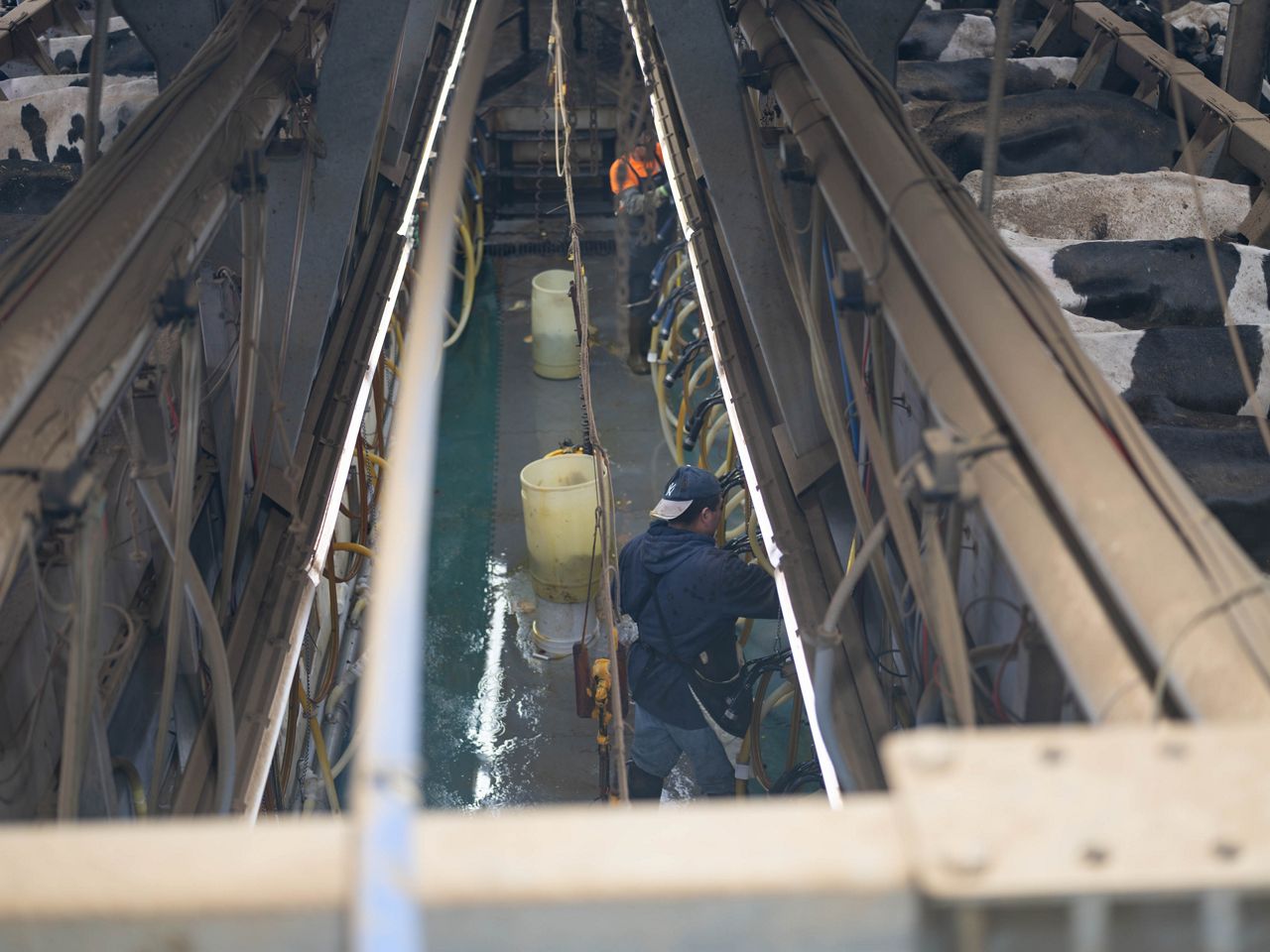
Employees of Venture Farms milk cows. (Spectrum News 1/Emily Kenny)
“Our cows are milked three times a day, every day, seven days a week, so we need year-round staff here,” Riehlman said. “We would really love it if there were other programs that were more suited to us in the dairy industry.”
Venture Farms milks 1,300 cows and employs 14 people. Riehlman said they are fortunate to have low turnover with their employees, making them highly skilled at what they do.
“A lot of our people that are working with our animals, that are feeding our cows, that are taking on management roles day in and day out, are people that we promoted from within,” Riehlman said.
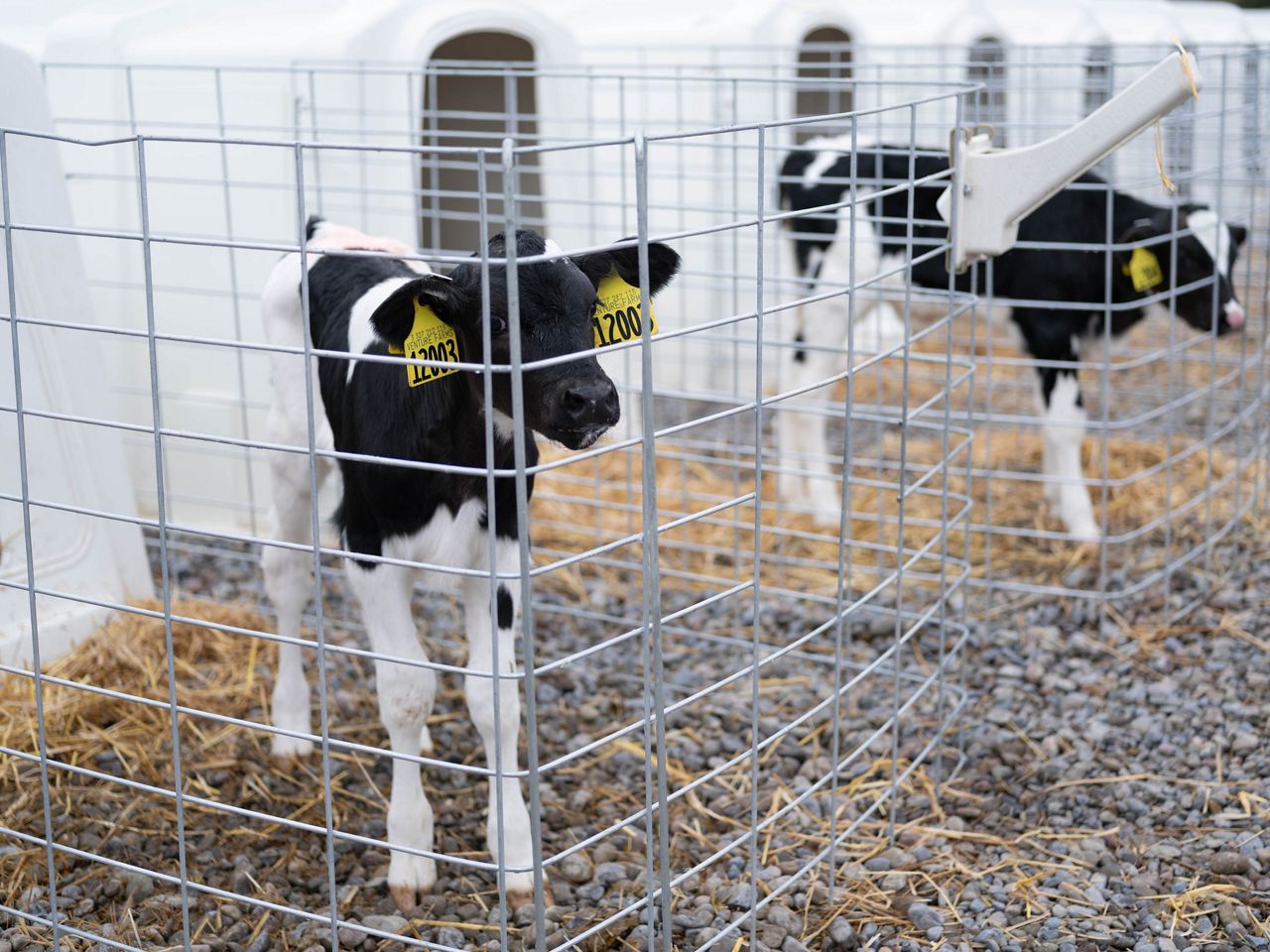
Dairy calves at Venture Farms. These new borns will grow to produce milk for Venture Farms in years to come. (Spectrum News 1/Emily Kenny)
Data from the National Center Farmworker Health shows that over 70% of agricultural workers are immigrants. Richard Stup, director of Cornell University’s agricultural workforce development program, said this largely has to do with changes to the kinds of jobs people are seeking.
“In our culture, we’ve encouraged our kids to, in many cases, seek higher education, seek higher paying jobs, and they’ve done that,” Stup said. “It’s simply a matter of the rural population is not as large as it used to be. There aren’t as many people staying to work on those farms as there was at one time.”
Stup said since President Donald Trump took office there was only one immigration raid on a New York farm that he is aware of, but some other farm employees have been detained while trying to get their citizenship.
“Some of those folks that have been here, especially those that have been here for the long term, have started the process of getting their status adjusted and that requires visits to immigration offices, courtrooms,” he said. “There have been several situations where a long-term farm employee went for a regular visit at one of the offices and ICE picked them up.”
Many of these employees have been here for 20 to 30 years, Stup said, and due to their time spent on the farm, they are highly skilled and even work as middle managers, making it difficult to find replacements for them.
“It creates a lot of fear on the part of the farm owners and managers. They’re trying to run a business and to have some of your skill employees, people that you know personally, to have them picked up and removed from the country is terrifying and there are business implications,” Stup said.
In addition to changes to the H-2A program, Stup said those who have been here without authorized status but have contributed for decades to New York farms need to be considered too.
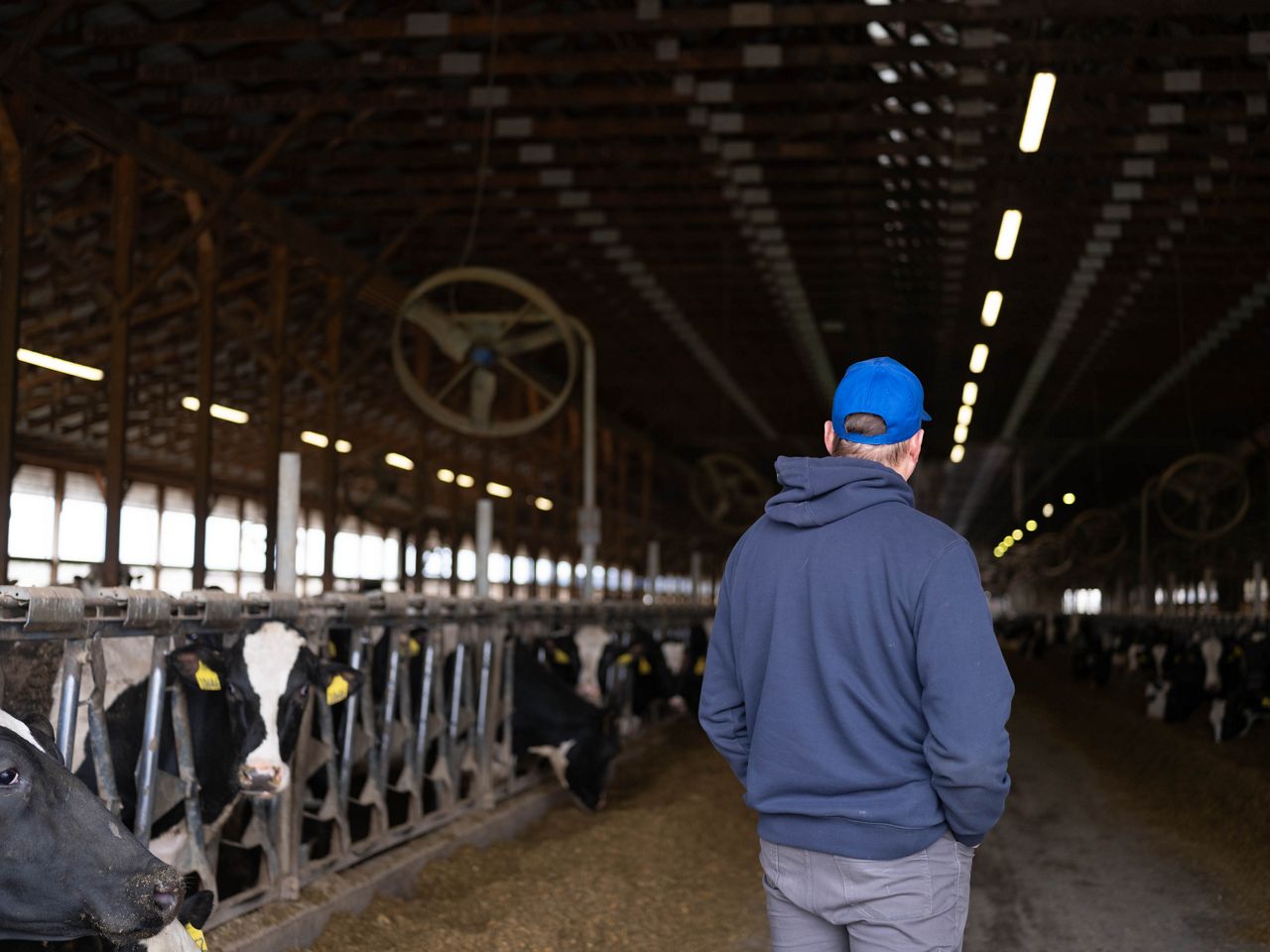
Riehlman looks at the cows in his barn. (Spectrum News 1/Emily Kenny)
“We can’t just leave them in legal limbo. There needs to be some way for them to move to at least an authorized status so that we can recognize these people that we want contributing to our economy and to our agricultural industry and not leave them out in the cold,” Stup said.
In October, the U.S. Department of Labor changed how the wages for H-2A workers are calculated leading to a reduction in what farmworkers are paid hourly. It sets two categories for skill sets, level one sets the hourly wage at $13.28 and the second at $16.35. However, the New York state minimum wage will apply instead.
“President Trump is putting farmers first and that includes strengthening the farm workforce and improving H-2A and H-2B visa programs. Our immigration system has been broken for decades and we finally have a president who is enforcing the law and acting on fixing programs farmers and ranchers rely on to produce the safest and most productive food supply in the world,” said a U.S. Department of Agriculture spokesperson in a statement.
The United Farmworkers Foundation filed a lawsuit in November against the wage cuts citing unfair pay reductions for foreign workers.
“President Trump’s wage cuts serve only one purpose: they make it easier for big agriculture corporations to exploit cheap foreign labor through the H-2A program and replace American farmworkers or avoid paying them a fair market wage,” said UFW president Teresa Romero in a press release.
Food processing jobs
Many dairy processing facilities such as Chobani, Fairlife, Cayuga Milk Ingredients and others have announced expansions to their New York facilities. While dairy farmers are excited about the expanded processing, Riehlman said there are some concerns about filling those jobs when the facilities are operating at full capacity.
“It takes time to be involved in the industry, to really learn what the process is, so can we keep up with the demands of staff and highly skilled labor in these production facilities? I think we’re going to struggle a little bit,” he said.
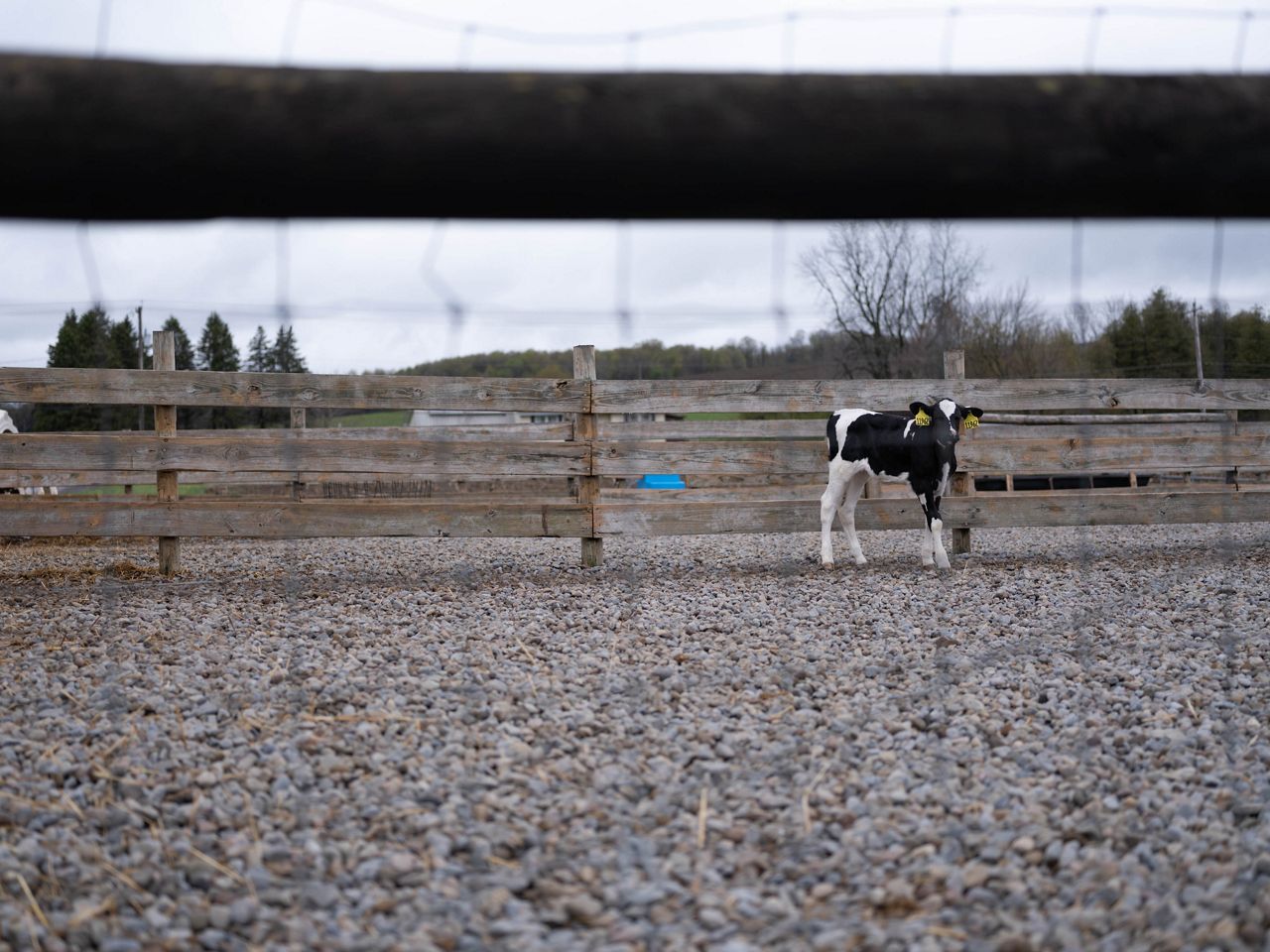
A calf at Venture Farms. (Spectrum News 1/Emily Kenny)
In September 2025, immigration officials raided the Nutrition Bar Confectioners factory in Cato and detained 57 employees. In Omaha, Nebraska, ICE officers raided Glen Valley Foods, a meatpacking plant, and detained more than 70 people, according to a press release from the agency. About 20% of all workers in the U.S. food industry are immigrants, according to data from the Migration Policy Institute.
“Our whole food cycle depends on more than just the production part, there’s also the processing part and we have a lot of that in New York. We have a lot of dairy processing and other vegetable and fruit processing that takes place. We do have immigrant workers that are involved in the processing parts of the business,” Stup said. “The bottom line is that the immigrant workers that we have support other jobs in the industry.”