
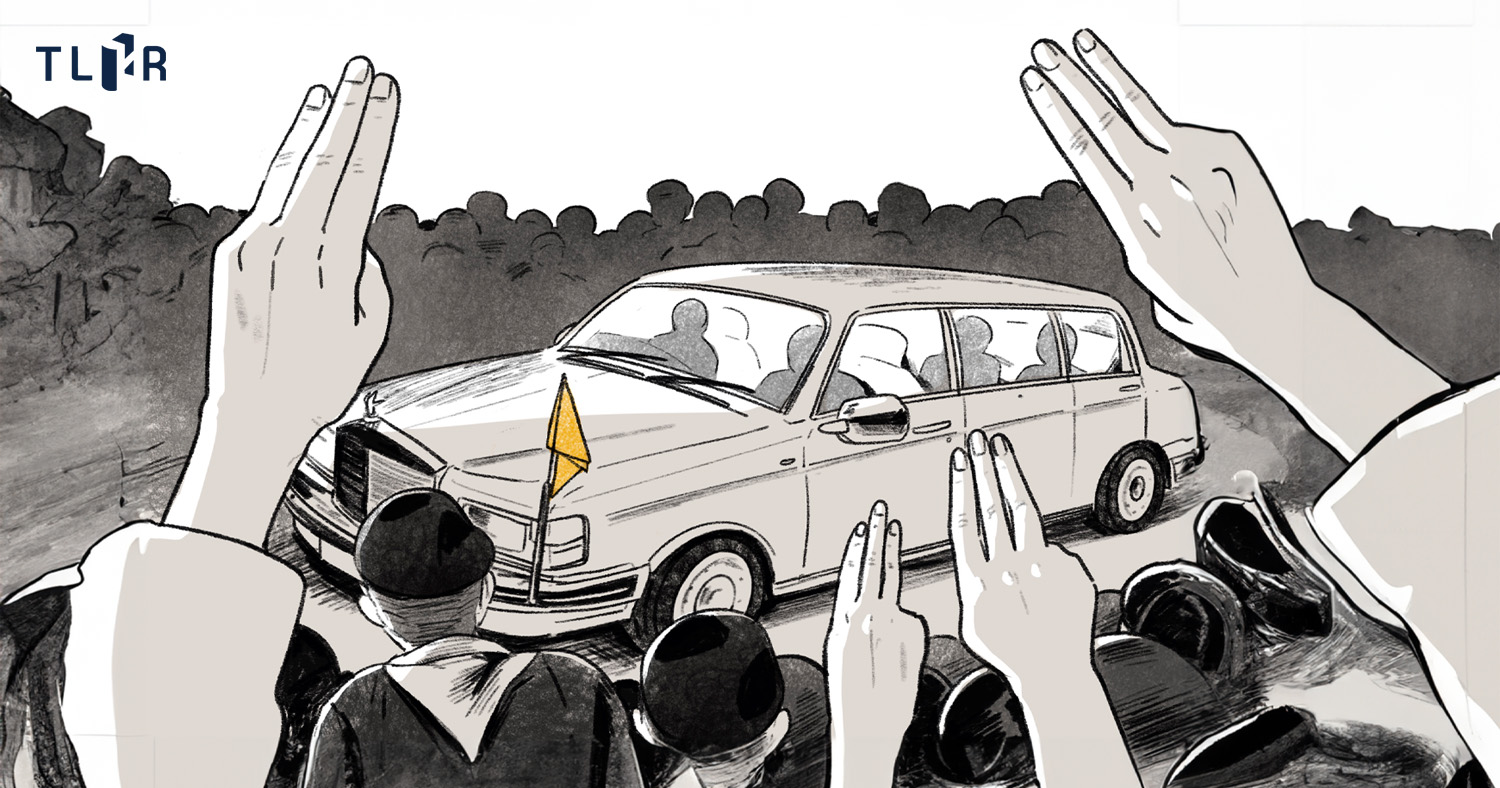
In October 2020, five Thai men attended a peaceful, pro-democracy protest that delayed the Thai Queen’s motorcade by six minutes. The five men–activists Aekachai Hongkangwan, Francis Boonkueanun Paothong, and Suranat Panprasert, artist Mr. “Keng,” (name withheld), and Mr. “Kwan” (name withheld)–were unaware that the Queen’s motorcade would come through the protest area, and they moved away from the road as soon as they realized a royal motorcade was passing. The men were later charged under Section 110 of Thailand’s Criminal Code for attempting “an act of violence against the liberty of the Queen,” which has a mandatory minimum sentence of 16 years in prison.
Following a trial, in June 2023 the Ratchada Criminal Court acquitted all five men, finding that they lacked the intent to obstruct the motorcade. However, on September 5, 2025, the Court of Appeal overturned the acquittal, convicted the five men, and sentenced four men to 16 years’ imprisonment and Mr. Hongkangwan to 21 years and four months in prison.
Since September 2025, the five men have been detained in overcrowded conditions, denied access to timely medical care, and Thailand’s Supreme Court has repeatedly denied their bail requests. They are currently appealing their convictions before the Supreme Court.
Why is This a Key Case?
This case illustrates Thailand’s use of severe criminal provisions to punish and deter peaceful protest and marks the first application of Section 110 of the Criminal Code to criminalize acts of peaceful assembly and expression during the 2020–2021 pro-democracy movement. In response to widespread youth-led protests in 2020-2021 that called for reforms to the government and monarchy, Thai authorities have relied on a range of criminal provisions to crackdown on dissenting voices, including lèse-majesté (Section 112), sedition (Section 116), and public order-related offenses. The use of Section 110, which criminalizes acts of violence against the Queen or her liberty, to convict peaceful protesters is particularly draconian as it mandates 16 years to life imprisonment. The broader pattern of criminalization further creates a chilling effect on peaceful assembly and political expression in Thailand, including advocacy for public-institution reform.
How is the Kennedy Human Rights Center Supporting the Petitioners?
In May 2026, the Kennedy Human Rights Center, Thai Lawyers for Human Rights (TLHR), and the Columbia Law School Human Rights Institute jointly submitted a petition to the UN Working Group on Arbitrary Detention on behalf of the five Thai men who have been convicted and sentenced to lengthy terms of imprisonment following their participation in a peaceful, pro-democracy protest. The petition urges the Working Group to declare the men’s detention arbitrary and call for their immediate release.