
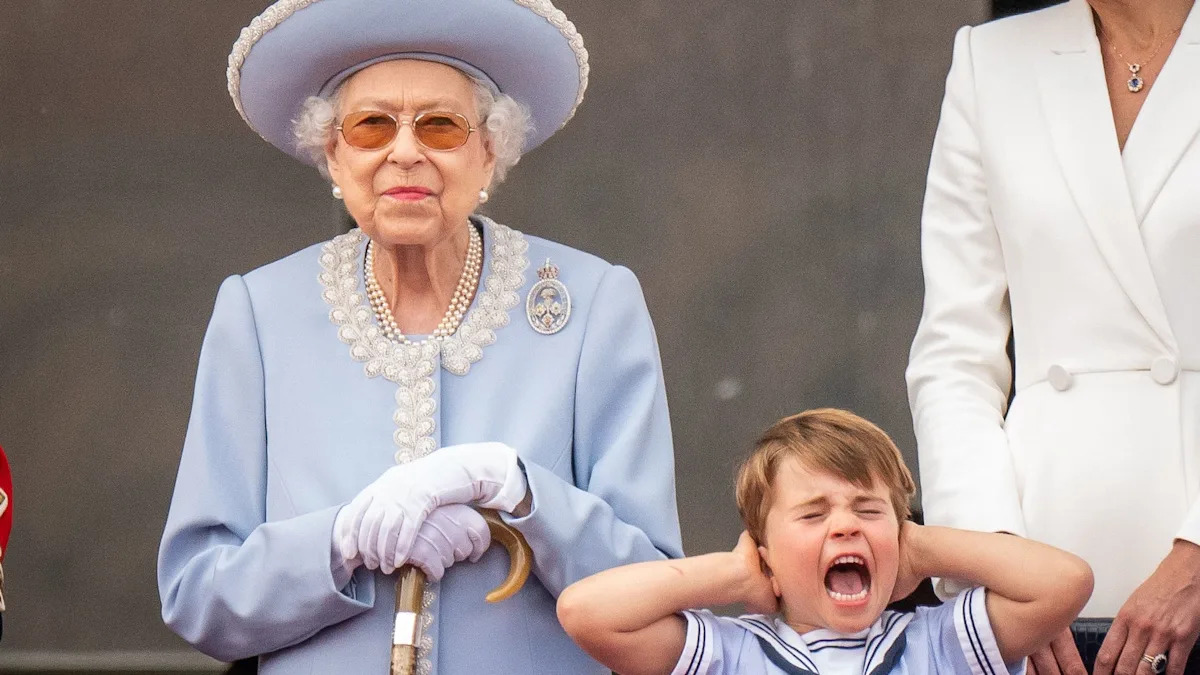
While the late Queen Elizabeth II’s actual birthday fell on April 21, the ruling monarch’s official celebrations traditionally take place on the second Saturday of June – a carefully orchestrated display of pomp known as ‘Trooping the Colour’.
It’s a fitting event title for a monarch who invented what is now known as the ‘rainbow strategy’ – a way of dressing that saw her wear bold, monochromatic colours to ensure she stood out clearly in large crowds and remained visible to as many people as possible.
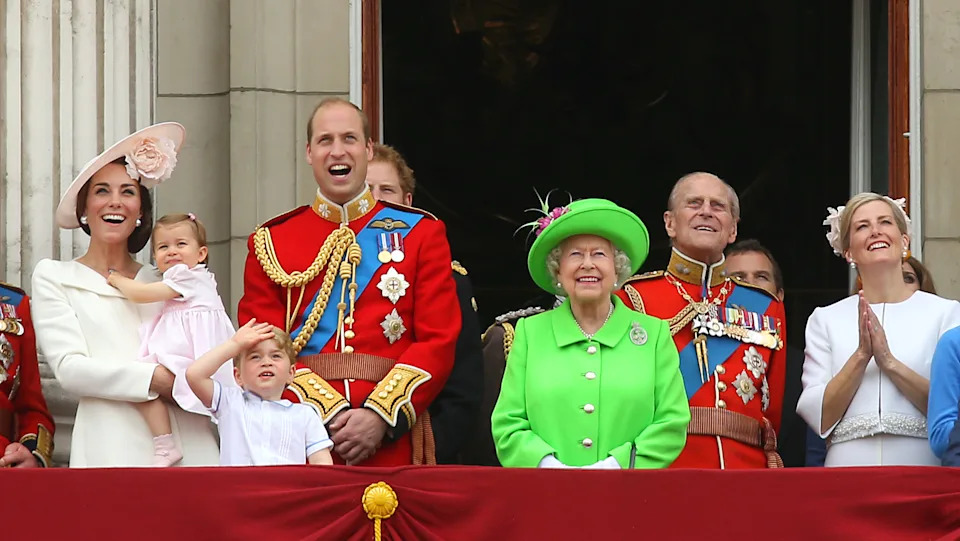
Queen Elizabeth II with the royal family during Trooping the Colour in 2016, wearing a bright green coat and hat (Steve Parsons/PA)
Angela Kelly, her long-time dresser and confidante who joined the royal household in 1994, is widely credited with refining this approach. Together, they developed a uniform that became instantly recognisable, consisting of tailored coats, a Launer London bag, sensible shoes and a matching hat.
“I have to be seen to be believed,” was the famous motto attributed to her, according to biographer Robert Hardman, a simple line that underpinned a lifetime of sartorial strategy.
So, as we approach what would have been Queen Elizabeth II’s 100th official birthday, we look back at eight of her most symbolic looks and the stories behind them.
1. 1947 wedding gown
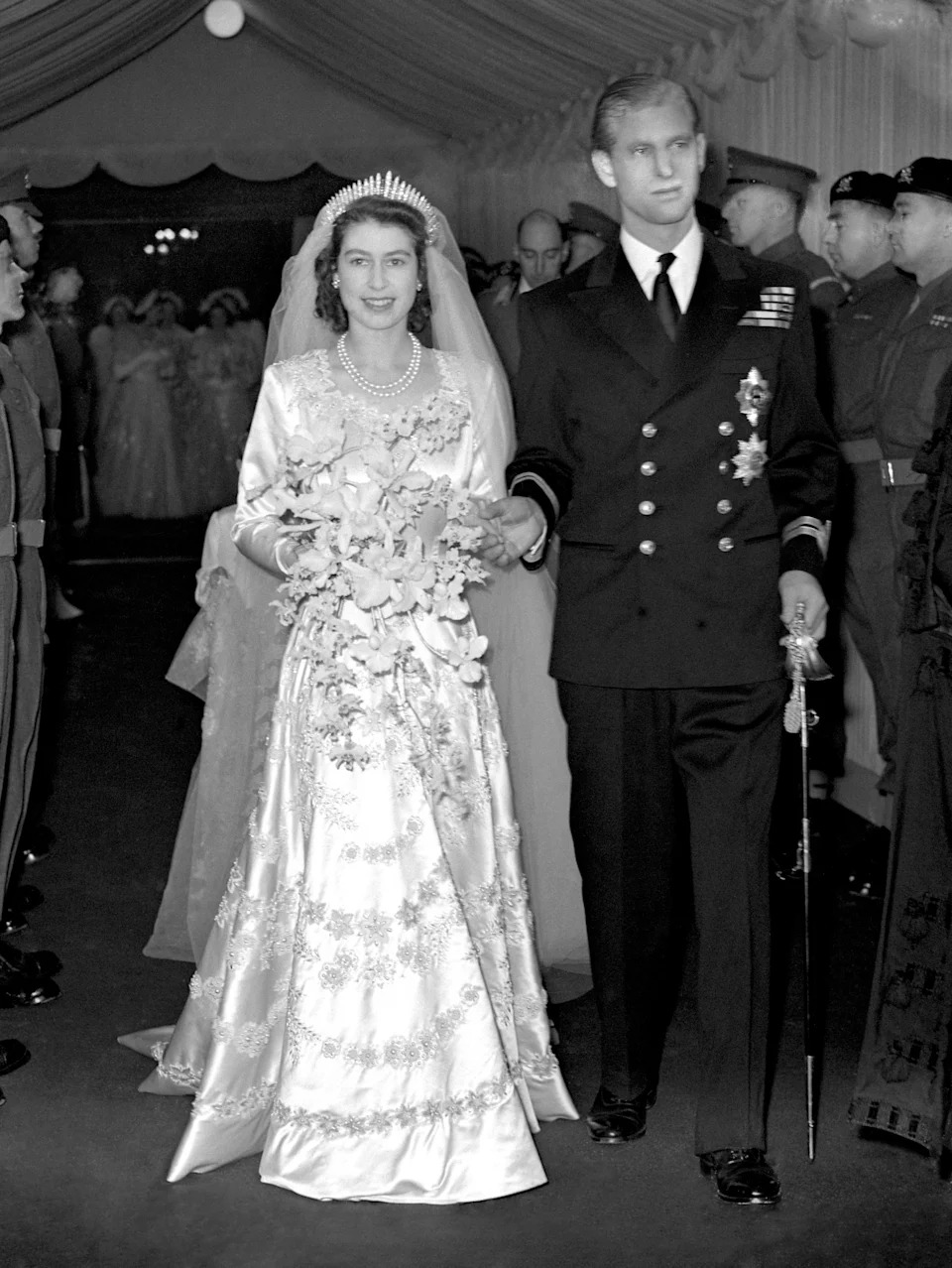
Princess Elizabeth and her husband Prince Philip leaving Westminster Abbey after the wedding ceremony in 1947 (PA Archive)
When Princess Elizabeth married Prince Philip Mountbatten in 1947, Britain was still emerging from the austerity of war. Rationing remained in place and optimism was tentative. Her wedding dress, designed by Norman Hartnell, became an emblem of hope.
Inspired by Botticelli’s Primavera, the gown featured intricate embroidery of flowers, trailing vines and blossoms – a symbol of renewal.
It took 350 dressmakers seven weeks to complete, a feat of craftsmanship that stood in defiance of post-war scarcity.
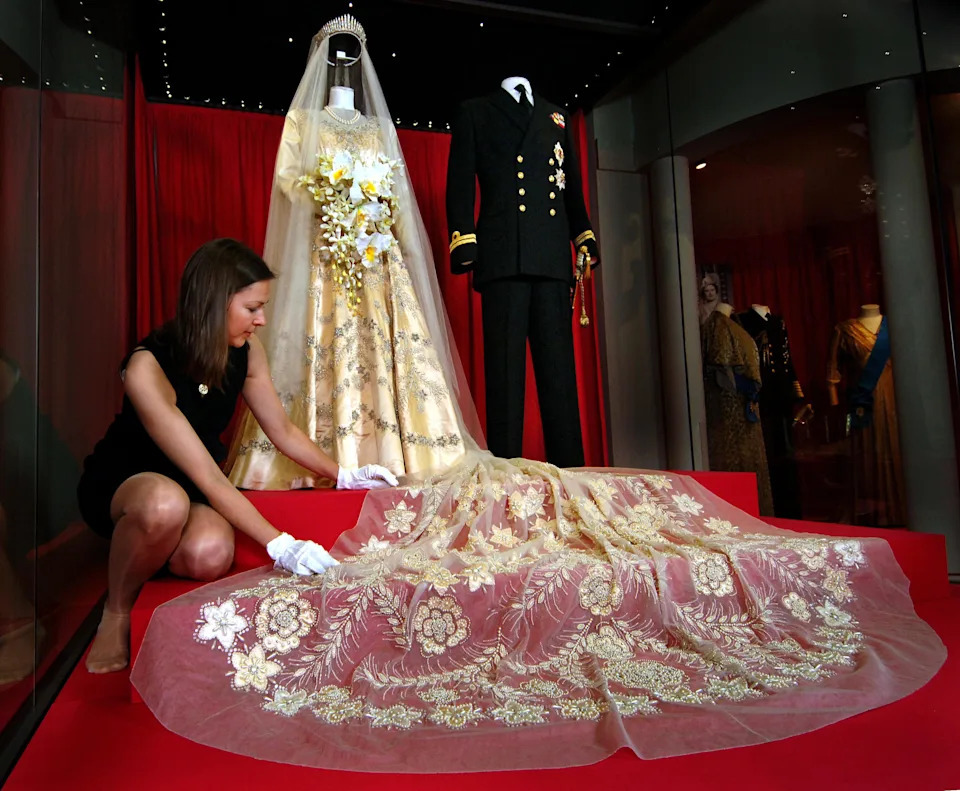
The late queen’s Norman Hartnell wedding dress and 13 foot train on display (PA Archive)
The dress was a restorative token for the public, offering a vision of abundance after years of hardship, and its influence endures – echoed decades later in the bridal choices of figures such as the now Princess of Wales.
2. 1953 coronation gown
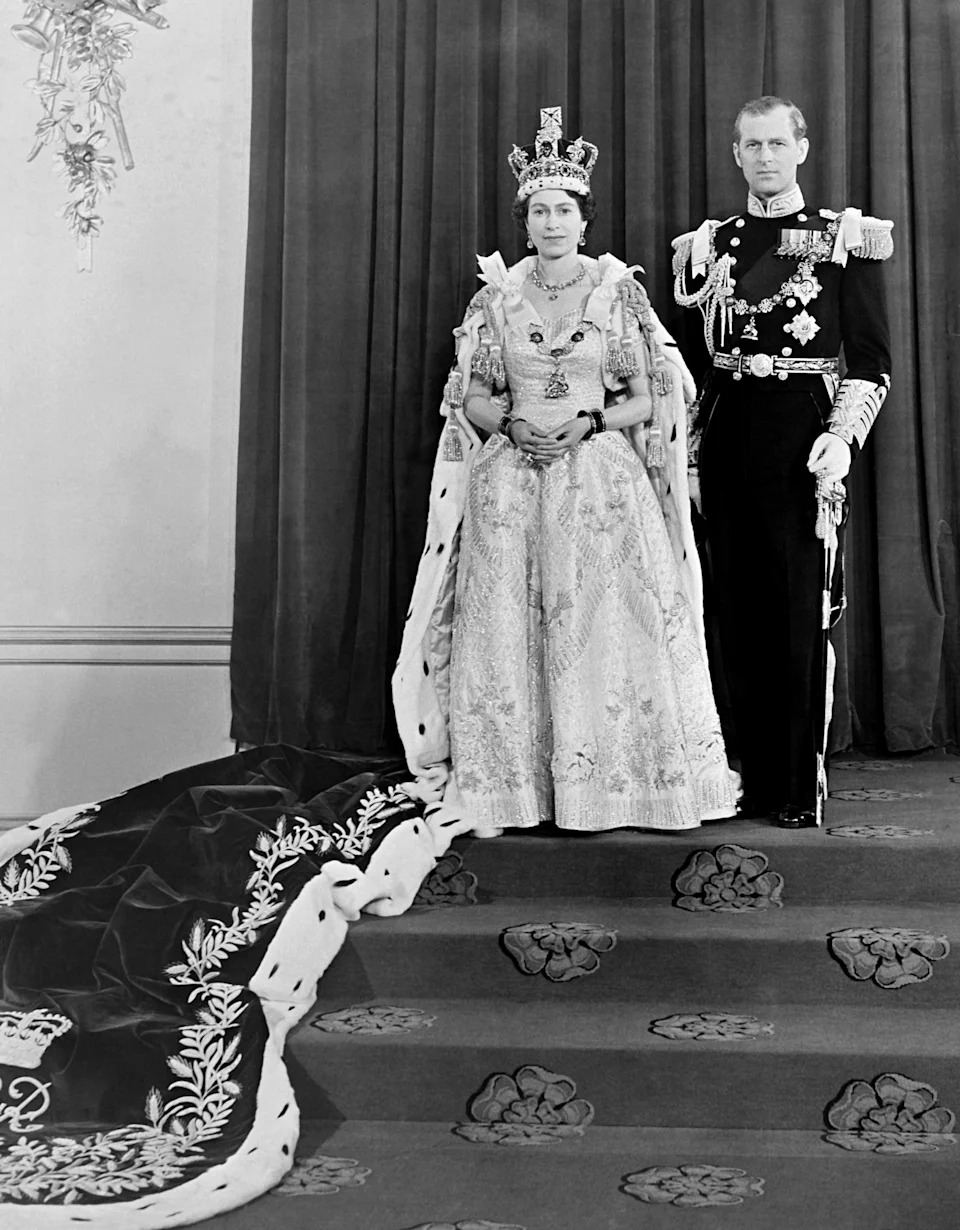
Queen Elizabeth II and her husband the Duke of Edinburgh at her coronation in 1953 (PA Archive)
If her wedding dress symbolised hope, the Queen’s 1953 coronation gown emphasised her approach to symbolism for the rest of her reign.
Also designed by Hartnell, the gown was made from silk produced in Kent and adorned with gold bugle beads, pearls and diamantés. Yet its true significance lay in its embroidery.
At the Queen’s request, the dress incorporated not only the floral emblems of the United Kingdom – the Tudor rose, Scottish thistle, Welsh leek and Irish shamrock – but also those of the Commonwealth. Canada’s maple leaf, India’s lotus and others were stitched into the design.
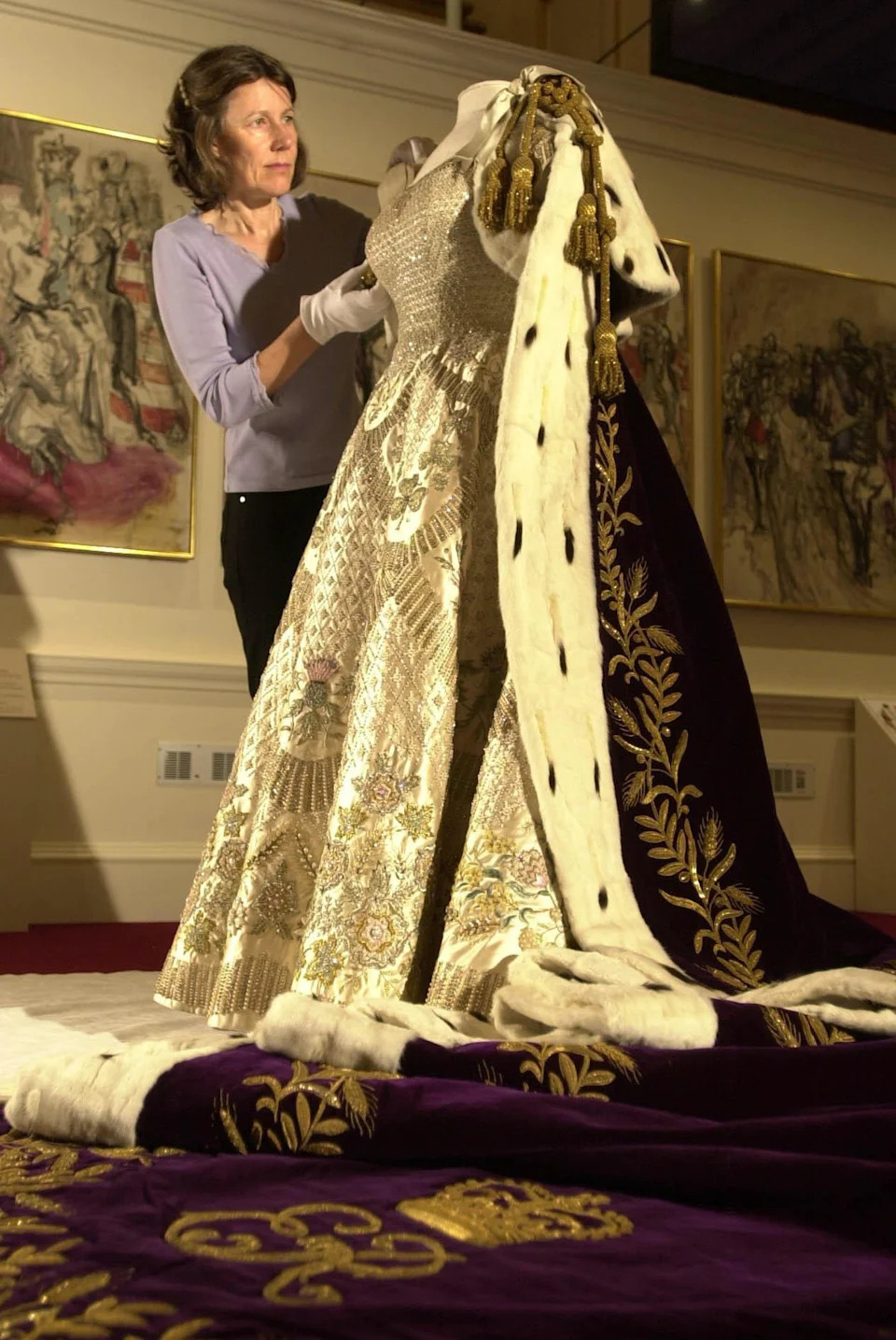
The late Queen’s coronation gown on display in the Ball Supper Room at London’s Buckingham Palace (Matthew Fearn/PA)
This was not just decorative, of course, but a clear statement of unity and a visual acknowledgement of a changing empire. In one garment, the Queen articulated the scope of her role – sovereign not just of Britain, but of a global community.
3. 1960 blue bolero and dress for Princess Margaret’s wedding
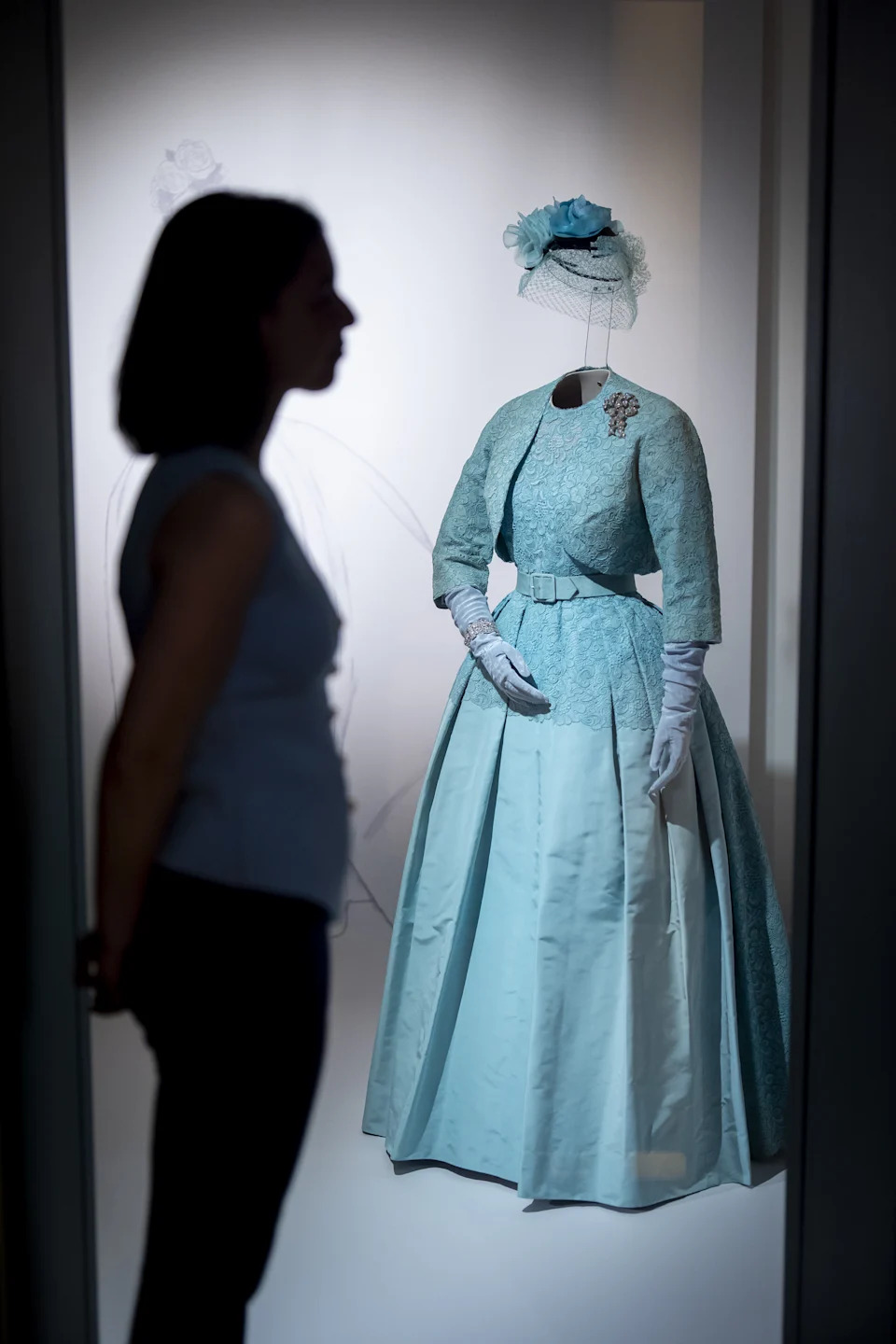
An ensemble worn for the wedding of Princess Margaret and Mr Antony Armstrong-Jones, May 9, 1960 (Aaron Chown/PA)
By 1960, Britain stood on the cusp of cultural transformation. The austerity of the previous decade was giving way to the energy of the Swinging Sixties, but tradition still held sway.
The late Queen’s outfit for Princess Margaret’s wedding to Antony Armstrong-Jones captured this transitional moment.
Her crinoline-skirted blue gown, complete with guipure lace and a matching bolero jacket, echoed the silhouette of the bride’s dress. It was also the last time a full-length gown would be worn by a royal wedding guest who was not the bride.
The choice of blue was also insightful. It marked the beginning of a lifelong affinity for the colour – which is now adopted by the Prince and Princess of Wales – conveying calm, trust and authority. Paired with a hat adorned with three silk roses – a nod to Margaret Rose – the look balanced personal sentiment with public symbolism.
4. 1975 “cherry blossom” dress
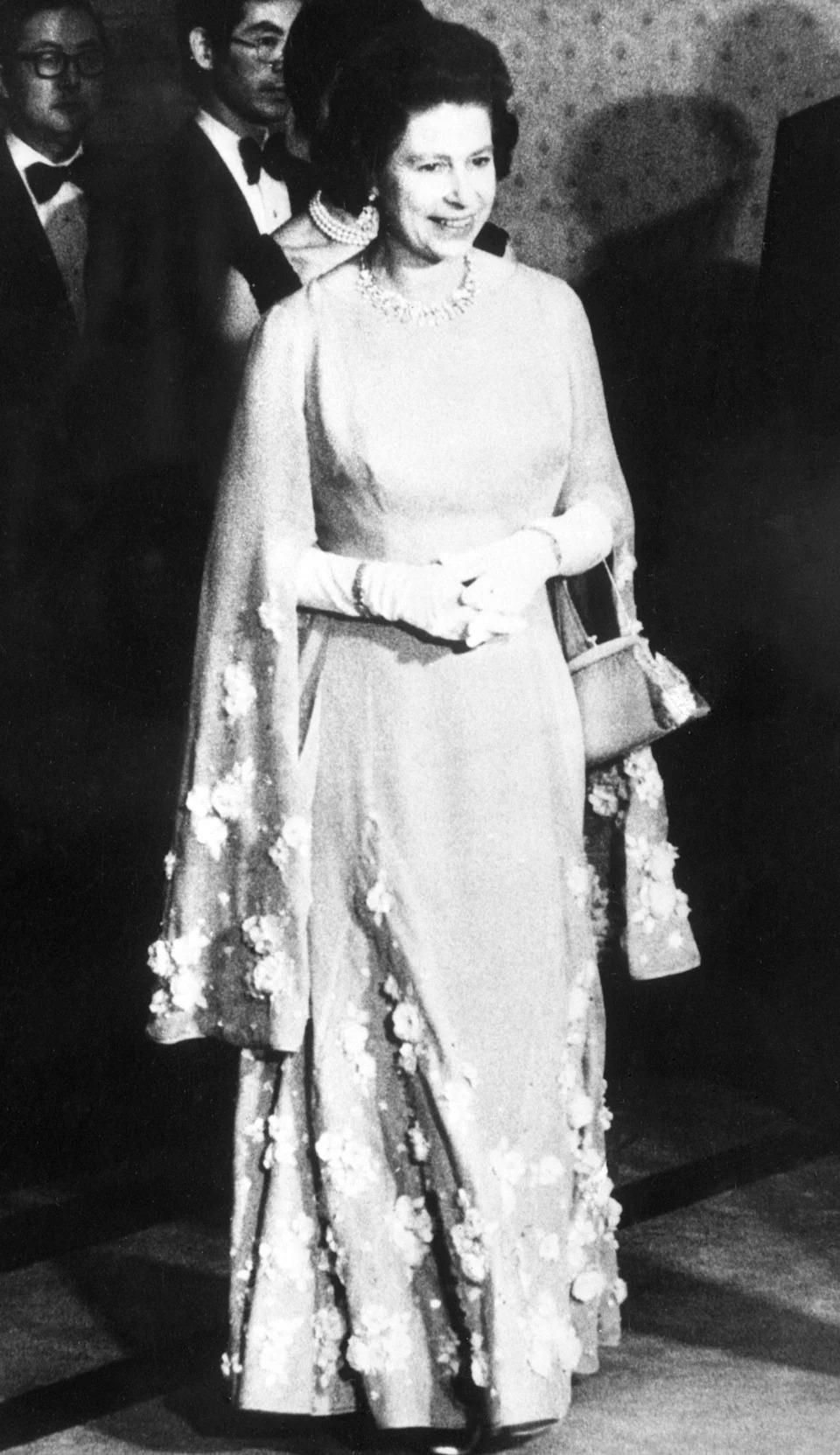
Queen Elizabeth II attending a dinner hosted by Japanese Prime Minister Takeo Miki in 1975 (Pana/PA Archive)
Nowhere was the Queen’s sartorial diplomacy more evident than on overseas tours. Her wardrobe became a carefully curated tribute to the nations she visited, incorporating their symbols, colours and cultural motifs.
In Japan in 1975, she wore a “Cherry Blossom” dress that referenced the nation’s sakura – a powerful emblem of beauty and transience.
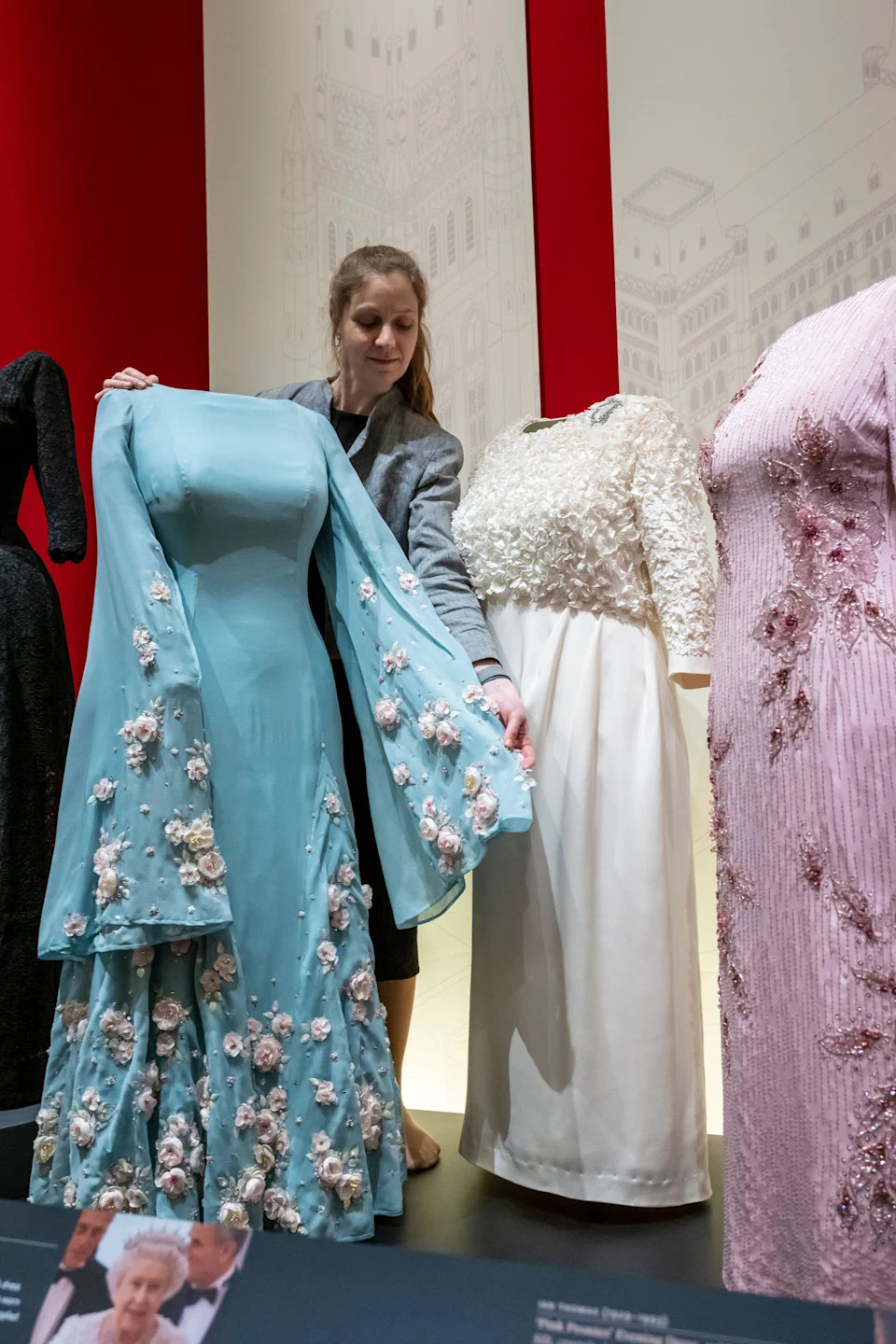
A curator with Queen Elizabeth II’s “Cherry Blossom” evening gown (Alamy/PA)
Similarly, during her historic 2011 state visit to Ireland, a white silk crepe gown by Angela Kelly featured more than 2,000 hand-sewn shamrocks, accompanied by a harp brooch – a gesture widely interpreted as one of reconciliation and goodwill.
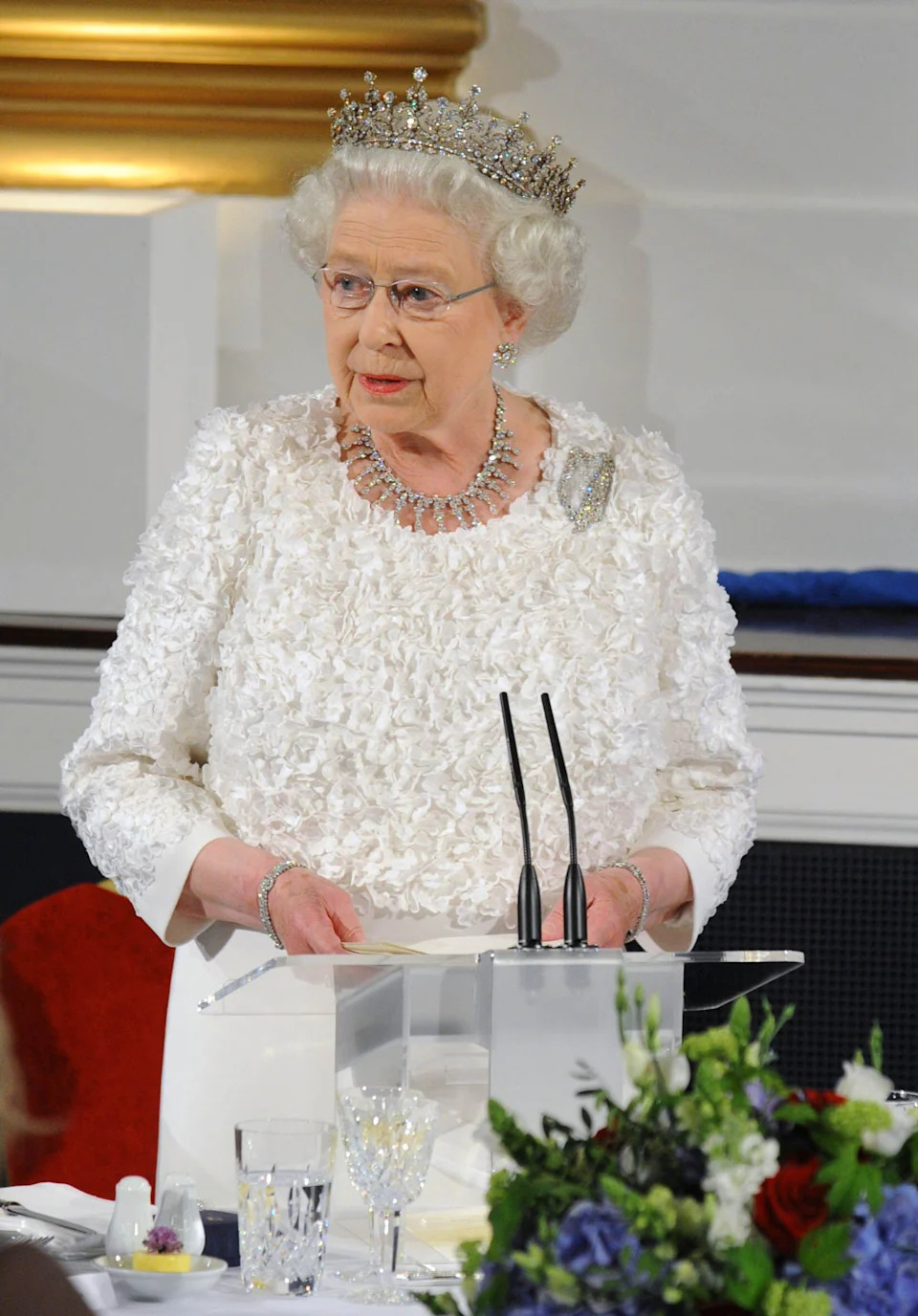
Queen Elizabeth II wearing a gown covered in hand-sewn shamrocks for a state dinner at Dublin Castle on May 18, 2011 (Alamy/PA)
These choices were rarely overtly political, yet their impact was undeniable, as they demonstrated cultural awareness, respect and a willingness to meet others on their own symbolic ground.
5. 1992 annus horribilis
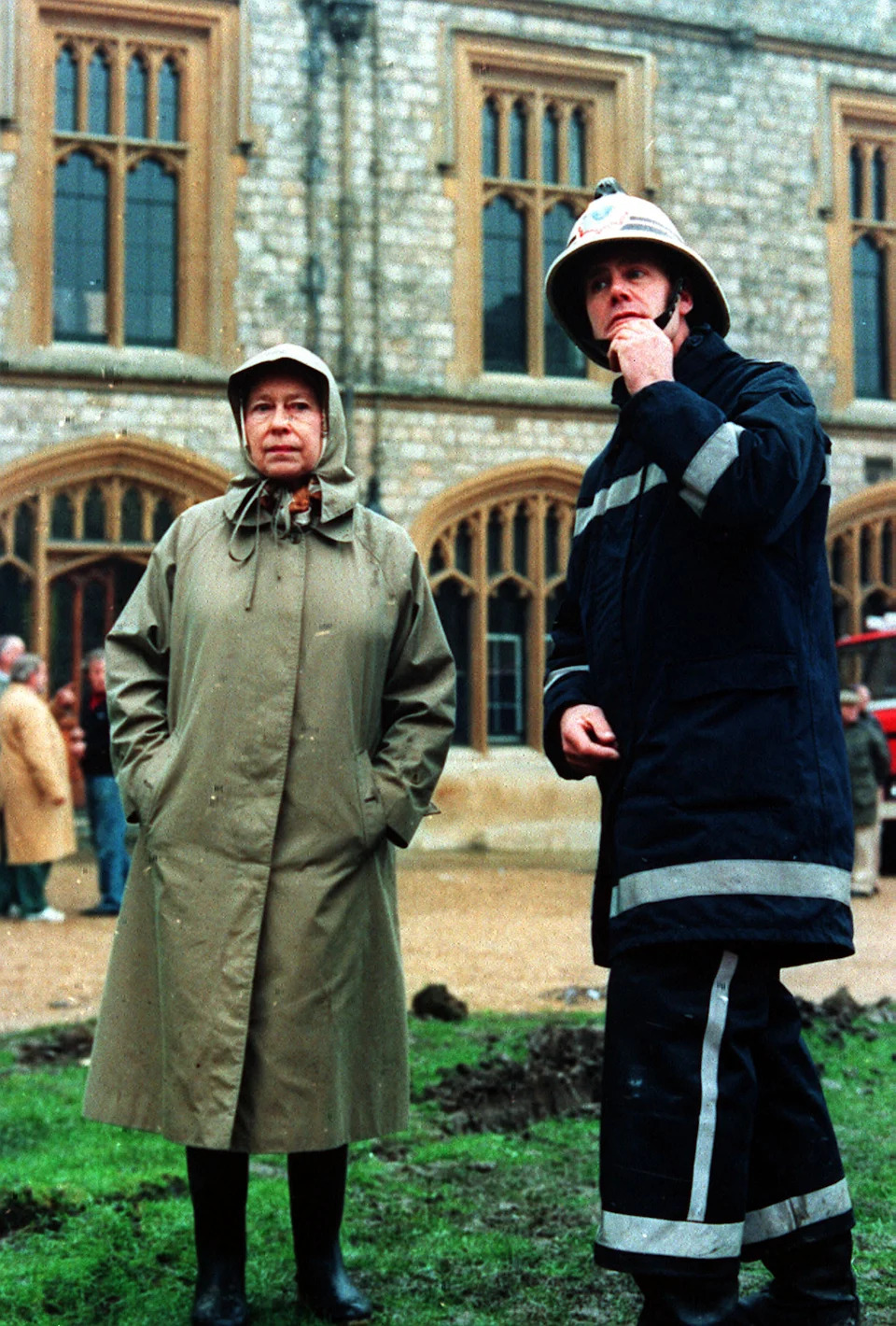
Queen Elizabeth II inspects the ruins of Windsor castle with a fireman, 1992 (Tim Ockenden/PA)
Not all of the Queen’s most symbolic outfits were ceremonial; some were powerful purely because they were unintentional.
In November 1992, following a devastating fire at Windsor Castle, the Queen was photographed inspecting the damage in a wax raincoat and wellington boots.
The image has since become emblematic of her so-called “annus horribilis” – a year marked by personal and institutional upheaval, including the breakdown of three of her children’s marriages and a series of public challenges to the monarchy.
There was no grandeur, embroidery or jewels, instead, the outfit symbolised pragmatism and resilience in hardy, weatherproof outerwear.
It captured a monarch confronting crisis with determination – embodying a distinctly British ethos: ‘keep calm and carry on’.
6. 2012 Olympic cameo
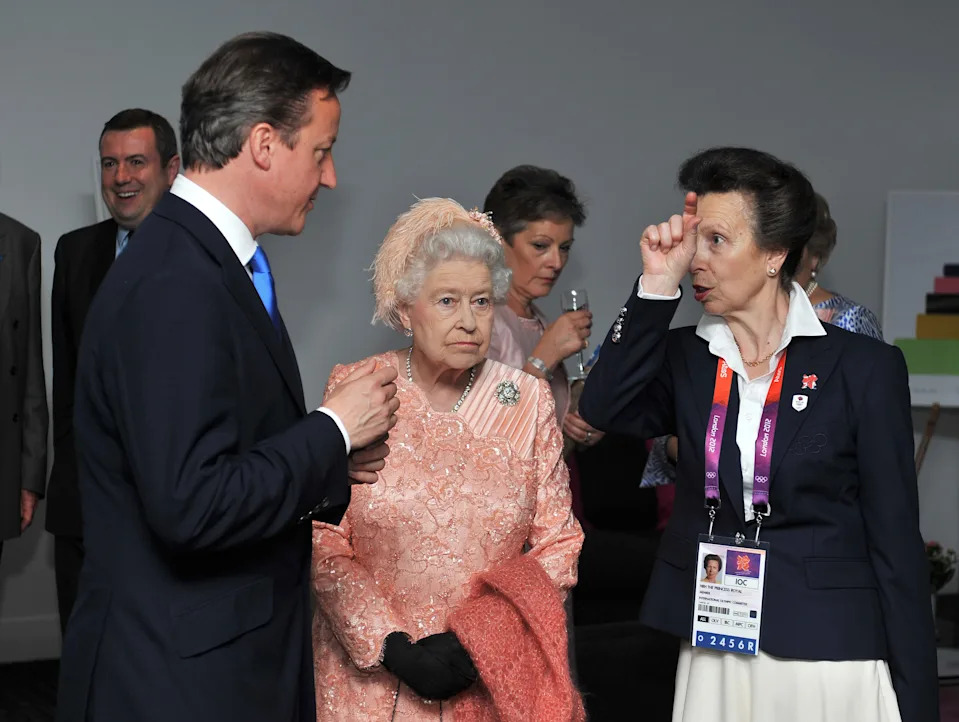
Queen Elizabeth II with the Princess Royal and Prime Minister David Cameron at the Olympic Games 2012 Opening Ceremony in London (John Stillwell/PA)
While tradition defined much of her wardrobe, the late Queen also understood the importance of reinvention.
Her appearance in the 2012 London Olympics opening ceremony – alongside Daniel Craig as James Bond in a pre-recorded sketch – was a moment of unexpected levity.
The peach lace dress she wore for the occasion, designed by Angela Kelly, was engineered with remarkable ingenuity, complete with sewn-in bloomers to accommodate the fictional parachute stunt.
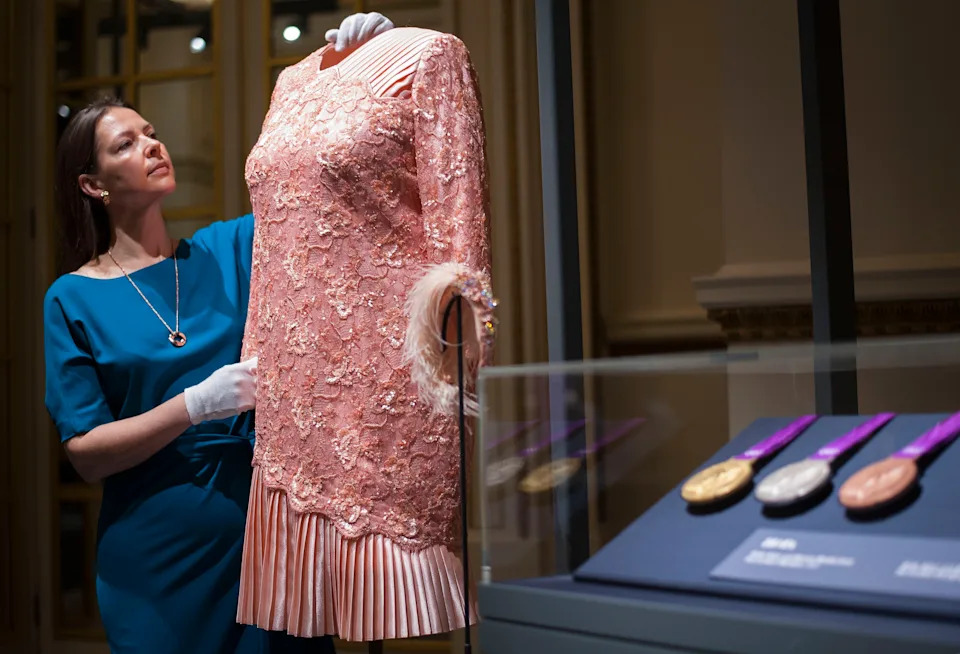
The queen’s peach cocktail dress on display in 2016 (Lauren Hurley/PA)
Paired with Queen Adelaide’s historic brooch, the look bridged past and present.
It demonstrated a willingness to engage with contemporary culture, reinforcing the monarchy’s relevance in a rapidly changing society.
7. 2020 Pandemic message
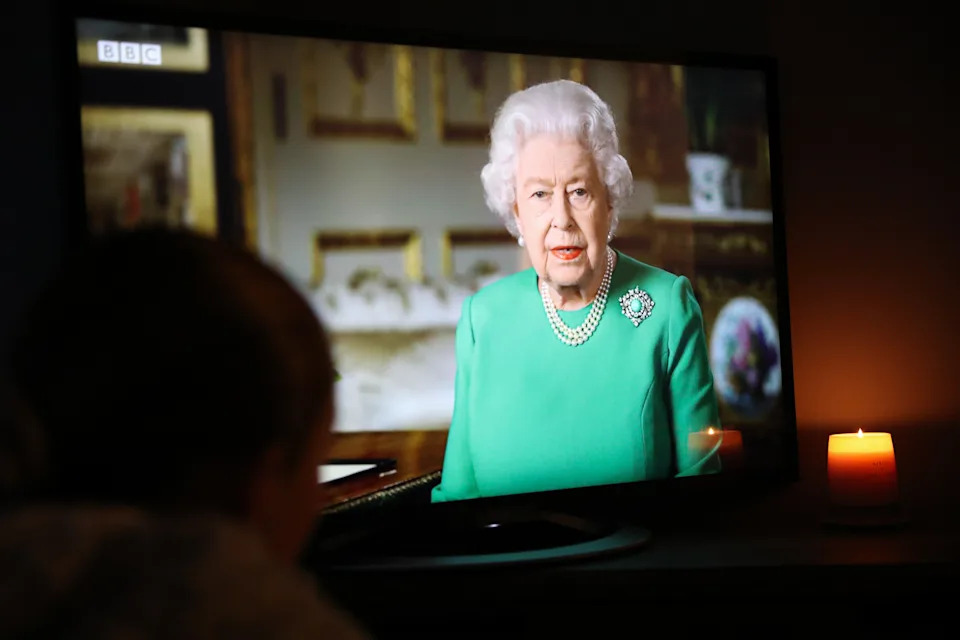
Queen Elizabeth II delivering her address to the nation and the Commonwealth during the coronavirus pandemic in 2020 (Scott Wilson/PA)
In April 2020, amid the uncertainty of the COVID-19 pandemic, the Queen delivered a rare televised address. Her outfit – a vivid green dress – became as memorable as her words.
Green, associated with renewal and stability, was a deliberate choice. Paired with her three-strand pearl necklace and turquoise diamond brooch, the ensemble conveyed calm and reassurance.
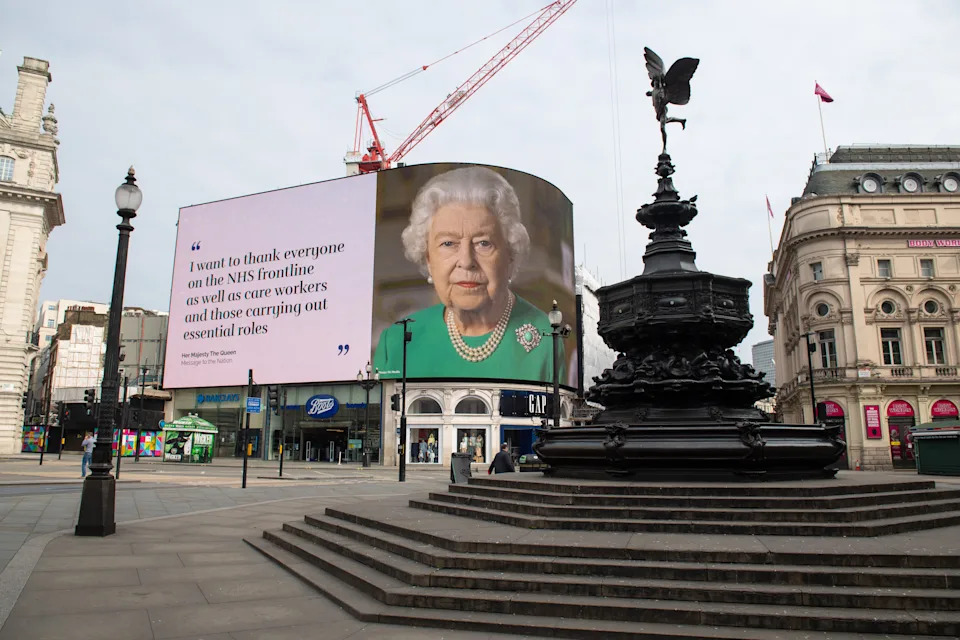
The Queen’s address was broadcast across the nation (Dominic Lipinski/PA)
Her message – “We will meet again” – echoed through living rooms across the country, but it was reinforced by her attire. Even in isolation, her wardrobe continued to serve as a conduit for connection.
8. 2022 Platinum Jubilee
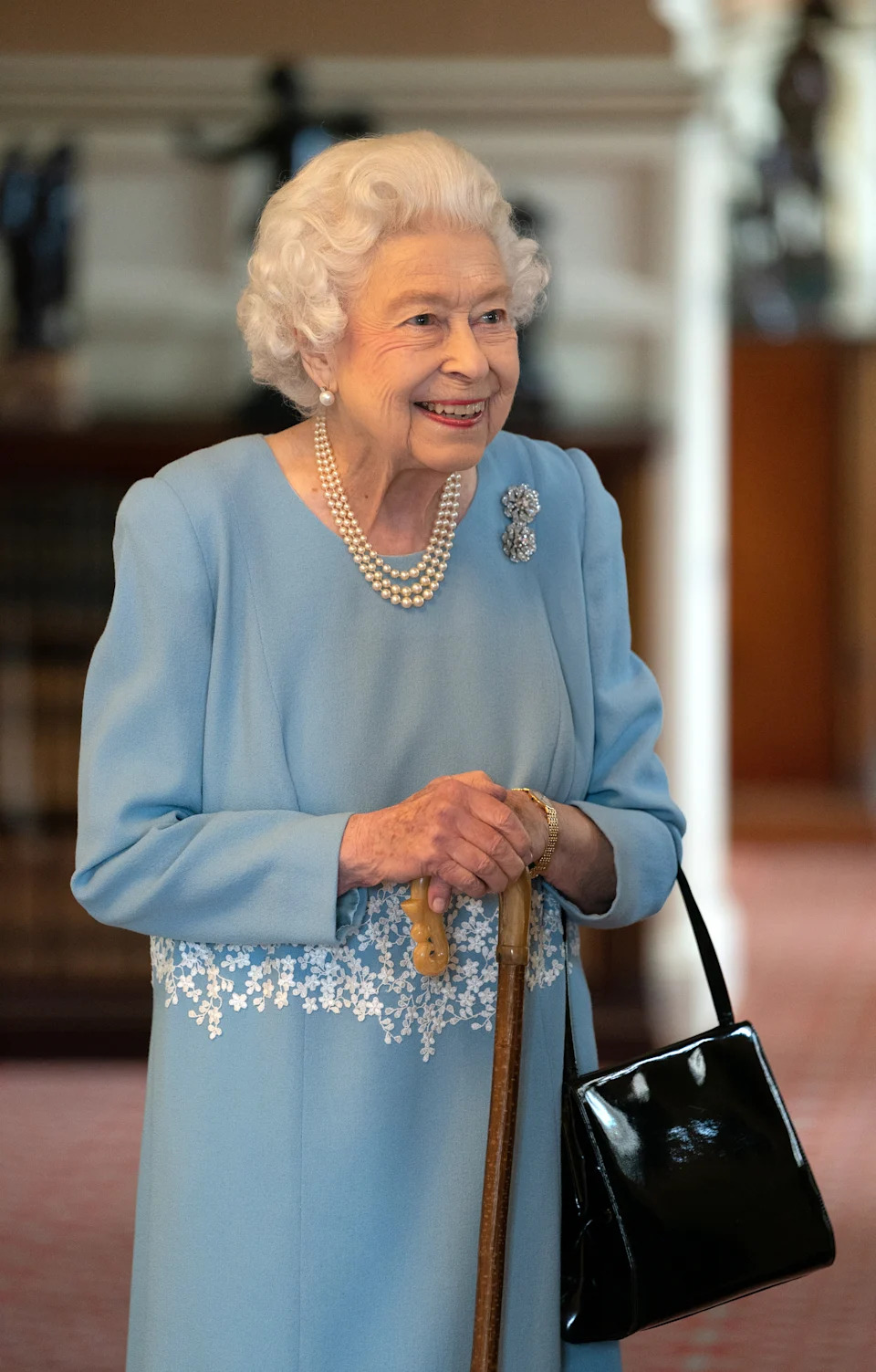
Queen Elizabeth II during a reception celebrating her Platinum Jubilee in 2022 (Joe Giddens/PA)
For her Platinum Jubilee, the Queen appeared in a powder blue dress by Angela Kelly – a soft, calming palette inspired by porcelain vases in a corridor at Windsor Castle.
Her signature pearls framed the neckline, while an aquamarine brooch – a gift from her father, King George VI – added a deeply personal touch for the momentous occasion.
After decades of bold colour and vivid symbolism, this look conveyed serenity and continuity.