
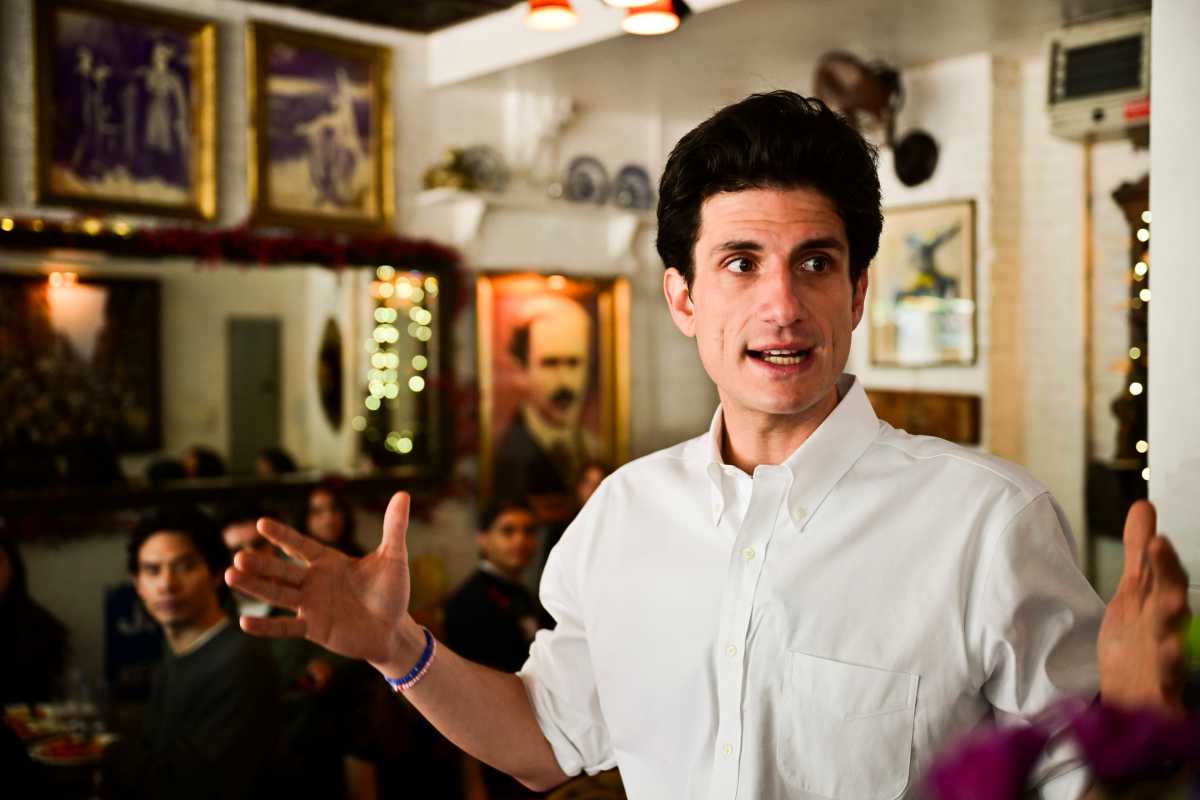
Jack Schlossberg is rolling out a proposal to expand federal support for nurses, amNewYork has learned, the latest in a string of policy pushes from the Kennedy scion as he tries to break through in a crowded Democratic primary for one of Manhattan’s most closely watched congressional seats.
Schlossberg’s “Next-Gen Nursing Initiative” would quadruple funding for the federal Nurse Corps program, increasing it from about $92 million to more than $370 million annually, according to the campaign, which says the plan could help more than 15,000 nurses nationwide, including about 3,800 in New York City.
The existing Nurse Corps program operates on a much smaller scale. Federal Department of Health and Human Services (HHS) budget documents say the $92.6 million program would fund an estimated 243 scholarship awards and 775 loan repayment awards in fiscal year 2027, and supported 2,450 nurses and nurse faculty as of September 2025.
The HHS is led by Secretary Robert F. Kennedy Jr., his cousin and a frequent target of Schlossberg’s criticism.
The proposal would steer federal scholarship and loan repayment assistance toward nurses who work in nursing homes, assisted living facilities and rehabilitation centers — settings Schlossberg says are being squeezed by a growing nursing shortage and an aging population.
“This is my shot in the arm for both,” Schlossberg said in an interview with amNewYork. “We don’t do enough to help seniors and nurses.”
The plan would designate long-term care facilities as priority service sites under Nurse Corps, create a paid residency track for long-term care nursing and build a pipeline between federally supported nurses and high-need elder care facilities.
A March report from the Center for Health Workforce Studies at the University at Albany found that New York’s RN education pipeline has remained relatively flat in recent years, with 10,286 new RN graduates statewide in 2024, including 3,840 in New York City. The report also found that slightly more than half of nursing deans said they turned away qualified applicants in 2025, citing faculty shortages, limited clinical training sites and admissions caps as key barriers.
The rollout gives Schlossberg another chance to emphasize policy in a race where he has drawn attention as the son of Caroline Kennedy and the only grandson of President John F. Kennedy. Schlossberg has said he is trying to distinguish himself with concrete proposals on housing, affordability, gun trafficking and health care.
“I think the best way to differentiate yourself is on policy,” Schlossberg told amNewYork in March.
On Sunday, Schlossberg rolled out another family-focused proposal alongside his mother, calling for the federal Child Tax Credit to be converted into a monthly benefit and funded with money he said should be redirected from President Donald Trump’s proposed White House ballroom.
Schlossberg said his nurses’ plan would be paid for by rejecting proposed health workforce cuts tied to RFK Jr. by redirecting a portion of projected Department of Health and Human Services savings, and by building on existing Title VIII nursing workforce programs.
Asked what his fallback would be if those savings are not available, Schlossberg did not name another funding source.
“Show me the member of Congress who wants to block helping out nurses and everybody’s parents and grandparents,” he said.
Schlossberg also did not commit to requiring participating long-term care facilities to meet wage, staffing or safety standards. Asked how he would keep nurses in elder care after their federal service commitments end, he said the plan starts with expanding the workforce pipeline.
“I think it starts with investing more in the pipeline to serve these facilities,” Schlossberg said, adding that more could be done through incentives and benefits.
The campaign said the plan was developed through research and conversations with nurses. Schlossberg said he had spoken with some nurses union representatives, but did not say a union had formally endorsed the proposal.
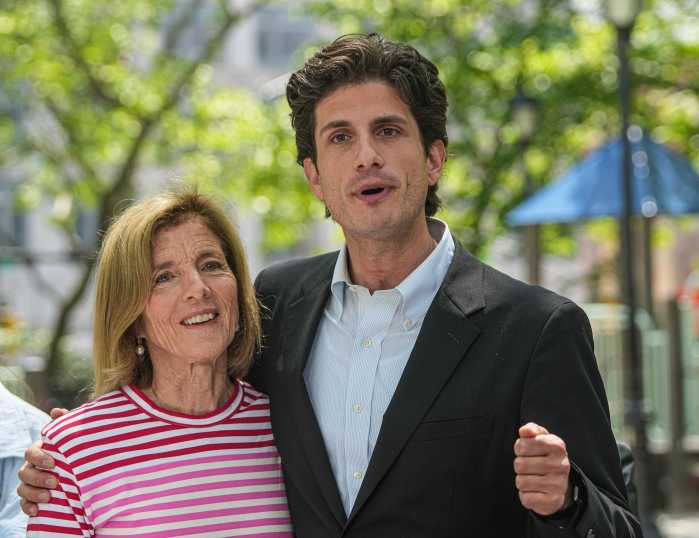 Jack Schlossberg stands alongside his mother, Caroline Kennedy, may 10Photo by Dean Moses
Schlossberg is running to replace retiring U.S. Rep. Jerry Nadler in New York’s 12th Congressional District, which includes much of Midtown, the Upper East Side and the Upper West Side. The field includes Assembly members Alex Bores and Micah Lasher, attorney George Conway and others.
Public polling has suggested Schlossberg is a top contender, though the available surveys have largely been sponsored by candidates or outside groups. Recent polls have shown him leading by margins of 3 to 10 points, while a late-February survey had Bores narrowly ahead.
The nursing proposal comes as Schlossberg seeks to claim the progressive lane in the primary. He has pointed to his positions on campaign finance, foreign policy, health care and immigration, and has said he does not take super PAC money, corporate PAC money or money from Big Tech and artificial intelligence interests.
FEC records show Schlossberg’s campaign has received limited PAC contributions, including $5,000 from Oceans PAC, $3,500 from Democratic Action Network and $5,000 from PAC to the Future, Pelosi’s leadership PAC. Those donations are capped and disclosed.
But his “No PAC Jack” branding has drawn scrutiny beyond the direct contributions. The Judge Street Journal reported last week that several PACs and hybrid PACs had solicited donations using Schlossberg’s name or voice.
Asked about the slogan, Schlossberg said his pledge is aimed at super PACs, corporate PAC money and Big Tech or AI money — but not every limited PAC contribution. He said leadership PAC donations are “apples to oranges” compared with unlimited super PAC spending.
“Not all PACs are the same,” Schlossberg said.
At the same time, the Working Families Party has signaled reluctance to line up behind him. City & State reported that WFP State Director Jasmine Gripper said the party may reopen its endorsement process because Schlossberg was polling ahead.
“As the polls show Jack Schlossberg ahead, we think we can do better than that,” Gripper said, according to City & State.
Schlossberg rejected that criticism in the interview, saying he is “the most progressive candidate in this race.”
He also addressed another issue that has divided the field: protests outside houses of worship over real estate events involving West Bank property.
Asked about the recent protest outside Park East Synagogue, Schlossberg said he understood why demonstrators objected to what he described as illegal land sales being promoted in a house of worship, calling it “distasteful.” But he said he still supports buffer-zone legislation around houses of worship and schools, arguing that antisemitism is real and that people should feel safe when they pray.
Asked whether he would consider federal action to stop U.S.-based sales of West Bank settlement property, Schlossberg said he would look at the options if elected.