
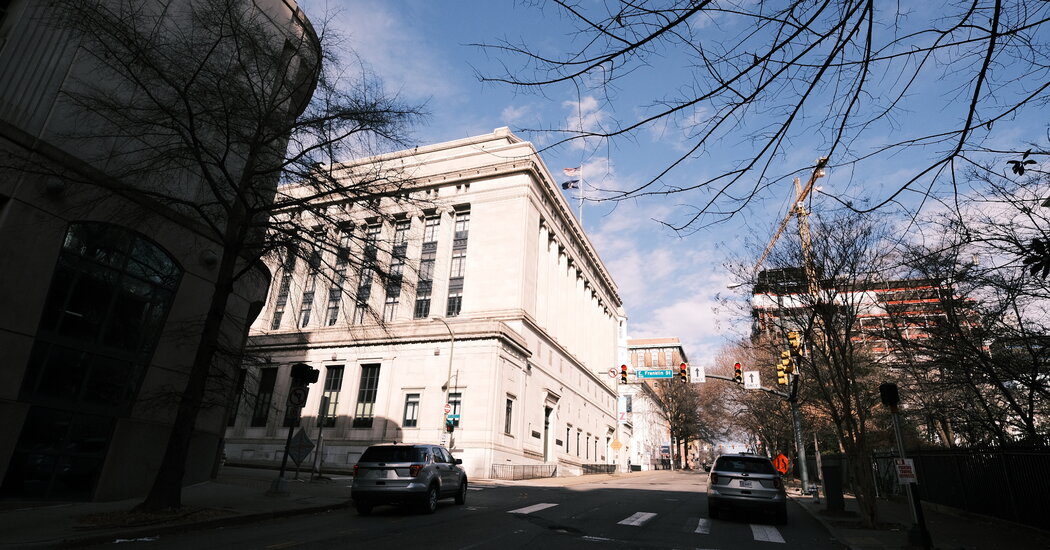
In Virginia, to be adopted, a constitutional amendment must be passed in the legislature twice, with a statewide election occurring between. In a 4-to-3 decision, the state court justices found that the first passage of the amendment came too late to be valid because, by the time the General Assembly acted, more than a million early voters had already cast their ballots in the 2025 general election.
Got a news tip about the courts? If you have information to share about the Supreme Court or other federal courts, please contact us.
In their filing to the U.S. Supreme Court, the Virginia state officials argued that state court ruling was flawed because under federal law, “Election Day” means the single day on which votes are counted, regardless of when they were cast. Therefore, because the General Assembly voted before the day of the 2025 statewide election, its action should be valid.
They contend that the Supreme Court will weigh in on that question in another case the court is considering over mail-in ballots in Mississippi. In that case, the Republican National Committee and Mississippi’s state G.O.P. challenged state laws that allow the counting of ballots that are postmarked by Election Day but arrive days later, arguing that federal law defines a single day for an election. In that case, the Democratic National Committee filed a friend of the court brief in support of the state’s grace period — and a broader interpretation of Election Day.
The move by Virginia officials is the latest in a series of emergency requests to the justices in the wake of their decision to narrow the Voting Rights Act of 1965. On April 29, the justices overturned Louisiana’s congressional district map, finding that it was an unconstitutional racial gerrymander.
Since that decision, Louisiana v. Callais, the justices have received emergency redistricting cases from Alabama, Louisiana and now Virginia, as political leaders scramble to take advantage of the ruling through redistricting ahead of the midterm elections.
Also on Monday, the Supreme Court cleared a path for Alabama to use a new voting map for the midterms. The one-paragraph order involved a pending petition before the court by Alabama lawmakers who challenged the state’s current congressional map, which includes two majority-Black districts that both elected Democrats to Congress in 2024.