
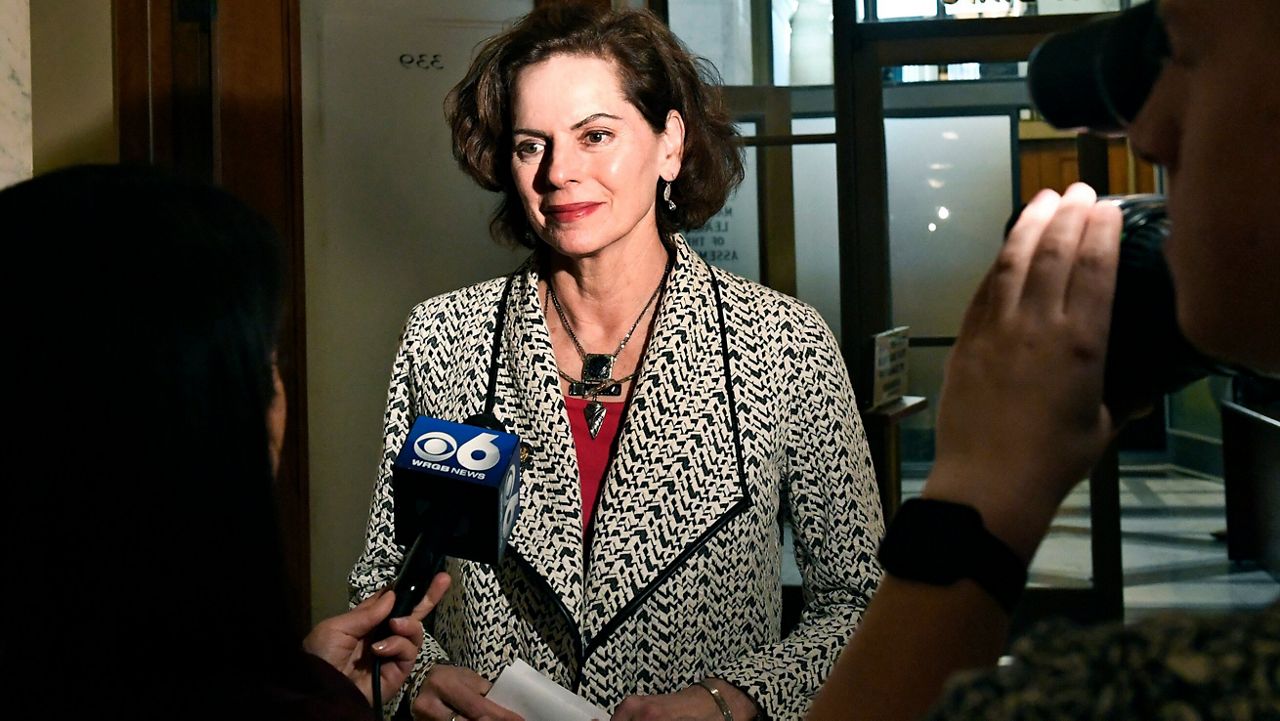
When Gov. Kathy Hochul announced two weeks after the budget deadline that she would support a new tax — a surcharge on luxury second homes worth more than $5 million within New York City — state Sen. Pat Fahy pioneered the effort to see it expanded to communities outside the five boroughs.
Now that it has become clear the tax won’t make the final package — still not finalized six weeks after the budget deadline — Fahy is hopeful the energy behind that push can still make waves.
“We have been stunned at how viral the entire issue became,” she said. “I think it became such a part of the conversation because we have young people all over the state who are pretty disillusioned because they cannot buy in the communities they grew up in, especially in communities where we have seen an exponential growth of high-end properties and investor properties.”
Despite doubts over how much funding such a plan would generate, Fahy led the crafting of a proposal that quickly gained momentum — a $2.5 million threshold for upstate homes, with the funds divided evenly between the municipality where the revenue originated and a pot that would go toward the state’s Aid and Incentives for Municipalities fund.
Despite enthusiasm from several upstate members and general support from Senate Majority Leader Andrea Stewart-Cousins and Assembly Speaker Carl Heastie — and Hochul not ruling it out entirely — Stewart-Cousins told reporters Tuesday that the tax was simply too complicated to squeeze into current budget negotiations.
“Because of the multiple layers of government upstate, it’s just a little bit more complex, so I think that’s a conversation that will go beyond this period,” she said, acknowledging support from several members.
Last week, Heastie indicated the same.
“There is an openness from us, and when we spoke to the governor she seemed open as well. The concern was that in New York City, there is only one taxing authority inside the five boroughs,” he said. “When you get out of the city, there are villages, there are towns, there are cities, so it’s a little more complicated. It probably couldn’t be enacted in this budget, but I think there is an openness for us to try to figure that out.”
Acknowledging the complexities — the tax has been so complicated in New York City that it has contributed to this year’s significant budget delay — Fahy said she is looking forward to continuing to work through the issue.
“I see that sometimes these efforts take a while,” she said. “I think it’s going to lead to a more productive conversation, and the bottom line is this is not an income tax — these are investor properties.”
As for this budget, Fahy is hopeful that shining a spotlight on upstate needs — and the need to help both New York City and upstate’s larger struggling cities like Albany, Buffalo and Syracuse — will propel more municipal funding across the board.
“I know the speaker and the leader are committed to helping Buffalo, Rochester, Yonkers and Albany, but we have hundreds more municipalities than that,” she said. “We think we’ve gotten into the conversation by communicating how much more of upstate, outside New York City, is facing serious financial challenges.”
Sources say the idea and the broader consideration of it have propelled further discussions about how to fund upstate municipalities in budget talks and could help fuel additional appropriations in the final package.
As for how the debate will progress from here, Republican members upstate have expressed a good deal of opposition to expanding the tax, but some Democratic members have also cast doubt on how much revenue it could generate and how the proceeds would be shared. State Sen. James Skoufis of Orange County told Spectrum News 1 there are still questions to be answered.
“It’s an interesting idea. I’m not knee-jerk opposed to it. I don’t know how much money it will raise,” he said. “The other piece I’m a little concerned about is the sharing included in that bill. The money would not stay in the locality where the luxury homes are — it would be spread around the state. As one of the places where there are a few, in the Hudson Valley, I would be reticent to see that money extracted from some communities I represent and then sent to far-flung places around the state, whereas New York City’s revenue would stay in New York City.”