
Photo-Illustration: by The Cut; Photos: Casey Kelbaugh/Courtesy of Frieze and CKA; Courtesy of BFA / Brendon Cook; Lyndsy Welgos
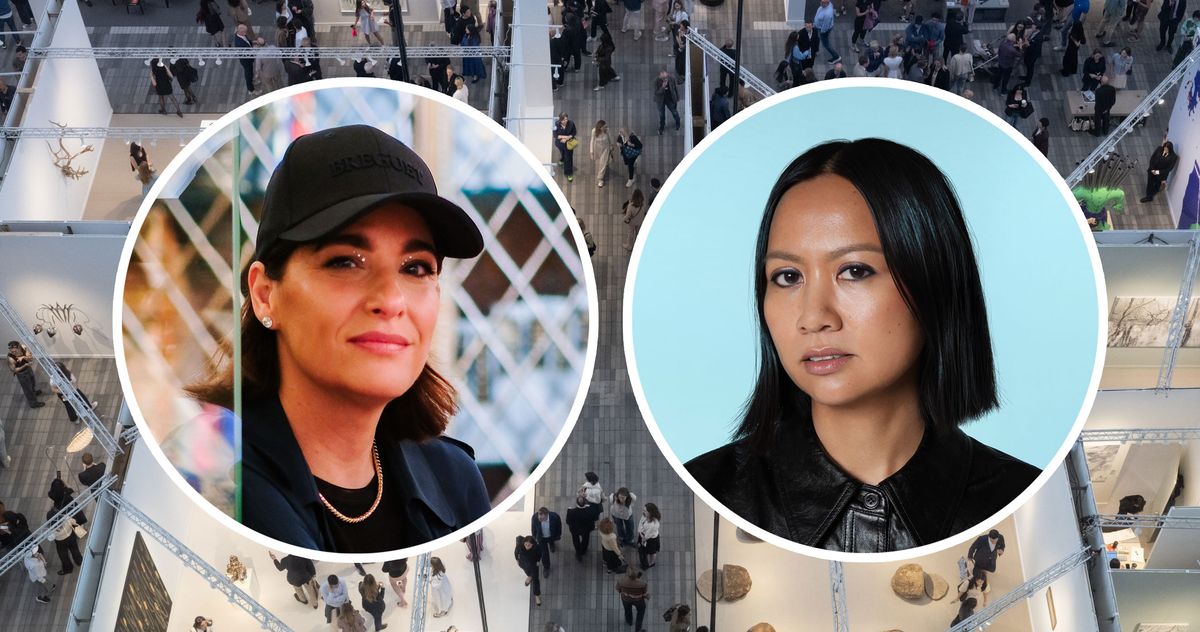
Frieze New York opens this week with nearly 70 galleries celebrating emerging and established artists across the city and around the globe. Christine Messineo has been working between Frieze New York and Los Angeles as director of Americas since 2021, organizing exhibitions across both cities and overseeing the best in artistic talent in the U.S. and abroad. This is her third year working with Lumi Tan, who has been curating the Focus section at Frieze New York since 2024. Focus spotlights young galleries across New York, giving fairgoers a chance to experience under-recognized talent from up-and-coming galleries. Below, Messineo and Tan give their insider tips for how to have the most successful Frieze experience — whether you’re an experienced art lover or a novice looking to get into a new hobby.
If I only had an hour to spend at Frieze, what would you want to make sure I saw?
Lumi Tan: The amazing part about Focus is that it’s a really concentrated section. It’s only 11 galleries, so you can see the whole thing in an hour. I think it’s a good starting point if you’ve never been to the fair, because the section is for galleries that are less than 12 years old, and they’re also asked to show just one artist. They put a lot of thought and care into their presentations. They usually bring in artists that haven’t been shown in New York previously. In the rest of the fair, there’s not as many solo presentations. Sometimes you go into a booth and you can get really overwhelmed with so many different artists and styles of work. I always recommend that if you’re new to the fair experience, Focus is a good place to start. You can delve deep into an artist’s practice. I mean, the section is called Focus for that very reason.
Christine Messineo: We have some really interesting programming that’s happening this year at the fair. One of the partnerships we have is with an amazing organization called Counterpublic, which is a triennial that happens in St. Louis around social engagement and public art. They wanted to preview a bit of what’s to be expected at Counterpublic. We are working with them on a partnership and a commission with the artist Kite, and there’ll be performances Wednesday and Thursday. One thing I always like to incorporate are these moments of the unpredictable or the unexpected, and that is essential to the work that Kite is doing. There’ll be a group of musicians who are traversing different parts of the fair and playing their instruments, and Kite has created this visual that will exist on one big wall in the fair and then in these kinds of echoes at other moments around the fair, visual representations that can be read by the musicians. It’s not your typical musical notes, but artistic interpretations that have this visual component that the musicians are going up to and interpreting and playing from. So don’t miss that.
How do you decide what gallerists get to show at Focus?
Tan: It’s important for us to have a great geographic distribution among the galleries and to have some galleries that are relatively new and some that are about to age out of Focus and go into the main section so we can really support their growth. We look at the strength of the gallery presentations and how they’re curated by the gallerists, but also it’s really important for me that the Focus section is about a sense of discovery, and we reconsider what that means every year. Sometimes it’s about artists who have shows that are happening in New York all at the same time. This year, it’s a lot of artists who haven’t shown in New York before and also artists who are New York legends. It’s this balance of these more established and under-known older New York artists who are showing with these younger galleries, and then this incredible group of international artists who haven’t shown in New York before.
Messineo: Lumi is such a fabulous curator and has such a thoughtful perspective. I remember when I was thinking about adding that curatorial vision to the committee, one of the reasons Lumi was such an appealing and interesting prospect was that she was someone that the galleries see often. She does the walk, she’s going and visiting all of the galleries and seeing them in person, and I think that kind of consideration and intimacy is really important for how we also want to connect with the galleries.
What are you most interested in as a curator?
Tan: For me, it’s always about discovering the New York that existed before I came. We have Antoni Miralda as part of the section, who’s showing with Champ Lacombe Gallery. It is a gallery in Biarritz, France, but was started by someone who worked in New York for a very long time, Lucy Chadwick, who I’ve known for years and has a great eye for working with artists who have not had a lot of representation in New York. Antoni Miralda was the founder of this legendary art restaurant, El Teddy’s, in Tribeca. It was a huge hot spot in the ’80s and ’90s, and Warhol and Basquiat and John F. Kennedy Jr. and Scorsese and all these figures from all over the cultural sphere convened there. He’s showing his work, which is both extremely spirited and fun but also very political and poignant. He’s drawing out these ideas of cultural exchange, and it’s very prescient right now. There’s a desire to have these collective experiences that bring together food and pop culture and art and all these cross-sections of different industries in New York, and Miralda was doing that both at the restaurant and in other experiential artworks that he was making in the ’80s.
How have you developed your curatorial eye?
Tan: I think the most important part is just to kind of see as much as you can. For me, that has always been really important, especially being in New York. You have access to just so many types of exhibitions and you have so many resources. I think people don’t really understand that commercial galleries are free to enter, and there’s such a range of incredible work that’s being shown there that can really influence what museums show a few years later. And they put just as much thought into curation as museum curators do. Seeing as much as you can to understand what your own taste is, or what you don’t like, is as important as understanding what you do. And sometimes for me, even as someone who has been curating for over 20 years, it’s like that still is a huge influence on how I shape my ideas. I’m like, What am I pushing against? Or what am I not seeing that I really want to see? Because I’ve seen so much of this one thing.
Are there any themes you find coming up again and again in Focus this year?
Tan: I think that world-building is always a huge part of what I show and focus on. The world is unending chaos and disaster right now, and I think that the artists in the section are finding their way to negotiate that in not the obvious politically didactic ways and demonstrating that the imaginary is just as important. They’re seeing a different future than just reflecting a direct reality.
Are there any exhibitions you are particularly excited about this year?
Tan: I’m really excited about Abraham González Pacheco’s work. We’re showing him for the first time in New York. He’s an artist from a gallery in Mexico City that’s participating for the first time called Campeche. He makes these incredibly layered drawings and paintings. He’s showing a number of concrete wall works at the fair. But he also has a background as a set designer, and so he is thinking spatially and visually, and he’s bringing together a lot of different historical and cultural references and collapsing them into his images. And that is partially inspired by the fact that the small town he grew up in in Mexico has no official archive. He’s starting from this idea of how would you tell the history of this culture, of this town, without any kind of reference points or official documentation.
Messineo: If I could single out one thing, there’s a presentation that’s happening by the gallery Esther Schipper, and it has created this intimate little room that will have an Anicka Yi in it, and then it has a Lotus Kang hanging, and then it has a Sah upside-down drum. There are also some wonderful solo presentations that are happening throughout the fair. I just got the preview for the Joe Bradley show that will be part of Zwirner, and these are luscious paintings and there’s some more intimate drawings. I love beginning to understand the connections between Joe’s drawings and his paintings, and I think moments where you can articulate that deeper understanding of a practice also feel really important.
Can you speak a bit about the international elements present at Frieze?
Tan: New York has always been a meeting place for the art world in an international sense. Focus in L.A. is only for galleries in the United States, so Frieze New York has a very special opportunity to be this concise insight into the international emerging art world. New York represents every single corner of the world, and it’s really important to reflect that back to an audience and to the curators here; the collectors here are all looking very internationally. Focus has always had a lot of strength in showing galleries from Latin America, and that’s always been a huge point of interest for visitors to the fair. It’s an opportunity to not only showcase these artists but also the histories that they’re telling and the kind of specificities and the landscapes and cultures and concerns that they’re coming from. It’s been a real privilege for me to be able to platform that.
Messineo: Isla Flotante, from Argentina, is joining us for the first time. As we’re thinking about our connections to South America that feel like an important voice.
What are some misconceptions you’d like to clear up about art fairs?
Tan: I think there is a misconception that it’s only for people who want to buy things. I’m sure any gallerist can tell you that they meet plenty of people who don’t buy things. But there’s a misconception that they only want to talk to buyers. They’re not there to be security guards for the work. They’re there to engage with audiences and take questions. Audience questions are important, especially from those who are not familiar with the artists. Those really help you understand what is drawing people to the work and what the work is actually communicating.
Messineo: Our core is our galleries, and they need to have a successful fair, but we are also representing what’s happening in the art world. I don’t think people think of art fairs as commissioners of artworks, but actually very often we are involved in a major transition or a critical juncture in an artist’s career. Maybe it’s the first time they’re debuting a large-scale sculpture or they’re working in the public domain or they’re thinking about performance in the first place. We’re very invested in what that can look like and the cultivation of a practice, so that it continues to grow. This year, I think there’s three or four galleries that are making the move from the Focus section to the gallery section. I think Mitre is making that move. It is a gallery from Belo Horizonte and São Paulo, Brazil, but their first art fair was a Frieze New York one a few years ago, and they won an award, the Focus Stand Prize. Helping them evolve into being as they continue to grow and to be part of that conversation and be in dialogue feels really important to the way that we work.
Stay in touch.
The latest in style, self, culture, and power in your inbox.
Vox Media, LLC Terms and Privacy Notice
Related