
Mayor Zohran Mamdani is giving his Department of Transportation (DOT) increased funding over the next four years to add bus and bike lanes across the city.
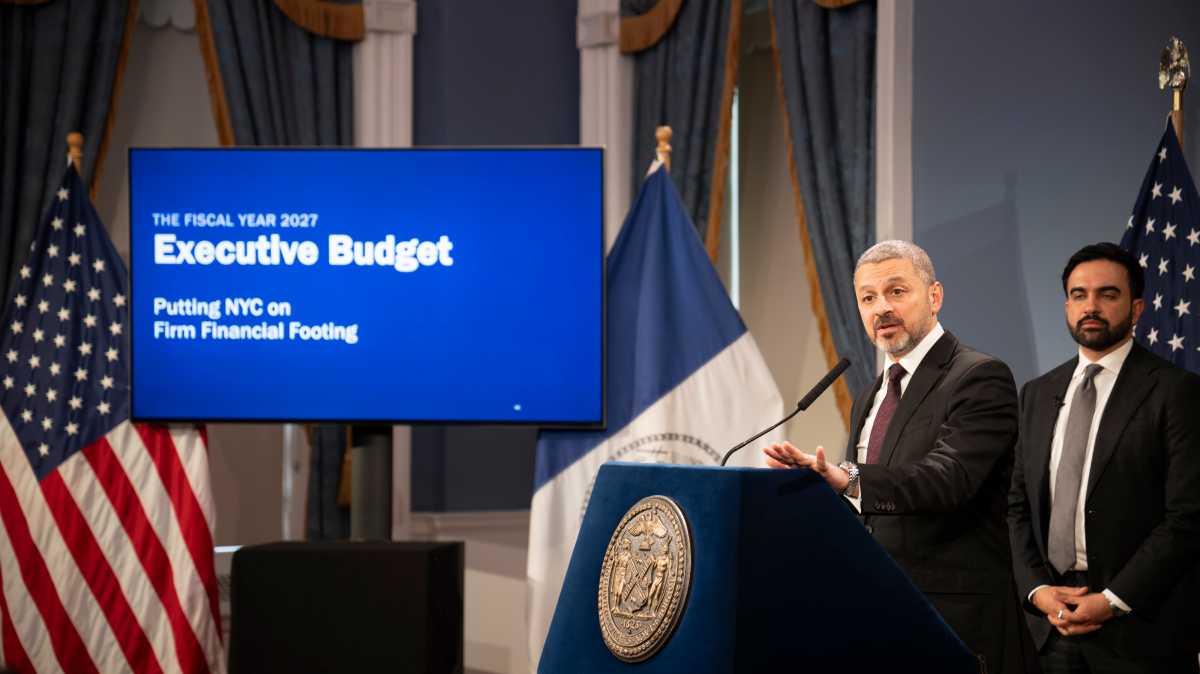
Mamdani’s budget director, Sherif Soliman, said on Tuesday that his $124.7 billion executive budget includes increased funding for the Streets Master Plan, which requires the city to install a certain number of bus and bike lanes each year. The plan, which mandates the city add 150 new miles of protected bus lanes and 250 new miles of protected bike lanes between 2022 and this year, was passed by the council in 2019.
The budget will increase DOT’s Streets Plan funding to nearly $35 million in Fiscal Year 2027 and then to $65 million by Fiscal Year 2030.
Soliman said that the amount breaks down to $17 million over the coming fiscal year and the following three for new bus lanes, $11.8 million over the same period for building new bike lanes, and a recurring $6.5 million investment in public realm improvements. Those dollars will go toward personnel and resources to get those projects built.
However, it was not immediately clear if the increased investments would be enough to fund adding 30 miles of new protected bus lanes and 50 miles of new protected bike lanes required by the Streets Plan for this year. A DOT spokesperson, when contacted by amNewYork, did not confirm when a determination would be made.
DOT Commissioner Mike Flynn, during a pair of March City Council hearings, had been unwilling to indicate how much additional funding the agency would need to hit the Streets Plan targets, after years of falling short of them under Mamdani’s predecessor, Eric Adams.
City Council Transportation Chair Shaun Abreu, in a statement to amNewYork, said lawmakers feel “encouraged” by Mamdani’s Streets Plan commitments, but will be “reviewing the details.”
“At our Preliminary Budget hearing, we emphasized the need for dedicated line-item funding for critical infrastructure projects, so the public can clearly understand how resources are being allocated, and we are pleased to see that reflected here,” Abreu said, referring to his line of questioning in the hearing on Mamdani’s preliminary budget in March.
The council member said they will “take a closer look” at how those funds are being allocated during an upcoming May 29 hearing on the executive budget.
“We will continue to do our due diligence to ensure the agency has the resources needed to fully implement the law passed by the Council and to catch up after years of delay under the previous administration,” he said.
Adding more protected bus lanes, in particular, is key to helping Mamdani fulfill his campaign promise of making the slowest buses in the country move faster. The mayor appears to have put the other half of that pledge, to make all city buses free, on the back burner for the time being.
Under the current Streets Plan, Mamdani’s administration can meet the target for new bus lane miles partially by adding Automated Camera Enforcement (ACE) technology, in partnership with the MTA, to more routes.
The safe streets advocacy group Transportation Alternatives, which has pushed for the administration to boost Streets Plan funding, celebrated the move as a boon to bus and bike riders as well as pedestrians in a Tuesday statement.
“On behalf of the crash survivors and victims’ families who know all too well the cost of a preventable traffic crash, the 1.8 million New Yorkers who ride a bike, the countless bus riders stuck in unending traffic, and every New Yorker who is a pedestrian at some point in their day, we believe this budget is a promising step forward,” said Ben Furnas, the group’s executive director.
“After years of chronic underfunding, it is exciting to see what’s possible under an administration that knows the greatest city in the world deserves the greatest streets in the world,” he added. “Increased dedicated funding is just the first step toward safer and better streets for all New Yorkers.”