
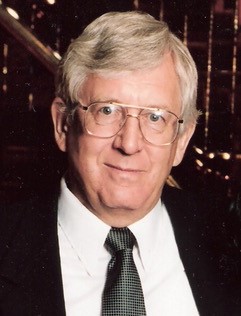
Author and historian Bruce Dearstyne collected and edited 16 historical stories into “Revolutionary New York: 250 Years of Social Change.”
Provided, Bruce Dearstyne
“Revolutionary New York” was edited by historian Bruce Dearstyne and looks at 16 historical events, both long ago and recent, that evolved New York state.
SUNY Press
As we prepare to celebrate the 250th anniversary of the American Revolution, SUNY Press senior acquisitions editor Richard Carlin asked historian Bruce Dearstyne to look through previous SUNY Press books and pull out some stories that capture how the state of New York has evolved from its earliest days through today.

Dearstyne, an author of several books of history, collected and edited 16 historical stories from previous SUNY books into “Revolutionary New York: 250 Years of Social Change” (SUNY Press). The collection begins with the story of the influence of the Oneida tribe in becoming a U.S. ally and concludes with the resilience of New York City and how it weathered the COVID-19 era from 2020 to 2022. Dearstyne is the author of two of the chapters.
Article continues below this ad
“As I worked on this book, I realized that we are the most historically significant state,” said Dearstyne. “We are a bold state and always ready to lead. Many states through the years have often looked at what we were doing and then have followed us.”
According to Dearstyne, New York came to revolutionary ideas somewhat late in the game. “There were many loyalists in the state at the time of the Lexington and Concord battles, but when the fighting came here, we were ready. A revolution is a change and New York is a state where change keeps happening. We’re always looking to be better. We’re always being an innovator.”
One reason he believes New York is the most historically significant state is that one-third of the major engagements of the Revolutionary War occurred here, including the most important one at the Battle of Saratoga. “New York also has some natural advantages, a great port where so many immigrants came ashore, and our state created the Erie Canal that opened up the West.”
Make the Times Union a Preferred Source on Google to see more of our journalism when you search.
Add Preferred Source
Dearstyne wonders if we still have the same drive for innovation and creativity today.
Article continues below this ad
“Every year we seem to be losing more of our population, and we can’t seem to get our energy policy quite right,” he said, “but New York has been through bigger crises before and they’ve always come through.”
Some of the chapters deal with these difficult times, such as the 9/11 terrorist attack on the Twin Towers, the Triangle Factory Fire of 1911 that resulted in 146 deaths, and the Stonewall Inn uprising in 1969, which ultimately helped secure rights for LGBTQ+ people. “When difficult events happen in New York, we’ve usually learned from them and made improvements. When 9/11 occurred, the fire department was not prepared for anything like that, but they transformed themselves over the next few years and today they are much better prepared. The Triangle Fire brought about legislation concerning factory safety and health regulations. The laws gave New York the most advanced industrial code in the nation.”
Dearstyne said the state of New York has a remarkable ability to survive difficult times because it is a diverse state. “New York City is the spot where most immigrants came to this country, by the millions, and many of them stayed here. This is also where many of their descendants settled. From that mixture of people with different cultures came different ideas, enormous energy and creativity.”
He said, like today, immigrants have always encountered tough times when arriving in a new country. “They always face discrimination about who should be here and who shouldn’t. To make it through that, you naturally become a survivor. I also believe New York is less racist than most other states. We tend to be more tolerant of different cultures.”
Article continues below this ad
By signing up, you agree to our Terms Of Use and acknowledge that your information will be used as described in our Privacy Policy.
With such an influx of immigrants to our state, Dearstyne believes that it has also helped bring such a wealth of artistic creativity. “In our state, we know the arts are not only important to our economy, they are also important for our emotional well-being. Because New York City has always been so open and tolerant, it has encouraged creative people to experiment in art. Many of these artistic innovations, like Modern Art, have spread across the country. New York is where most of the publishing industry is based, along with television, film and radio. The Harlem Renaissance in the 1920s was the place where creative African-Americans came to write poetry, paint, play music and create some of the best literature of the time.”
Tolerance and innovation are perhaps why the women’s suffrage movement began in Seneca Falls in 1848. “Seventy-two years after the signing of the Declaration of Independence, Elizabeth Cady Stanton led the Seneca Falls Convention for the purpose of discussing women’s rights, especially their right to vote. She and Susan B. Anthony worked a half century for that national vote, which came to New York in 1917, three years before the rest of the nation.”
For historians like Dearstyne, celebrating our 250th anniversary is a significant time to give an accurate representation of the good and the bad of our country. “Like America itself, New York didn’t always make the right choices, but we have usually learned from our mistakes and our failures. We often changed tactics and evolved to choose a path that allowed better freedoms and more opportunities for all of us.”
Article continues below this ad