
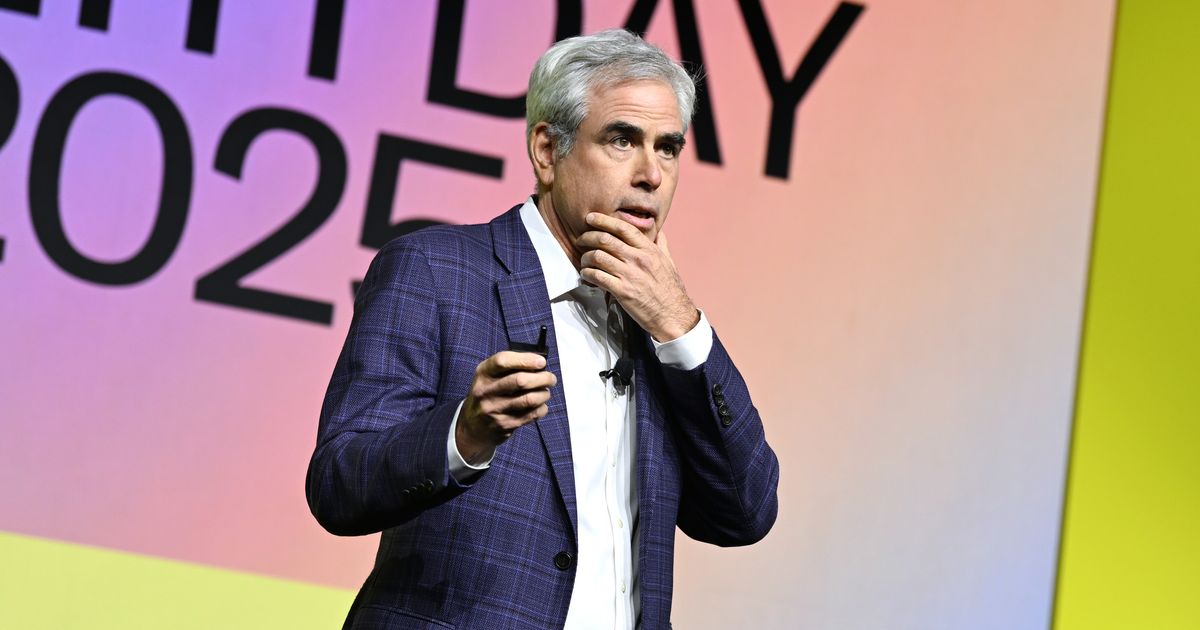
Photo: Kristina Bumphrey/Variety/Getty Images
New York University’s Jonathan Haidt checks a number of boxes for an in-house commencement speaker: best-selling author, public intellectual, and high-profile campus figure. A social psychologist teaching “ethical leadership” at NYU’s school of business, his books like The Coddling of the American Mind and The Anxious Generation show up on airport bookshelves and the Obama end-of-year-list. He has been a fixture on the liberal-nerd podcast circuit and in the TED Talk world, best known for advocating for free speech and limited screen time. Despite that résumé — or because of it — some NYU students donning violet gowns today at Yankee Stadium would prefer it wasn’t Haidt delivering their final undergrad address.
“It feels like Jonathan Haidt is meant to scold the student body and belittle them,” says Mehr Kotval, a graduating senior with a degree in comparative global politics. In an op-ed for the student paper, she wrote that the choice of a professor who wrote about coddled young people was a “last parting gift of disrespect” for students.
The backlash began last week, when the student government assembly delivered a letter to the university expressing its “profound disappointment” in the choice of Haidt. The letter cited his argument in 2024 that the university system needs to remove diversity, equity, and inclusion programs; it also cited his decision in 2022 to resign from a top professional society for psychology rather than submit a statement on anti-racism.
For years, Haidt has described himself as a “professor who favors free speech,” pushing back against the concepts of microaggressions and safe spaces that he saw as limiting the potential for growth and debate on campus. An avowed centrist, he also has argued the case for embracing conservative views in education, going so far as to claim that conservatives on campus were made to feel like gay people trapped in the closet. In 2015, he co-founded the Heterodox Academy, a nonprofit dedicated to promoting ideological diversity at the university level. He was devoted to this idea for years, even joining the board of Bari Weiss’s University of Austin, which was founded to promote ideological diversity and fight “wokeism.” (He severed ties with the unaccredited school last year.)
“Haidt still fashions himself as somebody who supports this diversity of thought on college campuses,” says a graduating politics major, “but he doesn’t represent that heterodoxy anymore.”
In the spring of 2024, students called for the university to divest from Israel as IDF soldiers killed thousands of civilians in Gaza following the October 7 attack by Hamas. But as students set up encampments to protest the war and their university’s investments, Haidt said the movement that spring was not “grounded in reality.” The graduating politics major notes that Haidt’s office is adjacent to Gould Plaza, where 120 people were arrested that April when the New York Police Department raided the encampments. But Haidt appears to have made no public statements about NYPD officers in riot gear putting students in zip ties. “I think it was a pretty conscious choice on his part not to speak up in the defense of students who were being arrested for their perspectives,” he says.
Haidt has waded into the most contentious debate on college campuses in the past two-plus years. He expressed support for Israel in the immediate aftermath of October 7, though he has acknowledged that while “I’m on one side,” there “are good reasons for taking the other side.” In addressing antisemitism on campus, he wrote that “anti-Israel sentiment seems to be increasingly closely linked to hatred of Jews.”
Students’ frustration with picking Haidt extends beyond the protests. This semester, administrators debuted NYU IRL, an initiative inspired by Haidt’s anti-phone crusade to get students to be present with each other in person; it included the renovation of a lounge with phone lockers and board games and colored pencils. (In a further twist, the New York Post ridiculed the lounge as a playroom for students spending $91,000 per year. The professor who denounced the coddling of young people accidentally inspired a “day care,” as the tabloid put it.)
“It feels absurdly hypocritical for NYU to celebrate Jonathan Haidt’s ideas about rebuilding an in-person community when the university has spent the last two years shutting down spaces for students to gather, protest, or speak freely,” says Kotval. She added that she was not allowed to walk in a smaller graduation on Wednesday for NYU’s Gallatin School of Individualized Study because she was wearing a keffiyeh.
Haidt did not respond to a request for comment; an NYU spokesperson said he was focused on his speech. “Professor Haidt is one of the most consequential scholars of the 21st century,” they added. “We’re excited he’ll be on our stage to share something truly meaningful with this year’s graduates.”
Some students are looking forward to Haidt’s message, including graduating seniors like psychology major Hannah Swartz, who was a member of Haidt’s Human Connection Club. “It’s a club that’s centered around having novel experiences without your devices to help build community and connection on campus,” says Swartz. This semester, those activities included game night and line dancing. “We also went to a crafts place,” she says. Grant Callahan, a Human Connection Club member graduating from the real-estate program, said that Haidt’s message to disconnect from the phone and reconnect with each other is “this inspiring thing where it’s not a lost cause. Like there is a solution to this.” As for the dissenters, he says, “The only folks I’ve encountered who are actively opposed to him for our graduation speakers are folks who have not fully been openly engaged with his work.”
Criticism of graduation speakers is a time-honored tradition. This year, the 2026 class of the University of Central Florida booed their speaker, a real-estate executive who told them that “the rise of artificial intelligence is the next industrial revolution.” And NYU had another speaker drama last year: After a Gallatin student condemned the “genocide currently occurring in Gaza” in his address last May, the university banned live school-specific speeches.
Not all Haidt dissenters are put off by his views. I spoke to a marketing major frustrated by the professor’s lack of celebrity status compared to past NYU commencement speakers like Molly Shannon (2025), Pharrell Williams (2017), and Taylor Swift (2022). “You pay all this money, you spend all this time and energy looking forward to that big day of having a fun commencement speaker,” said the marketing major, who was jealous of Northeastern’s pick: Hilary Duff. He said of Haidt, “All my friends and I had to like physically Google who the commencement speaker was because we didn’t know.”
Sign Up for the Intelligencer Newsletter
Daily news about the politics, business, and technology shaping our world.
Vox Media, LLC Terms and Privacy Notice