
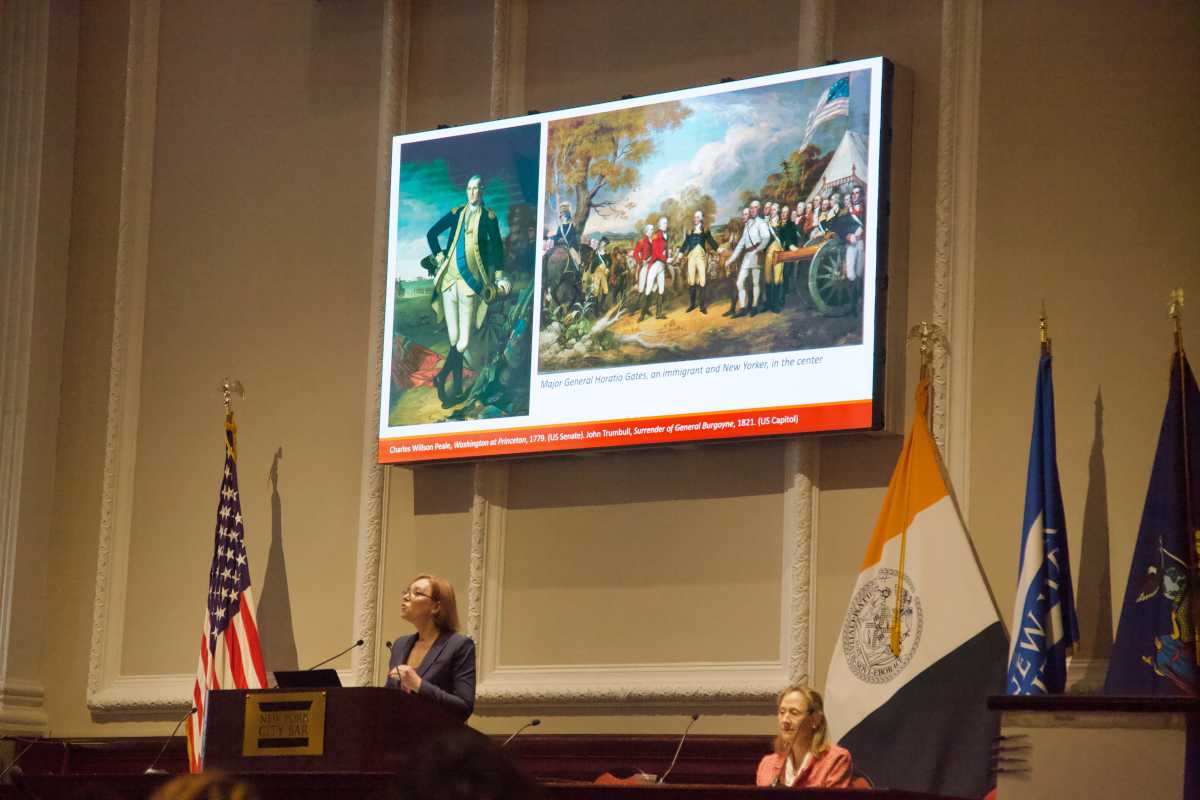
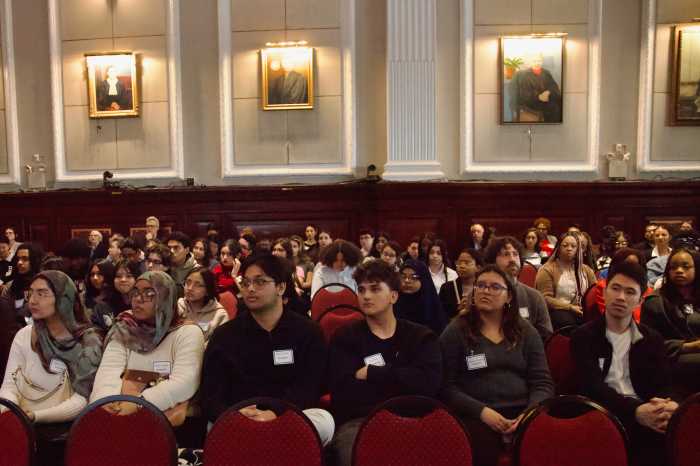
Historian Lisa Anderson of the Gilda Lehrman Institute provided more than 200 high school students with fodder to correct their peers and family members about the Declaration of Independence during a civic education event at the New York City Bar Association.
“Actually…” she had the group of students recite together in a joking, know-it-all tone, before diving into her lecture on “Ten Things to Know About the Declaration of Independence That Most People Don’t Know.”
The bar association’s event comes ahead of the 250th anniversary of the founding document and the establishment of the United States of America, which will be commemorated on July 4 of this year. Friday’s event featured remarks from two United States District Court for the Southern District of New York judges, Magistrate Judge Katharine Huth Parker and Chief Judge Laura Taylor Swain.
“As someone who’s also from New York and who went to public schools in New York City, it means a lot to me to be able to welcome you, fellow New York City scholars, to this very special event in this very special year,” Swain said. “The ideals embodied in the words of the Declaration — equality, fairness, and the belief that laws should serve the people — are what inspired me to pursue a career as a judge, working to ensure justice for all under the law. There’s something special about learning this history and working to extend its reach in a place that helps to shape it.”
Anderson’s presentation expertly avoided truisms about the Declaration, making the lecture engaging for the high schoolers.
Declaration of Independence ‘process was not perfect’
She brought up some important historical context that sometimes gets deemphasized in the common imagination of our founding, like the fact that sporadic battles with Great Britain were happening across the country before the Declaration.
She also pointed out how the Declaration fits into the many forms of New York exceptionalism, in that our state “was kind of a pain” when it came to signing the document. In fact, New York was actually an abstention on the vote to pass the Declaration because “the colony isn’t run especially well,” Anderson said.
Anderson also openly addressed the contradictions in the Declaration over slavery, arguing that most significant edit that was made to Thomas Jefferson’s original draft was the removal of the section in which he criticized King George for “waging a cruel war against human nature itself” in bringing human bringing into captivity and carrying them into slavery in another hemisphere.
“The process was not perfect, but this was a significant improvement because once again,” Anderson said, asking the students to join her in a refrain of, “‘Monarchy is stupid.’”
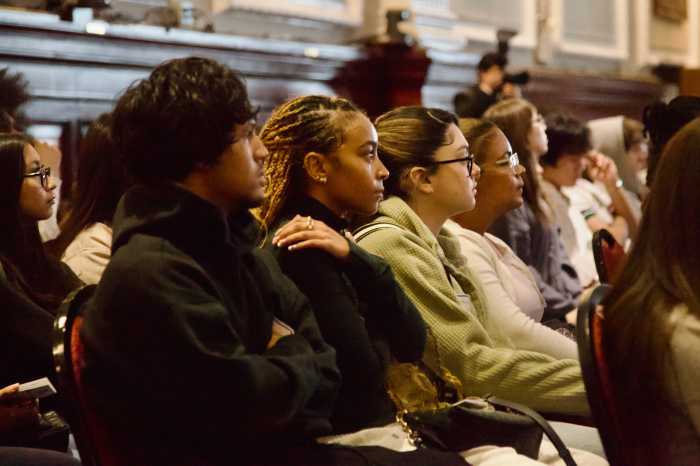
Over the rest of the day, students were tasked with working alongside volunteer lawyers and educators to reflect on whether the grievances in the Declaration of Independence still resonate with them and debate whether it lived up to its own promise.
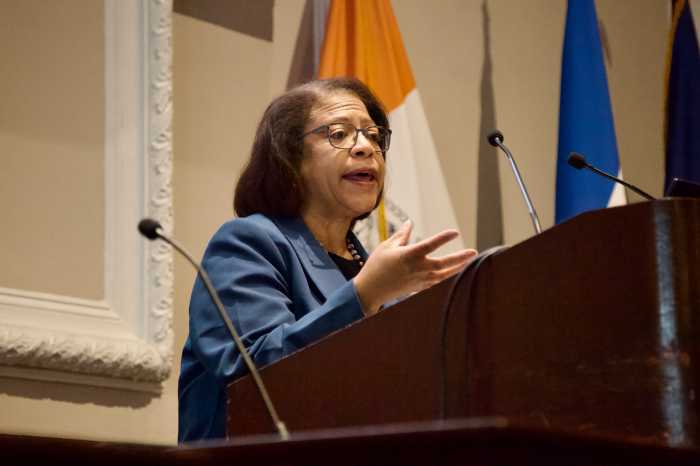 United States District Court for the Southern District of New York Chief Judge Laura Taylor Swain
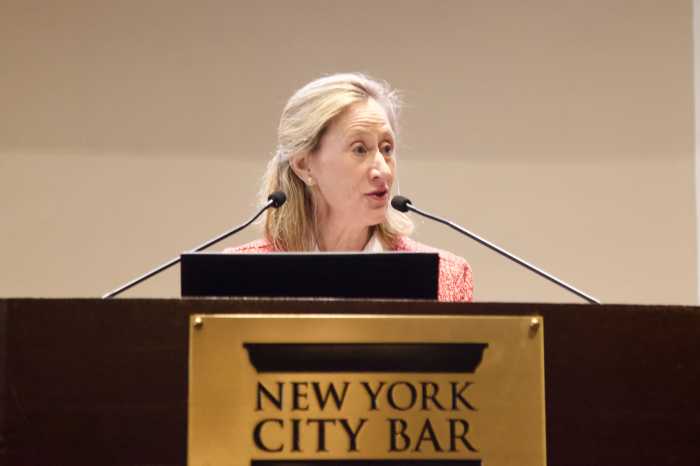 United States District Court for the Southern District of New York Magistrate Judge Katharine Huth
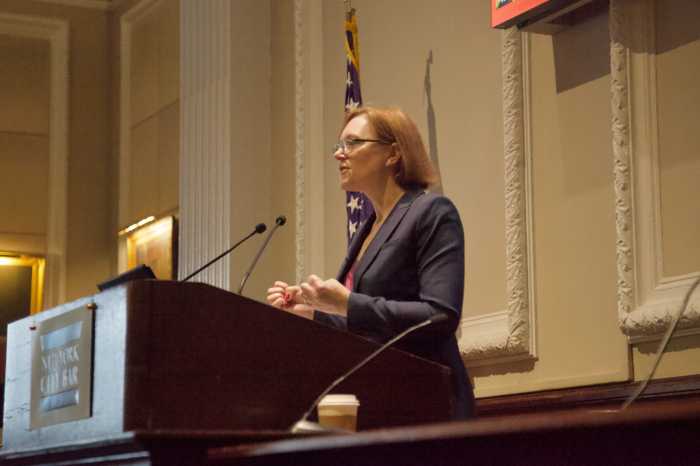 Historian Lisa Anderson