

Nearly 1 million college graduates now live within 30 minutes of Financial District
Lower Manhattan Draws Nearly 1M Graduates
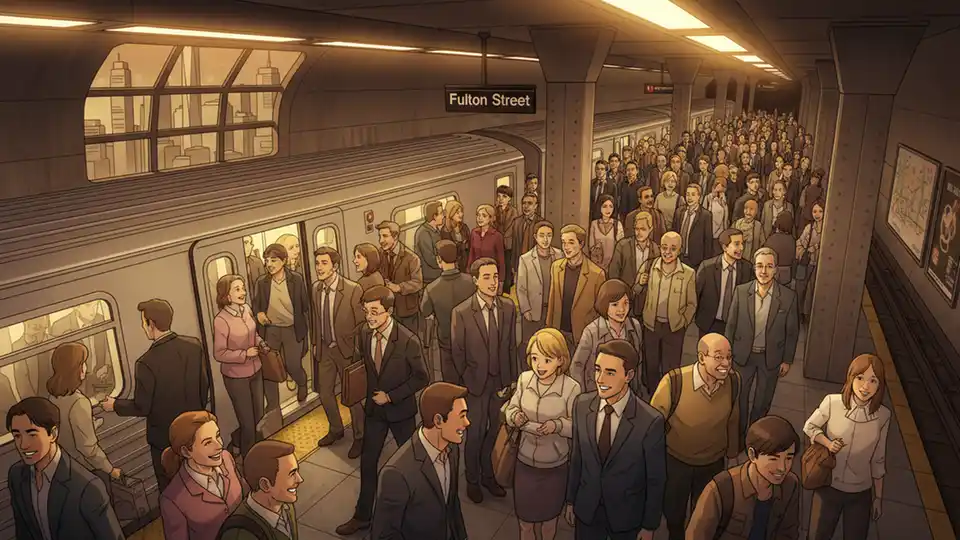
Nearly a million college graduates now live within a 30-minute commute of New York’s Financial District, according to a new study by the Downtown Alliance analyzing 2022 Census data. The “Brain Gain” report shows the workforce aged 25 to 34 has grown by 100,000 since 2012, while the 35 to 44 age group expanded by 87,000. The shift reflects Lower Manhattan’s evolution from a finance-dominated hub into a diversified employment center served by 13 subway lines, six local and 24 express bus routes, multiple ferry routes, and PATH service.
The district has moved beyond its Wall Street identity. Finance jobs, which once accounted for 66 percent of employment, now represent about one-third of the workforce. Professional services added 85,000 employees over the last decade within the commuting area, while finance, insurance, and real estate industries increased by 25,000 workers. Creative industries, fashion, advertising, and tech companies have filled the gap, drawn by transit access and a growing residential base. Major employers including American Express and Uber now operate offices in the area.

Half of New York City’s top 10 neighborhoods with increased educated adults fall within Lower Manhattan’s 30-minute commute zone, including Bed-Stuy, Williamsburg, and Jersey City. Seventy percent of the district’s workforce lives in the five boroughs, making public transportation essential for daily commuting. The area now supports more than 235,000 private sector employees and generates over $100 billion in city tax revenue. More than 88,000 new housing units, representing 45 percent of all housing under construction citywide, are being built within the 30-minute commute radius.
Lower Manhattan itself now has over 70,000 residents and continues to develop as a live-work neighborhood with diverse amenities. The growth in nearby housing and transit connectivity has reinforced the district’s appeal to younger professionals seeking shorter commutes and urban lifestyles. The expansion reflects broader shifts in how New Yorkers choose where to live and work, with transit access playing a central role in residential and employment decisions.
Riders commuting to Lower Manhattan can plan trips using real-time transit information available through Moovit, which covers subway, bus, ferry, and PATH connections across the region. The app provides route options and service updates for the 13 subway lines and two dozen express bus routes serving the Financial District. As the area continues to attract new residents and employers, reliable transit planning tools help commuters navigate the expanding network of options connecting neighborhoods across the five boroughs and New Jersey.