
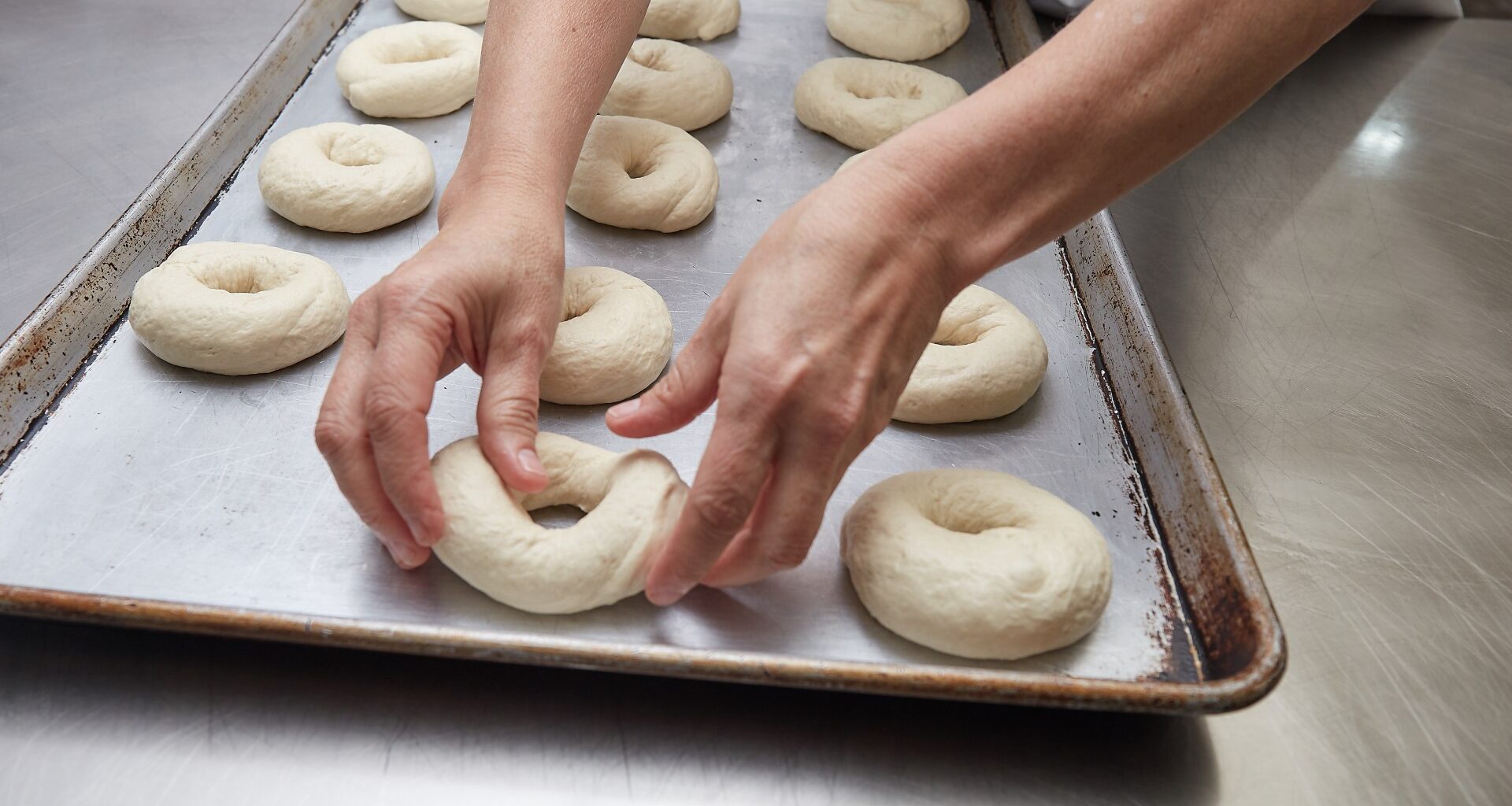
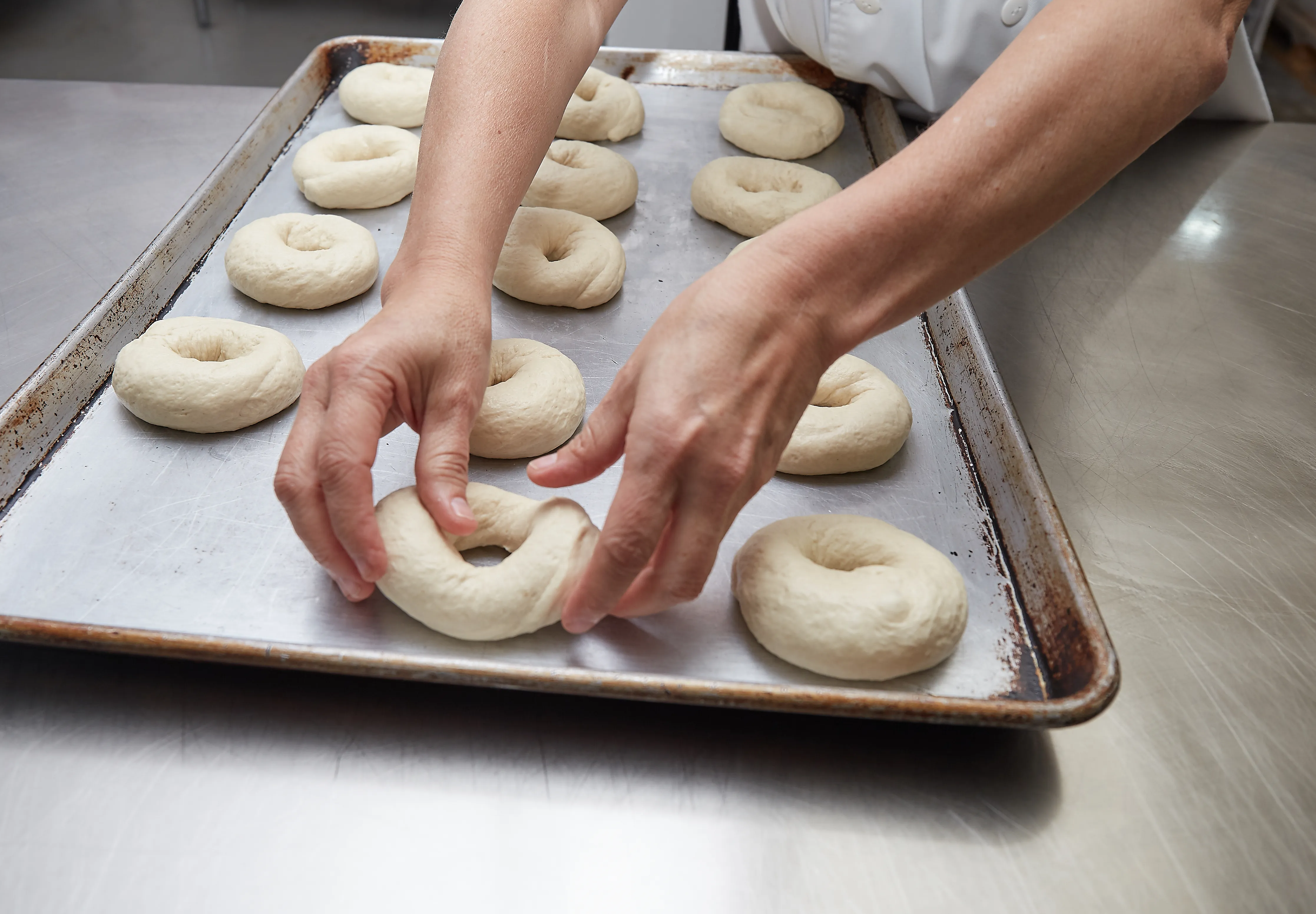
 bagel processing process step No 4 Credit: Getty
EVERY last bakery, pizza shop, and bagel joint in one US state is bracing for a major flour ban poised to disrupt bakers.
Under a new bill, they would no longer be permitted to use bromated flour – a staple ingredient known to strengthen dough, improve rise, speed up mixing and baking times, and create desired textures in baked goods.
Sign up for the Money newsletter
Thank you!
Recently passed by New York state legislators, the Food Safety and Chemical Disclosure Act is aimed at banning the manufacture, sale, and use of potassium bromate in breads and baked items, an oxidizing agent also known as dough conditioner.
The goal of the bill is to enhance consumer safety, as the chemical compound has been restricted or banned in Canada, China, parts of Europe, California, and other areas due to its links to cancer in its unbaked form.
While the heat from the oven is supposed to completely change the chemical structure of potassium bromate, the proposed New York law highlights a broader push to eliminate certain additives from the food supply.
Not only does the legislation target bromated flour, but also red dye No. 3 and propylparaben, a preservative used to inhibit mold growth and increase product shelf life.

RETAIL RADAR
Walmart, Target & Home Depot push law to stop closures & fight dark networks
BLAST FROM PAST
Costco shoppers risk losing major wholesale discounts thanks to a 1930s law
The food dye has long been used to color foods like candies, cake decorations, maraschino cherries, and snack cakes with bright pink and red hues, but its link to cancer in animal studies has raised concerns.
Meanwhile, propylparaben – which has been used in packaged foods such as tortillas, processed snacks, sauces, some cheeses, and more – was included in the ban due to its potential negative health effects.
The Food Safety and Chemical Disclosure Act is currently awaiting signature from Governor Kathy Hochul – a move that could force bakers across the state to change recipes that may have been around for decades.
Some bakers, such as Anthony Teutonico of Heartland Bagels in New Springville, are frustrated by the potential change.
Teutonico told a local outlet that he has already spent weeks experimenting with new recipes.
“That ingredient gives you the chew and the ‘pop’ in the oven — the springiness,” he said of potassium bromate. “Without it, you’re not getting the same result right away.”
In his early experimental batches, he ended up with bagels that were flatter, harder, and did not stay soft and chewy for long.
Others have welcomed the change as part of a longer pattern in food regulation.
“This is just another bump in the road. A lot of people don’t like change, but you have to put it in the back of your mind that they’re trying to make things healthier,” Cinzia Leon, owner of Moretti’s Bakery in West Brighton, told the outlet.
“When they took the trans fat out, we had to practice, practice, practice to get it right,” she said of New York’s early 2000s ban on trans fats. “We’ll do the same thing here. We’ll make sure it doesn’t affect the quality or the taste.”
Bromated flour is mainly used in commercial baking rather than by home bakers, especially for high-gluten goods such as bagels and pizza dough where structure and elasticity are key for a great bite.
If potassium bromate is banned, New York bakeries, pizza companies, and bagels shops may have to adjust their fermentation times, hydration levels, mixing techniques and even their flour blends.
Should Governor Hochul sign the legislation, flour manufacturers and distributors will have one year to sell the remainder of their bromated flour stock.
Meanwhile, restaurants will have until the expiration date on flour bags to use bromated products, working on new recipes until then.
Story idea?
If you have an exclusive idea or story tip for The U.S. Sun, feel free to reach out to me at maya.lanzone@the-sun.com!