
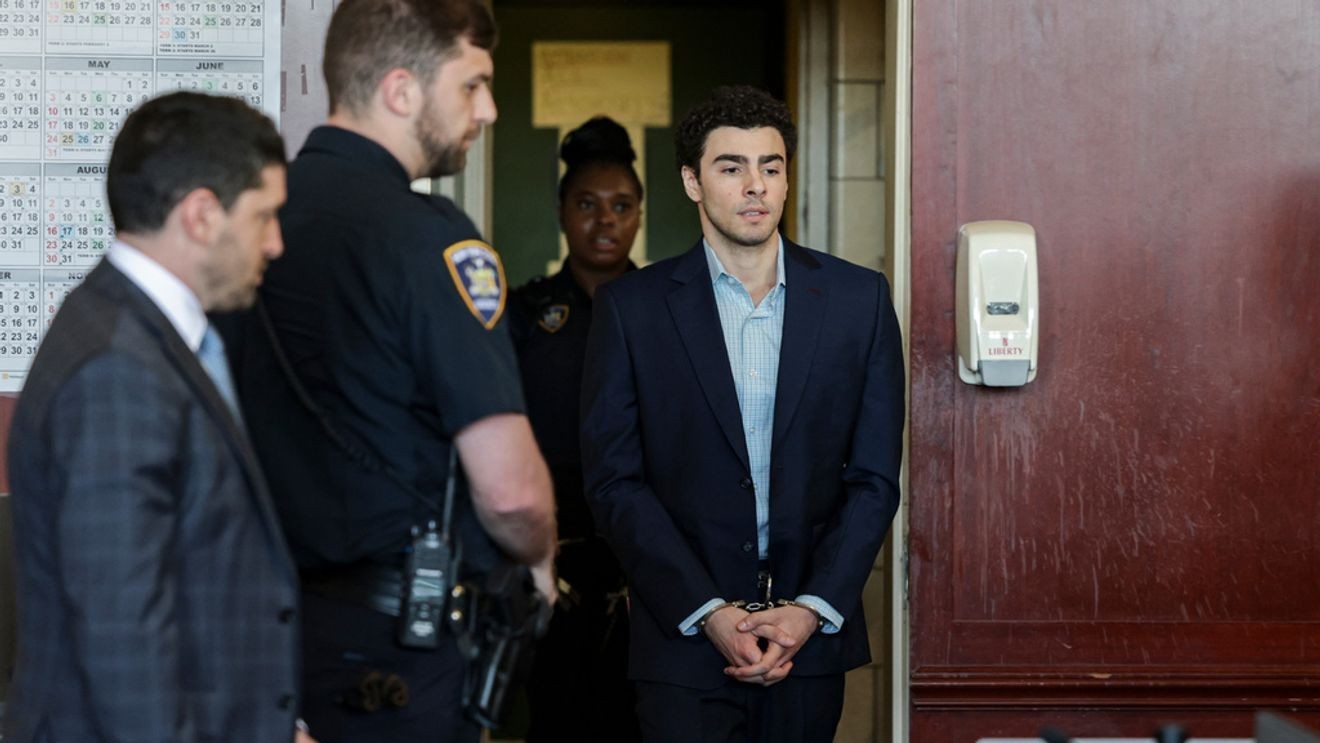
NEW YORK (TNND) — A judge overseeing the case of suspected CEO killer Luigi Mangione ruled on Monday that key evidence, a gun and notebook, can be used against him when his state murder trial begins in September.
Prosecutors have described the notebook as a “manifesto” in which Mangione wrote about wanting to “wack” a health insurance executive and rebelling against what he called the “deadly, greed-fueled health insurance cartel.”
However, New York Judge Gregory Carro also ruled that the initial search of Mangione’s backpack during his arrest at a McDonald’s in Altoona, Pennsylvania, five days after the shooting was unconstitutional.
“I find that the search of the backpack at the McDonald’s was an improper warrantless search,” the judge said.
He concluded the backpack was already under police control and no longer within Mangione’s “immediate control” when officers searched it at the restaurant.
Items found during the initial search — including an ammunition magazine, cellphone, passport, wallet and computer chip — must be suppressed, the judge ruled.
Still, Carro determined that a later inventory search of the backpack at the police station was lawful, allowing prosecutors to use the handgun and notebook recovered there as evidence during trial.
Police found the items after Mangione, 28, was spotted eating breakfast at the McDonald’s on Dec. 9, 2024. According to prosecutors, the 3D-printed pistol recovered from the backpack matches the weapon used to kill UnitedHealthcare CEO Brian Thompson.
Defense lawyers argued the search violated Mangione’s constitutional rights because officers searched the backpack before obtaining a warrant and asked the judge to exclude the evidence from trial.
Prosecutors countered that officers were justified in searching the bag because Altoona police procedures require officers to check for dangerous items during an arrest. Prosecutors also noted that police later obtained a warrant.
Carro also ruled that most of Mangione’s statements to police can be admitted at trial, though he excluded some statements connected to Mangione’s alleged fake identification.
Body camera footage shown during earlier hearings captured Mangione initially identifying himself to officers as “Mark Rosario” before later admitting the name was false after police checked the New Jersey driver’s license he was carrying against a database.
“If he had provided us with his actual name, he would not have committed a crime,” Altoona Police Officer Stephen Fox testified during the suppression hearing.
Mangione told police early in the encounter that he did not want to speak with officers, but police continued engaging him for nearly 20 minutes before he admitted he had lied about his identity. Officers later advised him of his Miranda rights.
U.S. District Judge Margaret Garnett, who is overseeing Mangione’s federal stalking case, ruled in January that the same evidence can be used during his federal trial, which is scheduled to begin in January 2027.
Mangione’s state murder trial is scheduled to begin Sept. 8 and is expected to last four to six weeks. Jury selection in the federal case is scheduled to begin Oct. 13, with opening statements expected Nov. 4.
Mangione has pleaded not guilty in both the state and federal cases. He faces the possibility of life in prison if convicted and is being held in a federal jail in Brooklyn while awaiting trial.