
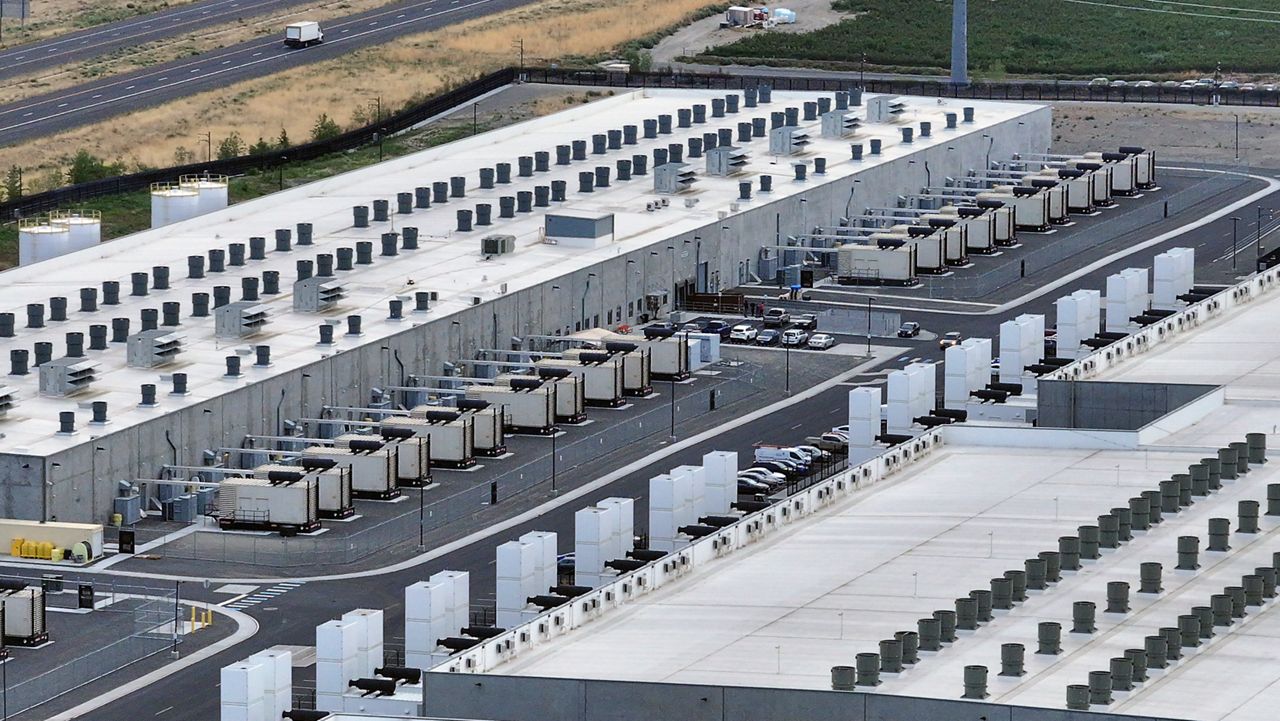
Conversations are continuing across the state on whether or not data centers are meant to fuel New York’s infrastructure. As artificial intelligence becomes more common in today’s society, controversy builds around the benefits of data centers.
The International Business Machines Corporation describes data centers as the backbone of the internet. It explains the facilities role as storing thousands of networks, data and power. Town of Oneonta Supervisor Will Rivera describes the facilities as false hope.
“Data centers come here with the promises of economic growth, and jobs, and all the studies that we’re seeing in actual communities that have had these, that’s not what happens,” Rivera claims.
What You Need To Know
The Town of Oneonta voted in favor for a 12-month moratorium to suspect data center developments
The facilities are nown to store thousands of networks
Those opposed to their developments say there are environmental consequences, no permanent jobs and potential health risks down the road
AI experts say data centers are crucial in today’s society
“A data center essentially is a large building filled with all these servers that, most of the time, typically, are unmanned,” Rivera said. “Or they may have one person. It’s just a big space or facility with all these servers running 24/7 that need to be cooled. All the data shows that these literally bring little to no jobs beyond the temporary, issues of creating the actual facility, and if we’re going to invest in economic developments, let’s invest in small businesses. Let’s invest in our healthcare. Let’s invest in longstanding jobs that will bring in housing, tourism and growth.”
Rochester Institute of Technology’s professor and AI expert Ke Xu says that is not the case.
“I understand there are different concerns about building a huge data center, but I think, on the flip side, some of the things to be considered is the number of jobs that can be created by having a data center around them,” Xu said. “The overall data center requires different levels of jobs [and] different technical levels. There’s construction, electricity, cooling systems [and] networking. There’s also higher levels of cybersecurity or technical operations. They’re all going to be permanent, it’s not a temporary situation. So it’s going to be a huge industry that comes as a benefit with it.”
Xu says the demand for power is inevitable as the AI industry continues to develop.
“It’s kind of inevitable now,” Xu added. “Every company and every area of research are investing and utilizing it. So the demand for data centers is absolutely going to go high. Everything you type into your app, your GPT, your Gemini, every message is being sent to a data center somewhere. So as more and more people use it, more and more data centers need it. So if we have more in the state, that’s certainly going to put us into an advantage.”
Rivera says data centers only consume energy. He acknowledges a need to invest in the electronic infrastructure grid, but he says those funds shouldn’t come from taxpayers.
“We need to invest in our electronic infrastructure grid,” Rivera said. “But not off the backs of the taxpayers. You know, we are facing an affordability crisis here, not only in New York, but all across the country.”
Xu also specializes in what’s called edge AI, or computing AI, which could eventually work in tandem with data centers. He says it runs AI on local devices in order to use less power.
“There’s always going to be larger data centers needed for major AI workloads, but I think there will be an increasing need for local devices handling some real-time processing that is closer to where the data is located,” Xu explained. “For example, your wearable electronics, your automatic driving systems, all of those require and will be beneficial if the AI is actually local. It doesn’t consume a lot of power, it doesn’t require a huge data center. It’s more complimentary than replacement.”
The town of Oneonta is hopeful it will be a leader across the state to vote in favor of a moratorium. It says the next 12 months will serve as an opportunity to draft local law that will be a more permanent suspension to developing data centers.
“Research shows that data centers become a 50-mile radius issue. It’s not a very localized issue. And 50 miles of rural New York can really encompass several towns. And, you know, thousands of individuals,” he explained. “This opportunity was to really give our town board the time to draft local law to address data centers and crypto mining.”
Legislation to approve a three-year statewide moratorium is under consideration after being proposed in both the state Assembly and Senate. Critics say a ban that long could give off the impression data centers aren’t welcome in New York and put the state behind in its goals to be a nationwide tech leader.