
Betsy Brightly’s daughter plays college basketball alongside some team members from Spain. The foreign students don’t like coleslaw — or they thought they didn’t. Then Betsy made them a homemade batch.
“They love it,” Brightly said. “I have to make them bowls of it for the holidays because they don’t go back to Spain.”
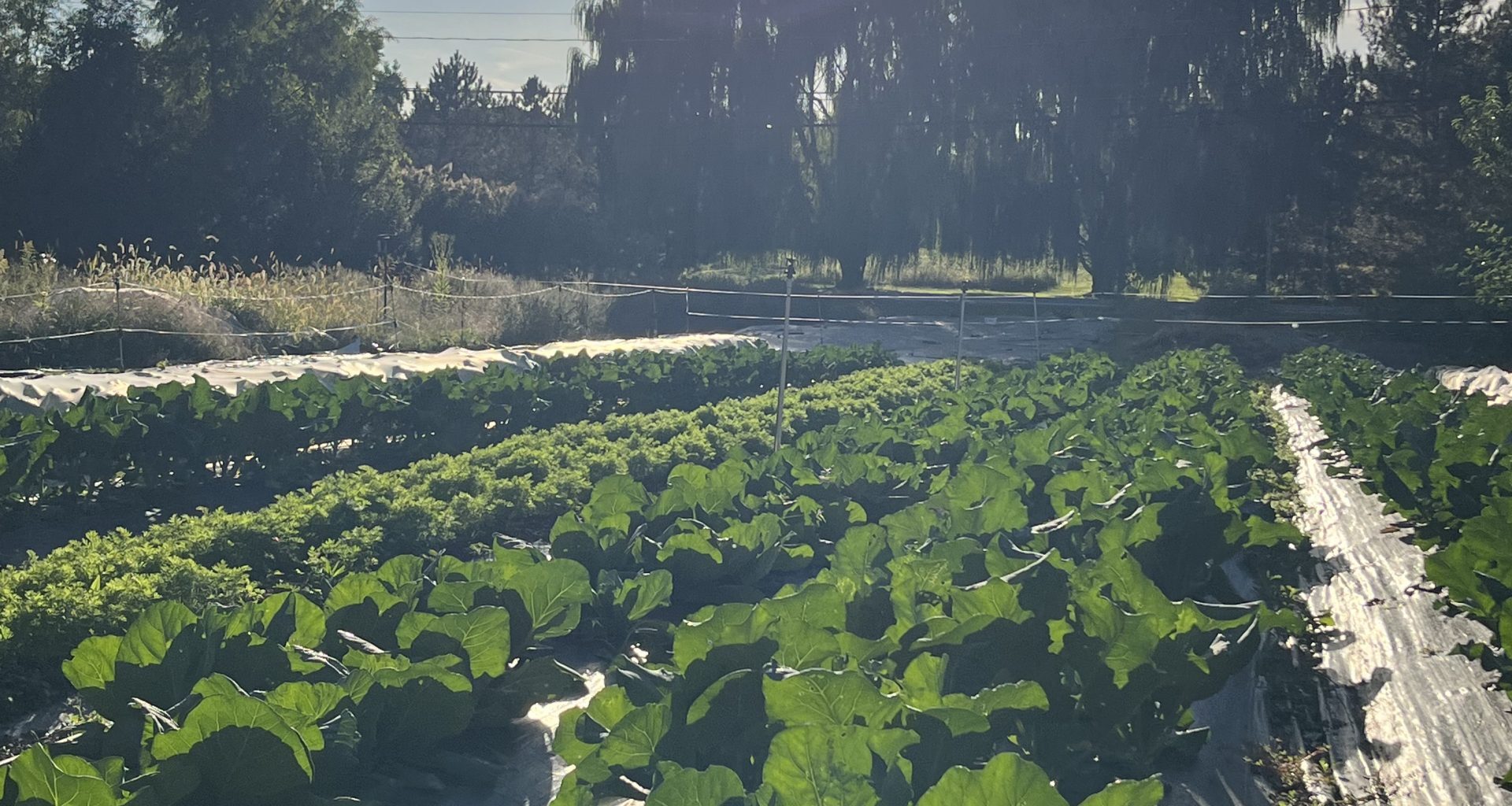
It doesn’t hurt that she uses fresh cabbage harvested from the 450 acres at Brightly Farms, which the family owns and runs in Hamlin. Now, in the eyes (and appetites) of the athletes, there’s simply no substitute for Brightly slaw.
Behold the power of cabbage.
Alongside squash, the crop is a mainstay of New York agriculture. The state is one of the largest producers of cabbage in the United States with more than 10,000 acres harvested, according to Farm to Institution New York State, a nonprofit dedicated to getting New York-grown food into institutions.
Farms across the state collectively yield nearly 15% of the country’s total cabbage. Only California produces more. Though shiny apples may get all the Instagram glory, leafy cabbage helps define the agricultural identity of the region.
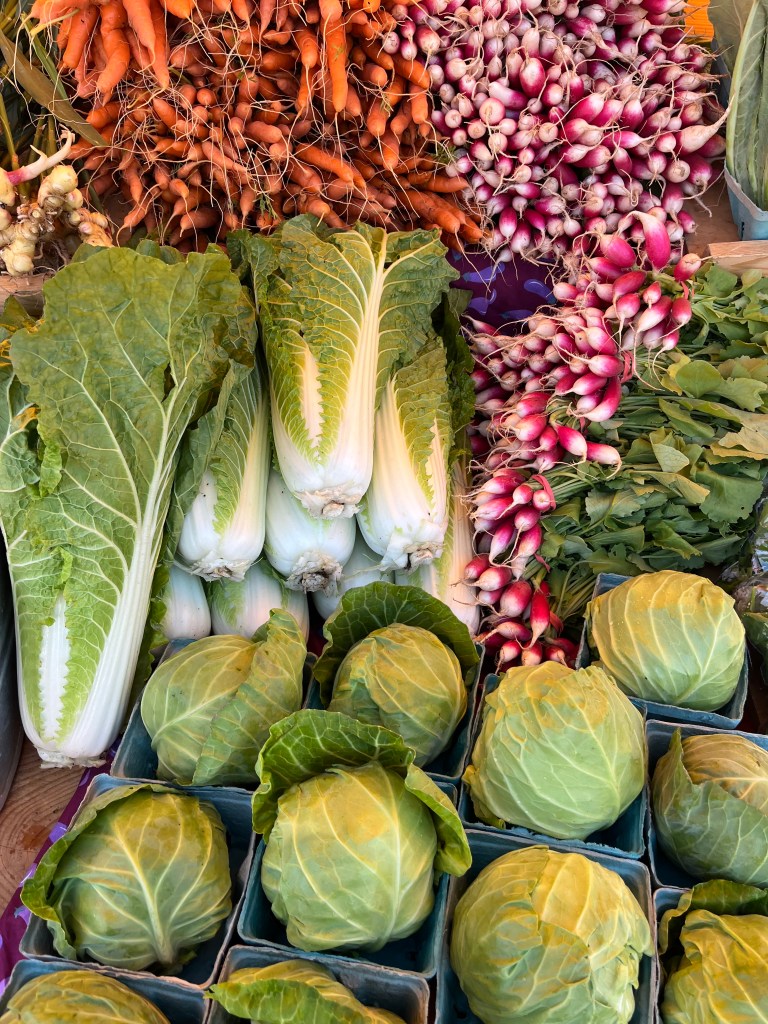 Credit: Photo courtesy of Chlovia Loomis/Growing Family Farms
Brightly’s boasts over a million cabbages on the farm. Every single one is cut by hand. Many go to cold storage rooms waiting for order fulfillment from fresh markets and distributors. Some become KFC coleslaw; others end up inside egg rolls in the New York City area.
“People think, ‘who’s buying cabbage?’ Well, just the egg rolls alone, right? And pierogies,” Brightly said. “There’s a lot of different food that you don’t think about that cabbage is in.”
Many companies prefer the cabbage grown in New York to crops in the southern states, she added, because of its particular profile. Hard frost and cooler weather makes Empire State cabbage white inside, with a crisp texture that gives it crunch.
As such, the scent of sulfur-rich cabbage is a hallmark of Western and Central New York. The village of Phelps in Ontario County was formerly known as the sauerkraut capital of the world. The odor characterized communities like nearby Shortsville, meanwhile, for decades before a major processing center closed in 2018.
Chlovia Loomis remembers the scent.
“I grew up out here in Hilton and I remember driving past cabbage fields. You smell it,” she said. “It smells sulfury outside.”
Now in her late 20s, Loomis is a visual artist whose striking paintings of everyday objects use color in bold ways. Many of them are inspired by her work managing the organic Growing Family Farms on Peck Road in Hilton — including plenty of cabbage.
“We’re not storing cabbage for a super long time,” she said of the farm’s smaller scope. “We’re focusing on selling it as fresh as possible.”
For Loomis, the relatively small-scale 2,000 to 3,000 cabbages at Growing Family Farms aren’t as pungent as the acres on larger operations elsewhere in the region.
“It’s not fields and fields of cabbage, but we’re growing caraflex or tiara or specialty varieties and then making sure we harvest them early in the morning so they taste their best,” Loomis said.
Chefs often come calling. If a restaurant wants to make bulk sauerkraut in the fall, GFF can grow an extra few dozen plants for that purpose. Usually, Loomis said, her operation varies week by week, focusing on CSA members and local hubs like the Brighton Farmers Market. Recent fare included brilliant green and purple napa cabbages, perfect for kimchi dishes.
“The cool weather cabbages taste sweeter because the plants produce more sugars,” Loomis said. “Summer would be the hardest time here [for cabbage], so then you get them a lot in fall, because then they head up around this time of year when the light cycle starts tapering off.”
This year’s lack of rain has led to smaller yields, felt by both Loomis and Brightly. And pests remain a particular problem for cabbage.
As part of the brassica genus, cabbage plants attract many unwelcome guests, most prominently the invasive cabbage moth. Crop damage leads to fewer crops, so naturally, addressing pests and weeds is a high priority for field researchers.
In the past two decades, the state’s Cabbage Research and Development Program has undertaken studies on pest control; in conjunction with Cornell Cooperative Extension, other issues like crop rotation and the use of nitrogen in fertilization have also been studied.
Christine Smart has been working with cabbage growers in the state since 2004. Her car even boasts an “I love New York cabbage” magnet.
Smart, who now heads up the research initiative Cornell AgriTech, said cabbage is “foundational” to New York agriculture. As such, the research aims to help farmers adapt their methods for better yields.
“It’s really fantastic because the growers actually make a list of their priorities. What are the issues that they’re facing?” she said. “It really becomes this partnership between the researchers and cabbage growers to solve the most important problems.”
The future of cabbage just might be varieties like caraflex, a cone-shaped head that tastes sweeter. Both Loomis and Brightly grow it, and Brightly even visited Holland to do trials with a seed company.
“In Europe, that’s in every grocery store,” Brightly said. “That’s what they like to eat. It’s amazing grilled.”
Back at home, though, coleslaw is still the standard for her and her husband.
“Every restaurant we go in, we have to order coleslaw because he’s got to taste it to see if they make good coleslaw,” she said. “And it just doesn’t pan out to be good.”
Brightly slaw remains hard to beat, thanks to homegrown cabbage.
Related