
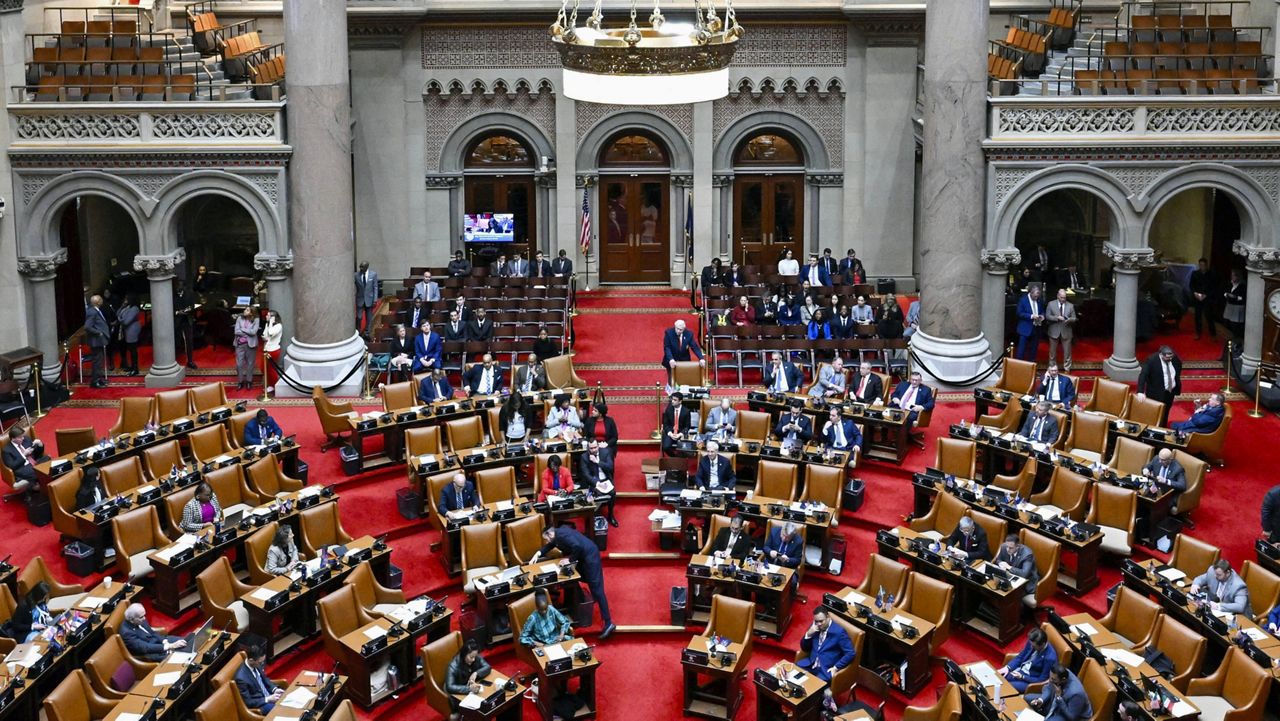
Deputy Senate Majority Leader Mike Gianaris confirmed Monday that state lawmakers likely won’t finish voting on budget bills this week — and even starting isn’t a sure thing.
It came after state lawmakers passed a 13th budget extender, ensuring essential state funding remains flowing until Wednesday. While the short extender provides some hope that voting on budget bills could commence this week, Gianaris said completion before the Memorial Day weekend remains unlikely.
“I think it’s ambitious to hope for this week; next week looks good, though,” he said. “I think it’s moving along. There’s a mechanical aspect, so once we’re actually agreed, getting bills printed, approving the drafts takes a couple of days.”
That doesn’t mean everything is settled. Matters from health care spending to Tier 6 pension reform remained open Monday, nearly seven weeks past the budget deadline. Gianaris blamed the delay on the weeks spent squabbling with Governor Kathy Hochul over her policy proposals colliding with the mechanics of the budget process.
Hochul has defended her use of the budget process to drive policy changes from car insurance reforms intended to lower rates which yielded unexpectedly tense negotiations, to a push to dial back the state’s 2019 emissions-reducing climate law in response to concerns over the potential further rate hikes and in the wake of considerable opposition from Democratic lawmakers and environmental groups.
“Once we concluded the policy discussion, now we’re turning to the dollars and cents, which takes some time, but we’re getting through it,” Gianaris said.
Assemblymember John McDonald of Cohoes told Spectrum News 1 another aspect of the outstanding financial discussion include amping up funding for hospitals and nursing homes, with special attention to nursing homes in the wake of cuts relating to federal spending measures.
“Yes, hospitals are important and they’re going to bear the brunt of a lot of the negative cuts with HR1, but same token, we have to move people out of the hospitals and they’re going to be going to nursing homes. We have to make sure those facilities are properly staffed,” he said.
McDonald described Tier 6 reform as a continuously moving target in the closing stages of the budget process. Sources say the latest discussions include expanding last week’s offer of retirement at age 58 after 30 years of service for teachers to other public employees along with evolving discussions around other measures relating to contribution rates and overtime pay. The current retirement age for Tier 6 employees is 63.
Also under discussion, he said, is much-needed capital funding for SUNY campuses. For McDonald, that means pushing especially hard to ensure a positive impact for the University at Albany.
“We’re fighting for that, but guess what? The people in Buffalo and Binghamton and Long Island, they’re fighting for their university centers,” he said.
It comes as legislative resources are strained under the weight of a budget process that is now directly colliding with the end-of-session rush.
“The budget alone, the end of session alone are major gargantuan issues alone; when you meld it together, it gets to be challenging, so I’m a little bit more sensitive to the impact it’s having on staff,” he said.
It also means many significant pieces of legislation will hit the Senate and Assembly floors both in and out of the budget in the coming days. Republicans like State Sen. George Borrello have blasted Democrats in the legislature for not entertaining an extended session calendar to allow for more time to field the onslaught.
“You’re going to have hundreds of bills passed in one day? How can the people of New York know what is in those bills and how can we as legislators know if we aren’t given time to vet them? So it’s an inherently corrupt process,” he said.