
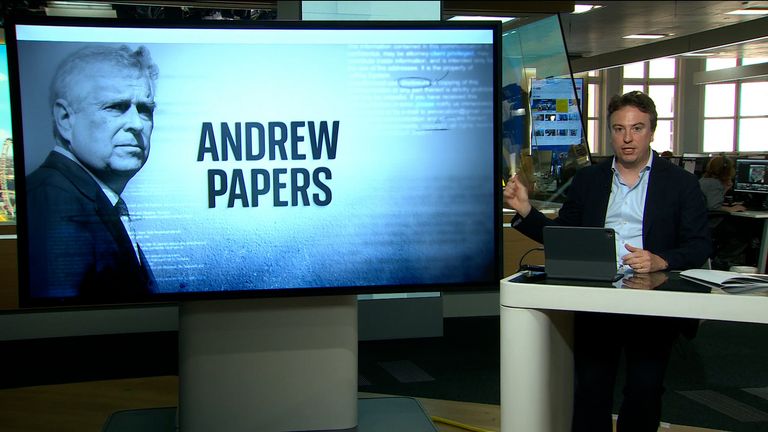
Newly declassified government documents reveal that the late Queen Elizabeth II fiercely lobbied for Prince Andrew to secure a prominent national role in 2001, setting the stage for his deeply controversial decade as the United Kingdom’s special representative for trade.
The internal memos expose the shadowy intersection of royal privilege and state diplomacy. They reveal that Andrew demanded luxury travel to specifically “sophisticated countries,” shunned public golf appearances to meticulously manage his public image, and explicitly preferred elite ballet performances to standard theater. This historic revelation raises profound, uncomfortable questions about the systemic oversight of royal appointments and the lengths to which the institution will go to protect its own.
The Sovereign’s Undue Influence
The files, recently released under the Freedom of Information Act, provide a stunning glimpse into the internal mechanics of the British establishment. A senior official explicitly informed the then-Foreign Secretary that the sovereign was “very keen” for her second son to take on a highly visible, state-sanctioned role in the promotion of national economic interests. This royal pressure effectively bypassed standard diplomatic vetting procedures, placing a man with zero formal background in international trade negotiations into a position of immense global influence.
Historians and political analysts are now re-evaluating the narrative surrounding the monarchy’s supposed political neutrality. The deployment of soft power is a hallmark of the Crown, but the aggressive internal lobbying to secure a taxpayer-funded portfolio for a specific family member crosses a delicate constitutional line. The Foreign Office, eager to appease Buckingham Palace, accommodated the request, fundamentally compromising the integrity of British overseas trade missions.
The Demands of a Prince
What makes the declassified documents particularly damning is the staggering entitlement detailed within the logistical briefings. Prince Andrew did not view the role as a public service; he viewed it as an extension of his aristocratic lifestyle. His explicit directives to embassy staff across the globe included a steadfast refusal to visit developing nations, insisting instead on itineraries restricted to “sophisticated countries” with luxury accommodations.
Furthermore, his handlers issued strict warnings to foreign dignitaries regarding his leisure activities. He flatly refused to play golf in public settings—presumably to avoid the optics of a taxpayer-funded holiday—yet demanded exclusive access to private courses. Culturally, he mandated that his hosts arrange private ballet viewings, summarily dismissing traditional theater. These demands alienated veteran diplomats who were forced to act as high-end concierges rather than executing serious bilateral trade agreements.
The Anatomy of a Diplomatic DisasterPrince Andrew was formally appointed as the UK’s special representative for international trade and investment in 2001.Declassified memos confirm he explicitly requested travel only to “sophisticated countries,” heavily restricting his diplomatic reach.He held the controversial taxpayer-funded role for exactly ten years before stepping down in 2011 amid escalating global scandals.The documents verify that the late Queen Elizabeth II actively pressured the Foreign Office to create the position for him.Parallels in Global Diplomacy
The deployment of unqualified individuals into high-stakes diplomatic roles is a global vulnerability. In developing nations, particularly across East Africa, the consequences of such nepotism are historically disastrous. In Kenya, the appointment of politically connected but fundamentally inexperienced individuals to key ambassadorial posts has frequently derailed critical foreign direct investment. When a nation sends a representative focused on luxury rather than statecraft, the host country instantly recognizes the lack of seriousness.
The Prince Andrew trade envoy debacle serves as a universally understood cautionary tale. International trade requires rigorous economic literacy, cultural humility, and an unrelenting work ethic. By subverting these requirements to fulfill a royal mandate, the United Kingdom severely damaged its reputation in key global markets, projecting an image of archaic entitlement rather than modern economic dynamism.
The Cost of Institutional Shielding
The ultimate tragedy of the 2001 appointment is what followed. Shielded by diplomatic immunity and the formidable public relations apparatus of the monarchy, Prince Andrew operated with terrifying impunity for a decade. The relationships he cultivated during this period, including his catastrophic association with convicted sex offender Jeffrey Epstein, eventually triggered an unprecedented crisis for the royal family.
Today, as King Charles III attempts to streamline the monarchy and project an image of modern accountability, these declassified documents serve as a toxic reminder of the past. They prove that institutional protection often blinds itself to inevitable diplomatic liabilities, sacrificing the nation’s credibility on the altar of royal appeasement.
The documents serve as a stark historical receipt, proving that institutional protection often blinds itself to inevitable diplomatic liabilities. The fallout is immense.