
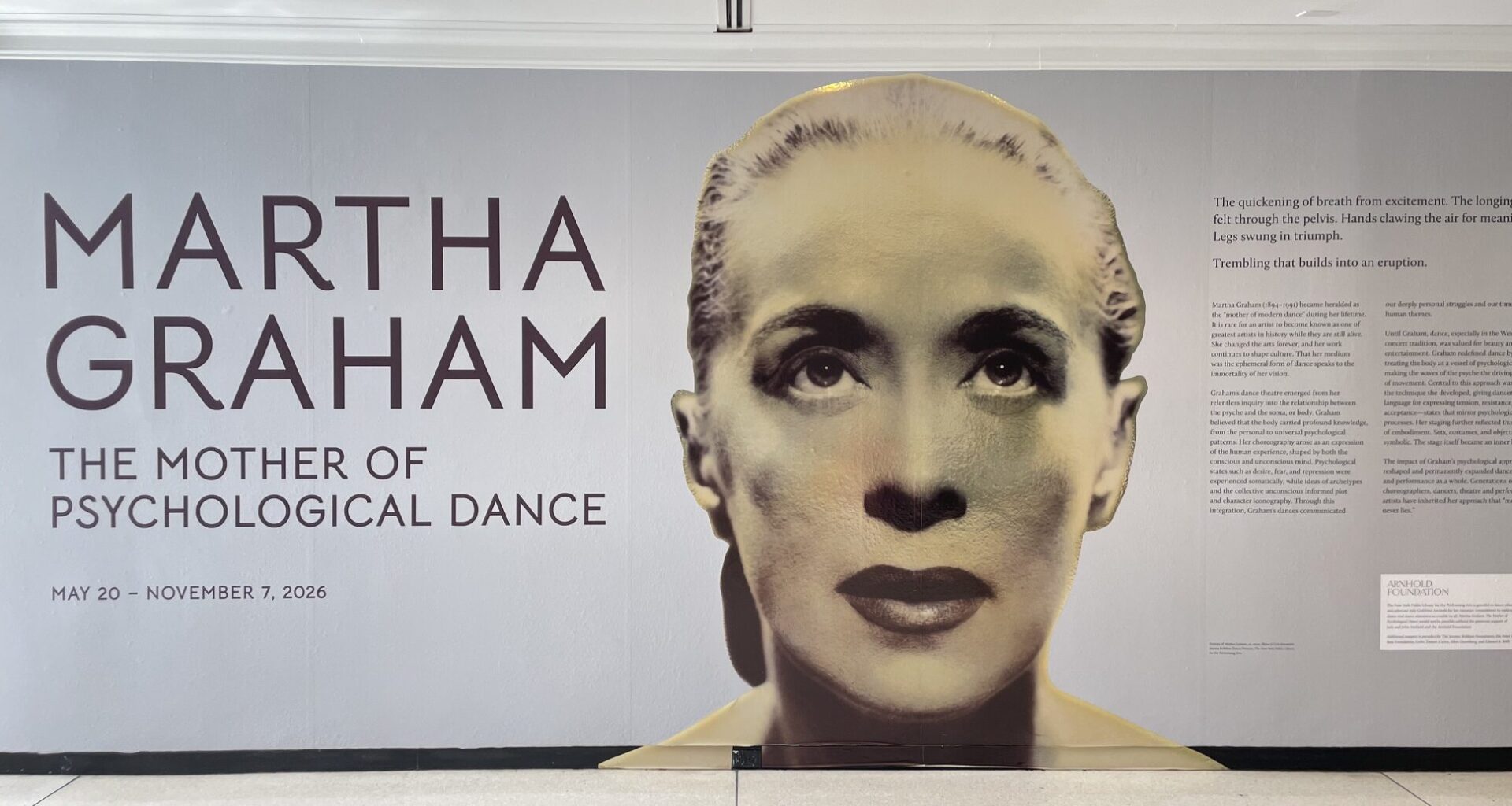
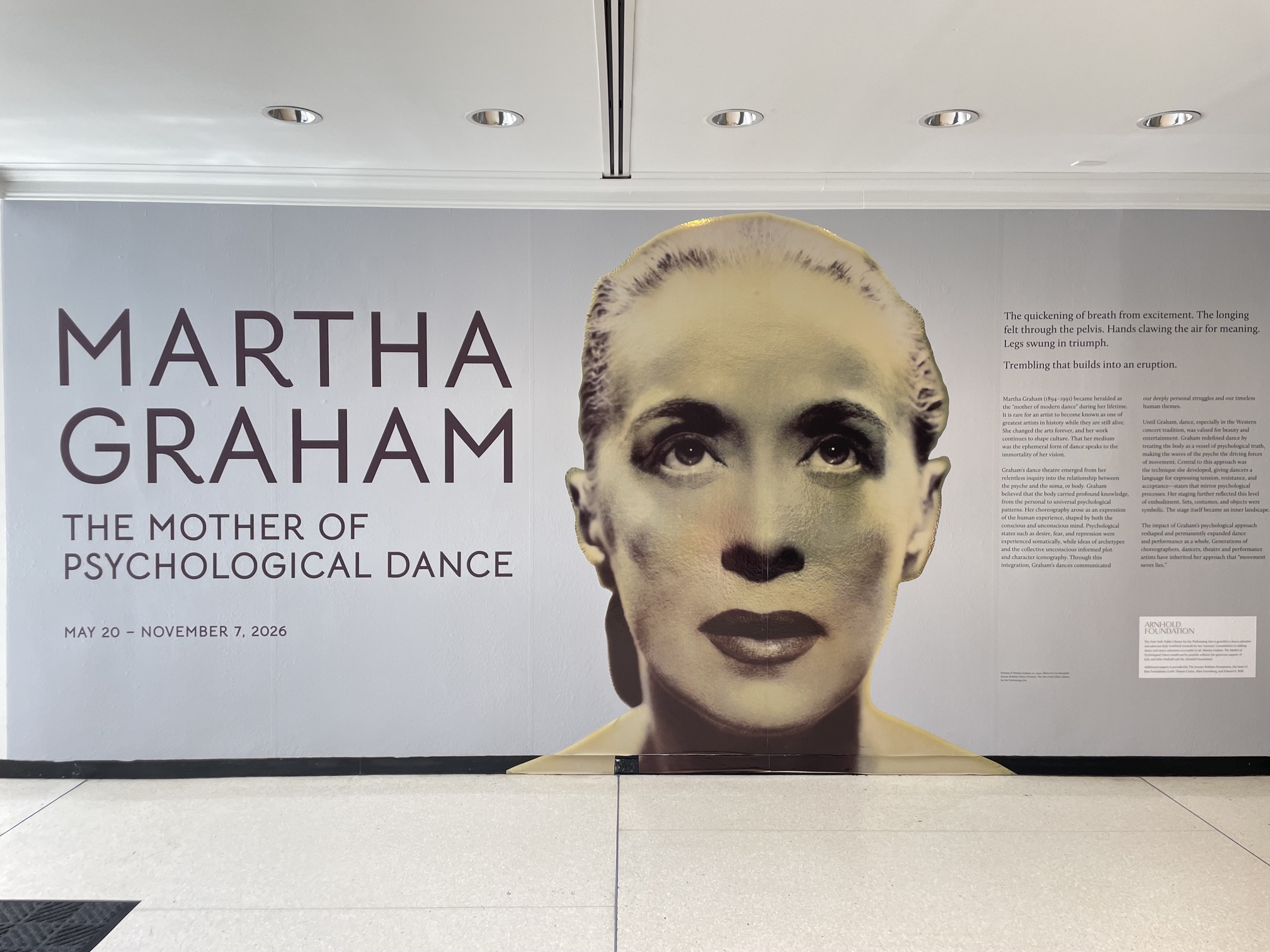
 A new exhibit at Lincoln Center’s New York Public Library for the Performing Arts features items from the library’s Martha Graham collection. Photo by Steve Holt
By Steve Holt
Year in and year out, Lincoln Center celebrates the titans of the performing arts. Next up on the “titans” list is a colossus of the world of dance, now showcased at The New York Public Library for the Performing Arts in its new exhibit, “Martha Graham: The Mother of Psychological Dance.”
Often also called “the mother of modern dance,” for her dancing, choreography, and teaching, Graham left an indelible impression on 20th century dance; her monumental influence lives on through countless dancers, students, and teachers.
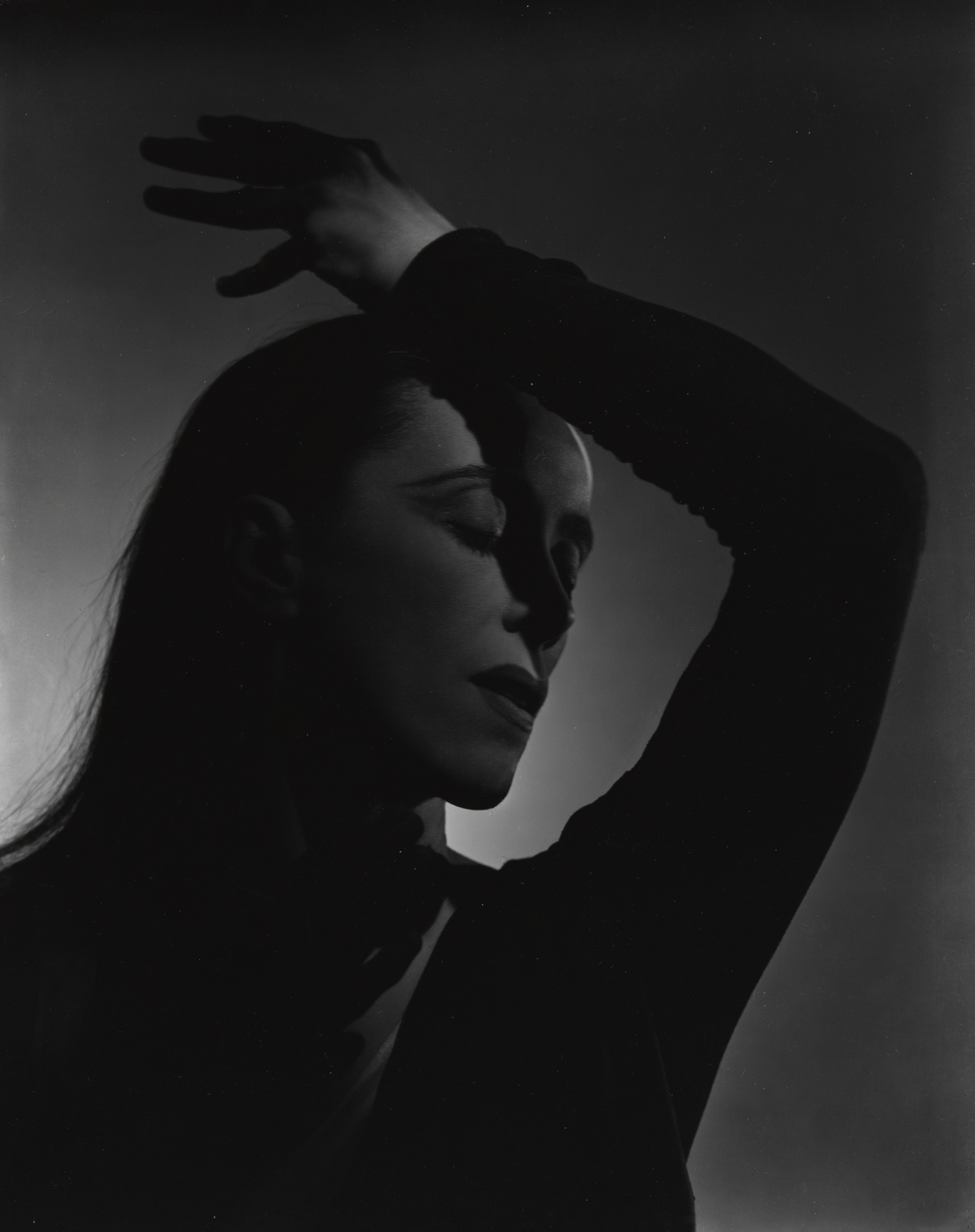 Portrait of Martha Graham, ca. 1940s. Photo © George Platt Lynes. Jerome Robbins Dance Division, The New York Public Library for the Performing Arts
Drawing on the rich treasures in its Martha Graham archive, the library’s exhibit is a brilliantly choreographed display of costumes, props, photographs (both iconic and rare), as well as videos, and even silent film.
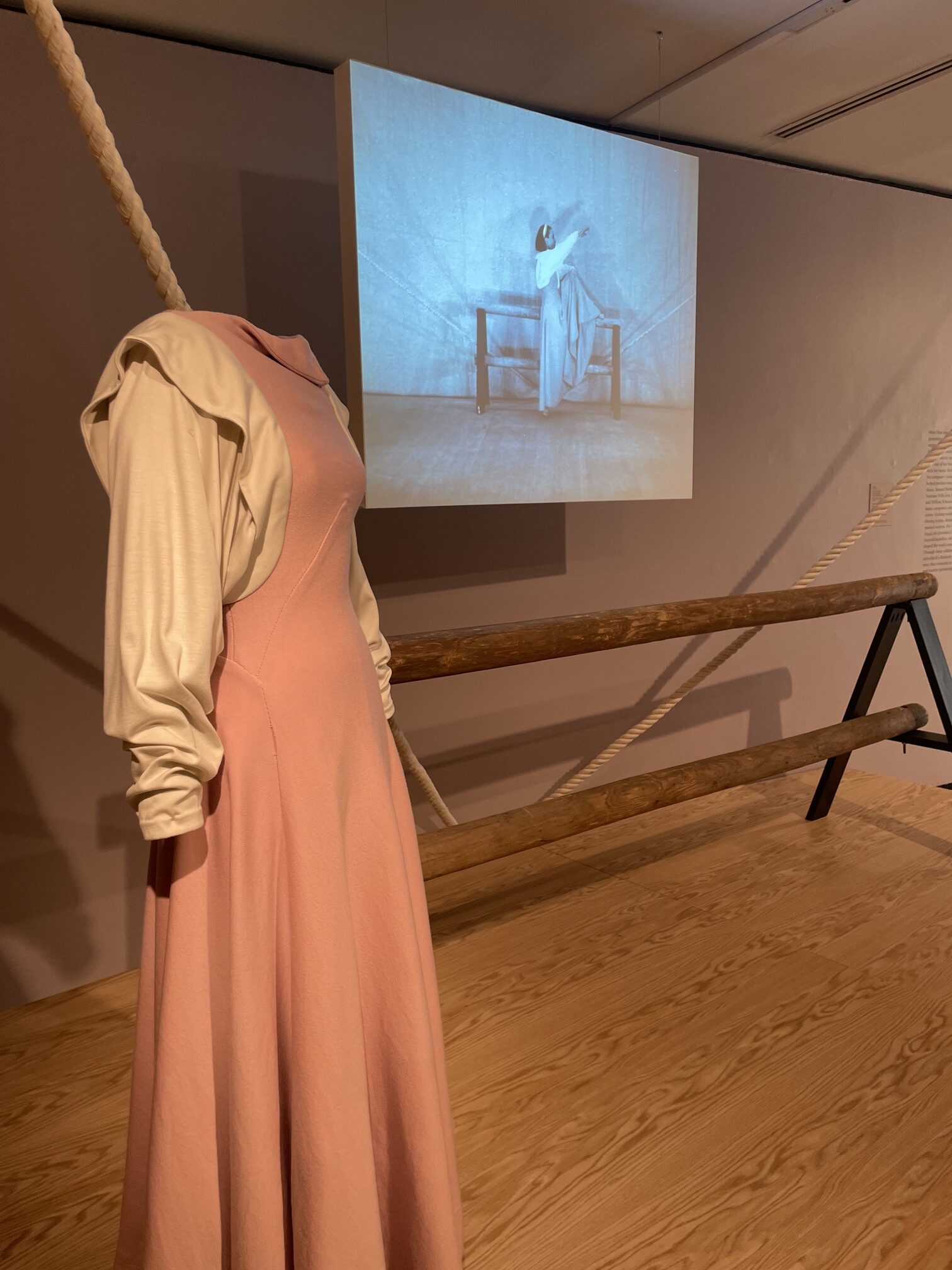 Graham designed the pioneer woman’s dress for “Frontier.” Photo by Steve Holt
One display in particular gives an idea of the presentation’s scope. A simple pink pioneer woman’s dress is posed before a rustic railing. A silent film plays on a screen, showing Graham soloing in “Frontier,” a work she choreographed in 1935 (it was the first of her “American” dance works, which culminated in 1944’s “Appalachian Spring,” with the beloved music by Aaron Copland). The “Frontier” set design was by Isamu Noguchi, an example of Graham’s collaborations with the 20th century’s greatest artists. And that pioneer dress? Graham herself designed it. The assembled exhibit is meant to draw the viewer into Graham’s world, to imagine being in the theater with Graham herself on stage.
Linda Murray, curator of the library’s Jerome Robbins Dance Division, calls Graham “a giant to whom we all owe a debt. We can never repay her, but it’s important that we don’t forget all that she gave. My hope is that this exhibition is a reminder of what made Graham so special.”
The curator of the exhibit, Jack Ferver, a renowned dancer, choreographer, and teacher, says that Graham’s accomplishments were achieved by staying true to herself.
“She believed that when you find that true vision, stick to it, yield to no one,” said Ferver. “She didn’t yield.”
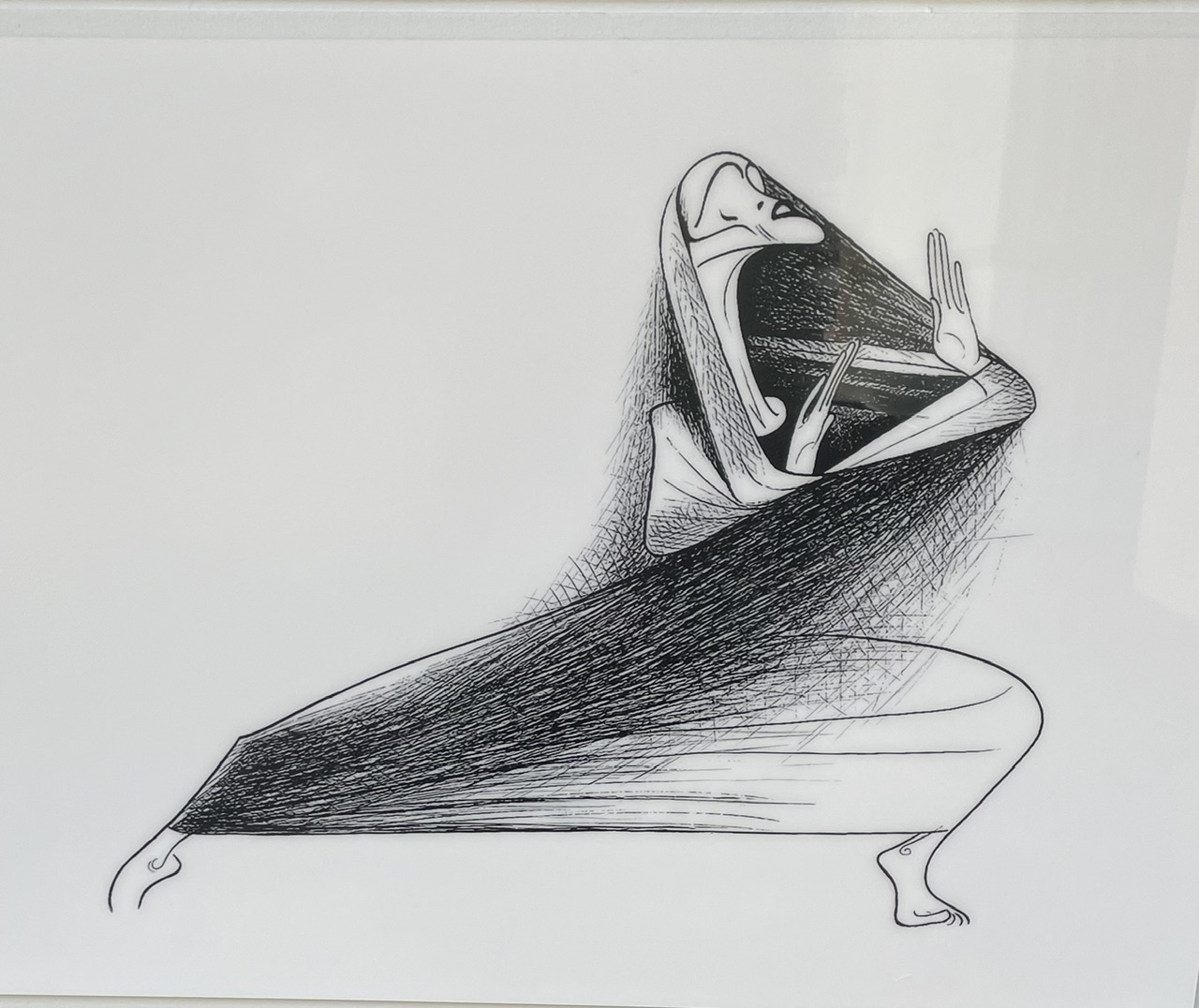 Al Hirschfeld’s drawing of Graham in “Lamentation” from 1930. Photo by Steve Holt
Janet Eilber, the artistic director of the Martha Graham Dance Company, joined the ensemble while still a student at Juilliard. She was directed by Graham herself in most of the company’s major roles. She also enjoyed success on Broadway, as well as acting in film and television.
“Hopefully, this exhibit communicates that marriage of physicality and emotionality that Martha was after,” said Eilber. “That’s the essence of her theater. It’s not physical tricks or melodramatic acting, it’s the emotion being revealed through movement.”
The exhibit runs from now through November 7. More information is available at http://nypl.org/marthagraham, including details on several special programs about the lasting legacy of Martha Graham.
Subscribe to West Side Rag’s FREE email newsletter here. And you can Support the Rag here.