
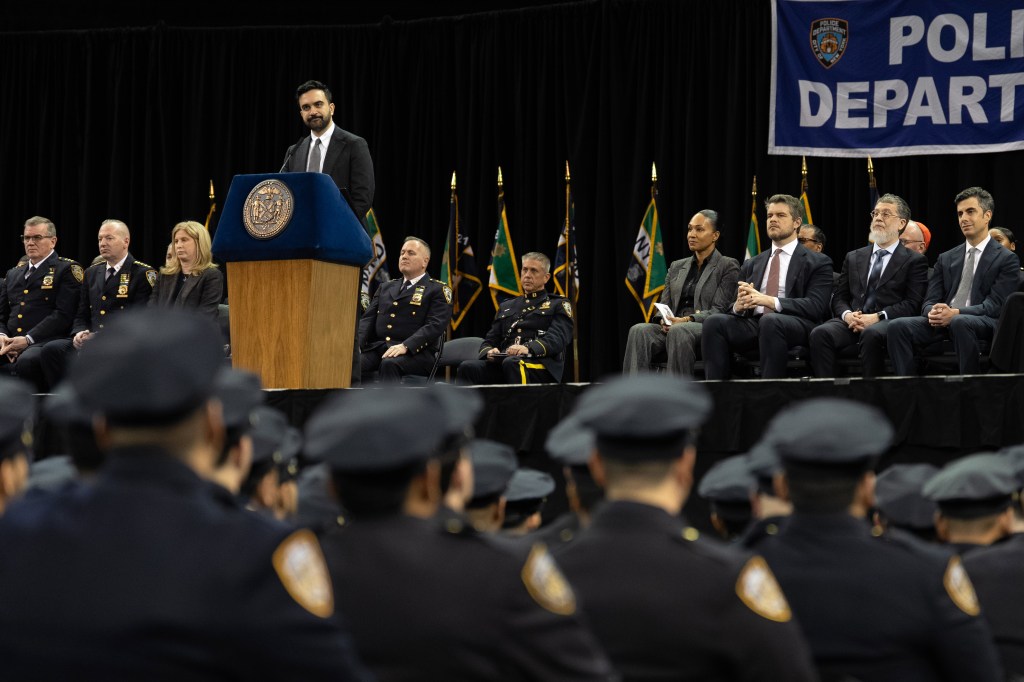
In an interview last month with the New York Times, Mayor Mamdani took pains to make clear that he is the ultimate decisionmaker for all city departments and agencies, including the police department.
The interviewer raised questions about the mayor’s willingness to overrule his NYPD Commissioner Jessica Tisch and follow through on his criminal justice related campaign promises, such as to shut down the gang database and to dismantle the NYPD’s Strategic Response Group, the unit that polices protests.
Even beyond those specific aspects of policing in New York City, other recent developments call into question the role the mayor is willing to play when it comes to matters of policing and criminal justice and whether he meant what he said on the campaign trail.
In 2013, a federal judge ruled in Floyd vs. City of New York that NYPD stop-and-frisk practices violated the constitutional rights of Black and Latino residents. Hundreds of thousands of people had been stopped-and-frisked unlawfully, and the overwhelmingly majority of those people were people of color, leading the judge to find systemic violations of the Fourth Amendment’s prohibition against illegal searches and seizures, as well as violations of the equal protection clause of the 14th Amendment.
In her remedial order, the judge appointed a monitor to ensure that the NYPD implemented a series of court-ordered reforms. The monitor’s most recent report found that the department is not following the law. The monitor highlighted three persistent failures: unlawful self-initiated stops by police officers, underreporting of stops and frisks, and lack of supervisory accountability (noting “Supervisors routinely approve stops, frisks, and searches as lawful even when they are not”).
ProPublica recently reported the monitor’s focused attention on the NYPD’s notoriously aggressive Community Response Teams (CRT), units created to address quality-of-life conditions that were expanded by former Mayor Eric Adams. The monitor discovered that the NYPD failed as required by a federal judge to audit stops by CRT units from March 2023 through March 2026, such that unconstitutional stops, frisks and searches went undetected.
And earlier this year the New York Civil Liberties Union, the Bronx Defenders, and Milbank LLC, filed a federal lawsuit alleging what are essentially illegal stops-and-frisks via car stops. According to the lawsuit, of the more than 74,400 vehicles the police searched from Jan. 1, 2022, to Sept. 30, 2025, more than 84% of the drivers were Black or Latino while fewer than 4% of the drivers searched were white.
Like street level stops-and-frisks, these car stops and searches virtually never turned up any contraband or weapons. Referring to the stops as “stop-and-frisk on wheels,” NYCLU lawyers called upon Mamdani to end what they called a “racist and shameful practice.”
The stop-and-frisk monitor referred to the report as a “wake-up call.” To date, Mamdani has been silent about both the report and the car stop lawsuit that mirror the very same complaints of illegal stops targeting people of color.
Given his vocal and public positions on criminal justice as a member of the Assembly and during his campaign for mayor, his silence begs the question of whether the policing buck really does stop at the mayor’s desk or, despite his statement to the Times, does he defer to Tisch, who on several policing issues has voiced opinions quite different from his.
It is one thing for the mayor to tell reporters that he is the ultimate decisionmaker when it comes to the NYPD. It is another thing altogether for him to take decisive actions to prove it.
Zeidman is a professor at CUNY Law School and founder and co-director of the Second Look Project NY.