
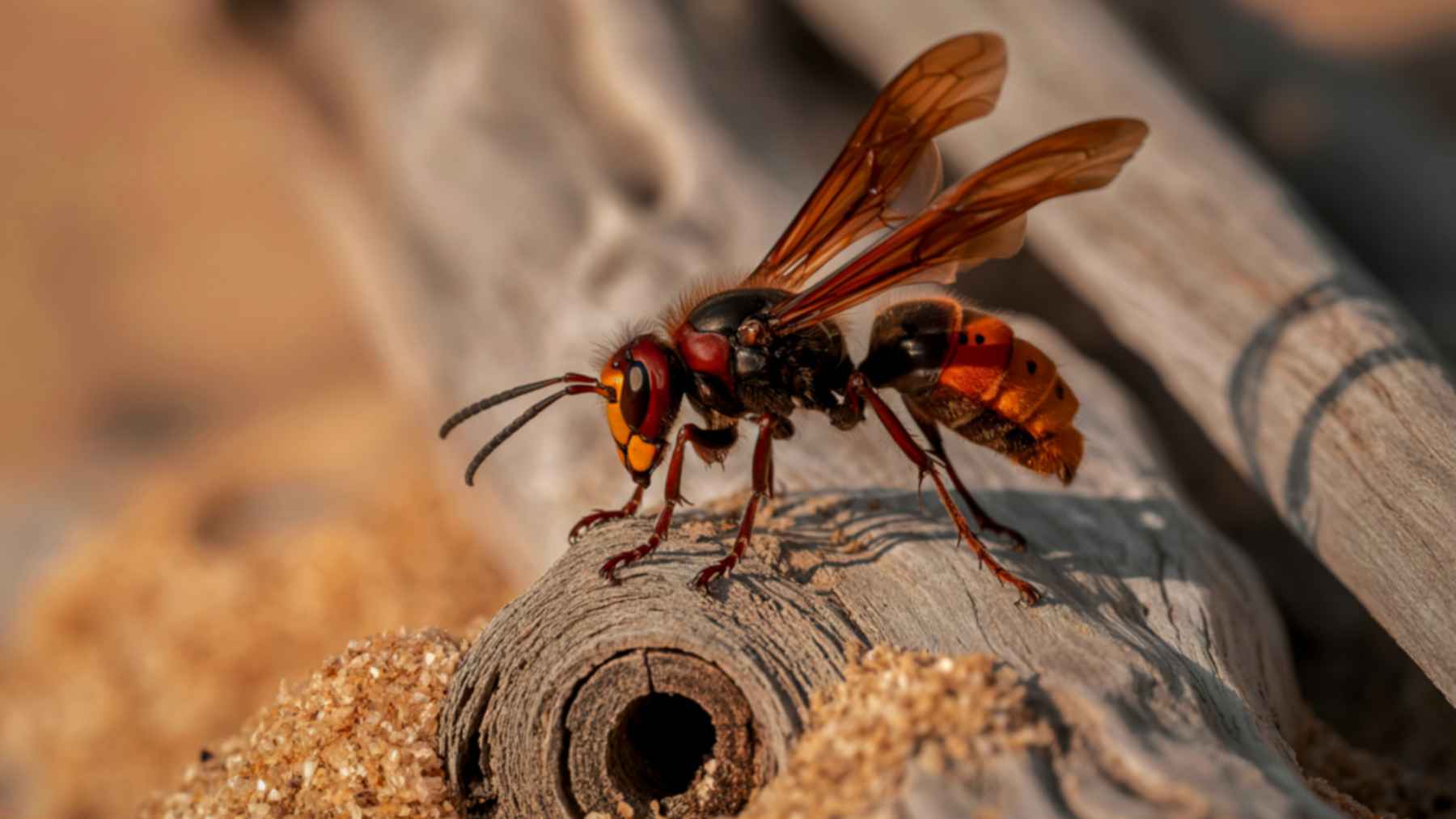
In Alcañiz, a town in Aragón, Spain, officials say a spring trapping push along the Guadalope River has captured 62 Asian hornet queens across roughly 20 devices. The goal is to stop each fertilized queen before she can build a first nest and seed a new colony. Local environment councilman Ramiro Domínguez called the tally “preocupante,” or concerning.
What makes the campaign notable is the toolkit. Alcañiz is combining commercial “selective” traps with homemade versions built from plastic bottles and a fermenting bait of water, sugar, and fresh yeast. It is a very municipal form of biosecurity, and it sits at the intersection of ecology, public safety, and a local beekeeping economy.
Why stopping queens matters
This is the season when control efforts have the best odds. Alcañiz began placing traps in March, aiming to intercept queens right after winter dormancy, and plans to keep the operation running through May. Fewer queens now should mean fewer nests later.
Biology explains the urgency. One peer-reviewed study notes that a Vespa velutina queen can produce “thousands of individuals” over the year, with “several hundreds” of hornets present in a colony from spring into autumn. That growth curve is why springtime queen capture is so appealing as a preventive tactic.
Alcañiz also has recent evidence the species is establishing nearby. Officials reported finding nine Vespa velutina nests near the city last summer, and local reporting says early spring trapping has already caught queens and some smaller hornets identified as early workers. That combination suggests the population is not just passing through.
A bottle trap built for scale
The homemade devices are a classic field solution, cheap, familiar, and easy to deploy in numbers. They are plastic bottles hung along the river corridor, baited with a sweet fermenting mixture that draws hornets in and is meant to keep them from escaping. Local officials say the traps are checked periodically, because a trap that is not maintained is a trap that stops working.
The bait recipe hints at why this works without any electronics. Water, sugar, and fresh yeast create fermentation odors that many wasps and hornets track, so the trap leans on insect behavior instead of sensors. For a city crew, that matters as much as raw effectiveness.
Selective traps and unintended catches
Alongside the bottles, Alcañiz is using VespaCatch traps intended to reduce collateral capture. Local officials say the entry holes are designed for Vespa velutina queens and workers while helping exclude native hornets such as Vespa crabro. In practice, that is the difference between targeted control and a broader hit to local insect life.
VespaCatch’s own guidance describes adjustable openings ranging from 7 mm to 11 mm, or about 0.28 to 0.43 inches, with a 9 mm setting recommended for spring trapping of Vespa velutina. Smaller openings can increase selectivity, but they can also limit what enters, so settings are always a tradeoff. The result is closer to tuning a filter than buying a one-size-fits-all solution.
Independent studies show why municipalities should treat “selective” as a performance claim, not a guarantee. A recent paper comparing trap models found that some designs such as VespaCatch can have higher capture rates but also very low selectiveness, including captures of vulnerable native species, and it concluded bait trapping remains environmentally unsustainable where the invasion is already established.
The warning is not that trapping never works, but that design and deployment choices can decide whether a program helps or harms.
The economic stakes for bees and crops
Beekeepers in the area are already feeling the pressure. Local reporting says apiaries around Alcañiz have seen Vespa velutina near hives, with honey bees taking defensive positions at the entrance, which disrupts normal activity and stresses the colony. A hive that is stuck defending itself is a hive that is not foraging.
There is also scientific context for how intense hornet pressure can become. In one field study of hornets hunting at domestic hives, researchers reported that predation on honey bees increases from midsummer into fall, and that “up to 20 hornets” were counted at the same time in front of a single hive in their study areas. That is the type of scenario that can erode a beekeeper’s season.
Zoom out and pollination becomes the larger balance sheet. The Intergovernmental Science-Policy Platform on Biodiversity and Ecosystem Services (IPBES) pollination assessment estimates the annual market value of crop production directly linked to pollination services at $235 billion to $577 billion worldwide in 2015 dollars.
In the United States alone, the U.S. Fish and Wildlife Service cites research estimating pollinators contribute $34 billion annually, which is why municipalities treat invasive species control as economic protection, not just conservation.
A local campaign with a public safety edge
The city is explicit that the issue is also about people. In its public messaging, Alcañiz warns about stings and allergic reactions, and it extends that caution to pets. It is also asking residents not to tamper with traps placed along the river.
Citizen reporting is the other pillar of the plan. Officials are urging residents to look for primary nests with a diameter similar to a tennis ball, often on buildings near the river or under roof overhangs, and to report them rather than trying to remove them. Early detection can shrink the need for risky interventions later.
What success looks like after May
Alcañiz’s next steps are to keep trapping through May and intensify monitoring based on what the first month revealed. A practical benchmark will be whether the city sees fewer summer nests than last year’s nine, since spring captures only matter if they translate into fewer colonies.
Researchers also note that control strategies typically mix adult trapping with nest neutralization, so the trap counts are only one part of the picture.
For residents, the immediate takeaway is simple: report nests and leave traps in place so the monitoring effort stays intact.
The official statement was published on Ayuntamiento de Alcañiz website,