
I WAS once taken to task by a sales rep shocked that Queen’s University had done nothing to mark the fact that Philip Larkin, one of the most consequential English poets of the 20th century, had once been there as a librarian.
It was the late nineties and I had just started working there.
I cannot remember what he was selling, but he made a great job of selling Larkin, whose poetry meant much to him.
Larkin was not the most humorous of men, so don’t go looking for laughs in his verse, but he had a great turn of phrase. There’s a famous opening line about parenting in his poem ‘This Be The Verse’ which is still unfit for publication in a family newspaper.
Less contentious is his observation that “Sexual intercourse began in 1963 / Between the end of the Chatterley ban / and the Beatles first LP”. Even a lugubrious poet needs to have his finger on the pulse of popular culture.
For me one of his most moving poems is his meditation on two effigies, ‘An Arundel Tomb’, and its closing observation that “What will survive of us is love”.
Larkin may not have identified himself as a ‘Queen’s poet’, but he was included in Frank Ormsby’s ‘The Blackbird’s Nest, An anthology of poetry from Queen’s University Belfast’.
They include poems by more than 50 poets, Larkin joining Heaney, Longley, Muldoon, Carson and many others. I had a hand in its publication, and still have a copy of a cheque from the late Jim and Alice Fitzpatrick, owners of The Irish News, who helped fund the book.
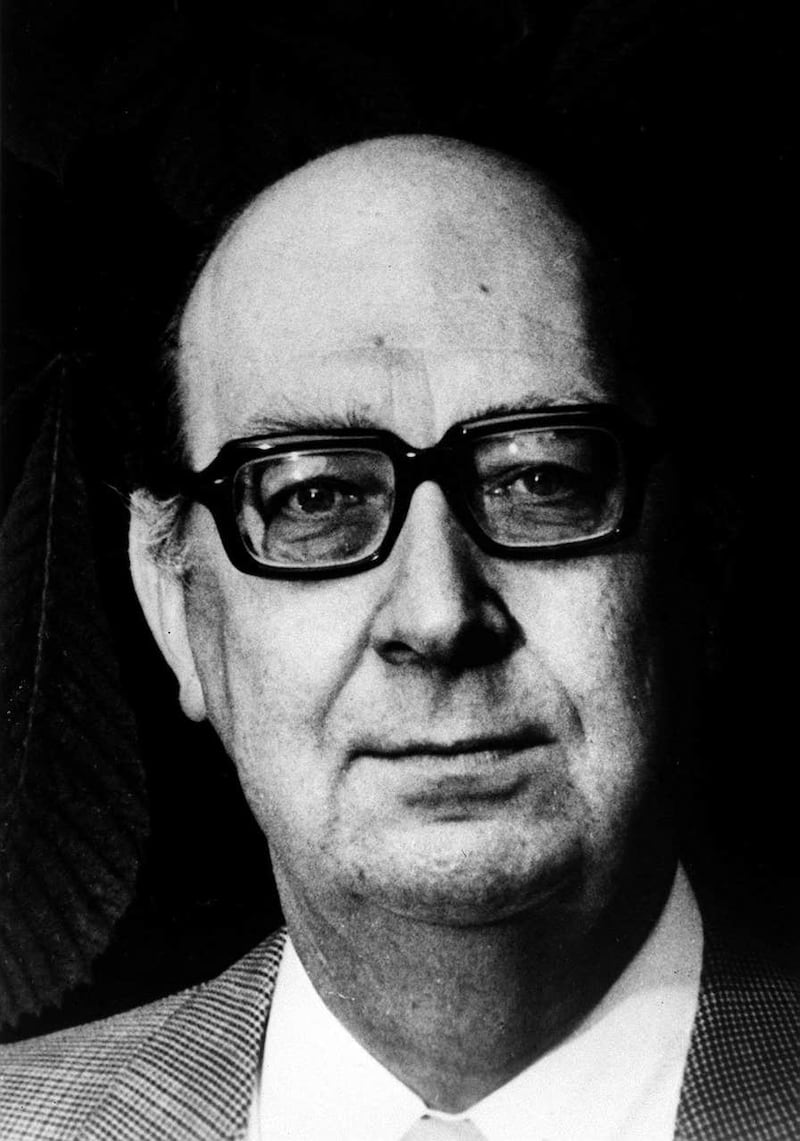 Poet Philip Larkin
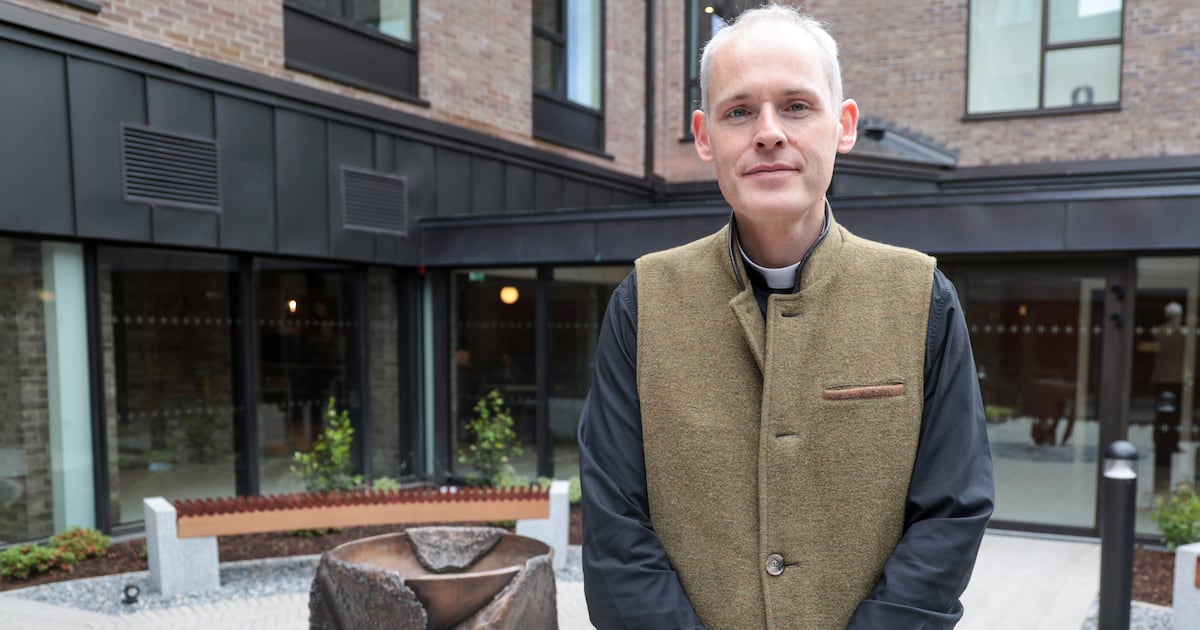
Anyway, by now I’m sure you’re asking ‘Why is he wittering on about a dead poet?’ The memories were prompted by the reopening of the Catholic Chaplaincy at Queen’s.
When the sales rep went down to worship the poet outside the Elmwood Avenue terrace house where Larkin lived, he was confronted not by an elegant Victorian townhouse but by the modernist Catholic Chaplaincy, built in a space where the original buildings had been demolished. He looked in vain for a blue plaque. (There’s now one on the library.)
This divisive building – conservatives think it a monstrosity – is one of the jewels of modern Irish architecture. In his ‘An Introduction to Modern Ulster Architecture’, David Evans notes: “A spirit of respect and architectural good neighbourliness is evident in this elegant example of ‘infill’ designed by Lawrence McConville.”
It pays homage to the bay windows of its neighbours, playfully elevating them above street level. I love its playfulness.
It is impossible to overestimate the importance this building has played in the lives of countless young men and women who have passed through Queen’s University’s doors over the years.
For generations of Catholic students, the chaplaincy has been a home away from home. Its reopening, after a three-year closure for renovations, is something to be celebrated.
One of the first things I did when I started working at Queen’s in 1999 was to meet the chaplains as part of my efforts to get under the skin of the place.
I was, they told me, the first member of the senior team to meet them. At that point the university was going through one of its periodic paroxysms, and they were not happy.
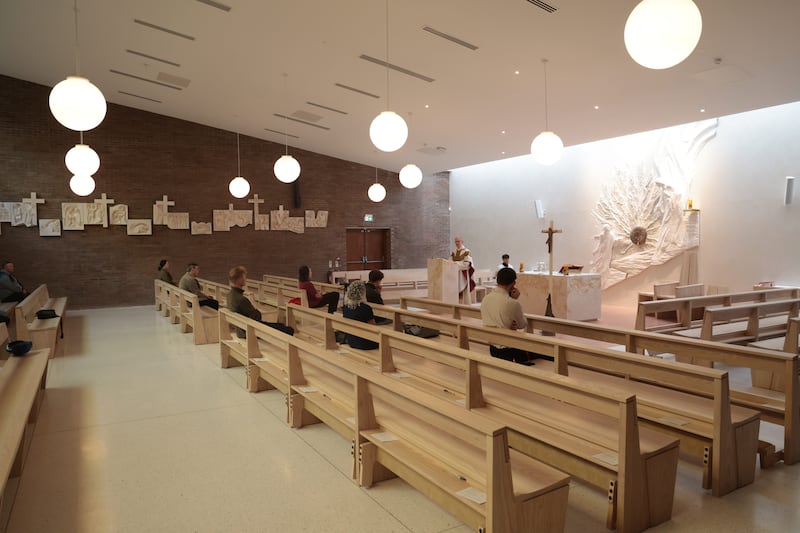 The newly refurbished QUB Catholic Chaplaincy. PICTURE: BRIAN LINCOLN
 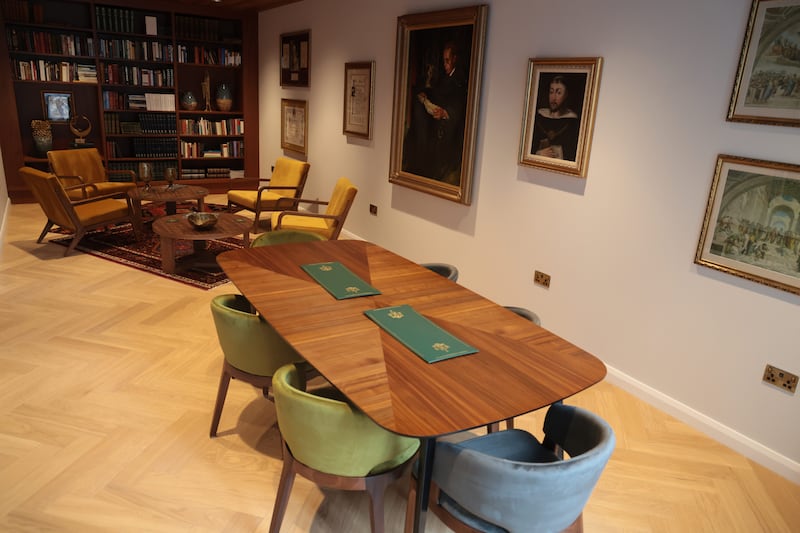 The newly refurbished QUB Catholic Chaplaincy. PICTURE: BRIAN LINCOLN
Such was their displeasure that I was treated to a diatribe about the changes then being put into effect. The Catholic chaplain later apologised for venting their frustrations on me. But there was no need. I’d wanted warts and all, and that’s what I got.
What I also got was an understanding of how much the chaplains cared for the students and staff, and how it was they who often carried the burden of dealing with the fall-out from restructuring, changes to the curriculum, and the emotional and mental health pressures on young people under their care.
They exemplified faith in action – prioritising often practicalities over ceremony, and always putting people first.
Looking back now, the nineties and the early noughties seem to be a different age. The pressures on students were intense, but that generation did not need to worry about the harms of social media. Harms which have unquestionably in my mind been responsible in large part for the catastrophic decline in young people’s mental health over this past two decades,
In that context, faith, and the strong sense of common purpose that faith communities present, is one of the anchors that can keep people grounded.
More important still is to have a safe place to go when times are tough, with the assurance that there will always be someone there to help, if that’s what you want.
For students at Queen’s, the Catholic Chaplaincy is that place. It’s great for them that its doors are open once again.
If you have an opinion on the issues raised in this article and would like to submit a
Letter to the Editor
to be considered for publication,
please click here.
Letters to the Editor are invited on any subject. They should be authenticated with a full name, address and a daytime telephone number.
Pen names are not allowed.